
EMAIL:
lh@longhuamachine.com
TELL/whatsapp:
+8619305527239  English English
Views: 0 Author: Site Editor Publish Time: 2026-08-06 Origin: Site


The transition to fully automated die casting cells is accelerating, but the efficiency of robotic extractors and automated sprayers is frequently bottlenecked by outdated, manual, or thermally inconsistent melting processes. Inconsistent molten metal temperatures, manual ladling delays, and high dross formation disrupt automated casting cycles. This leads to increased scrap rates, including porosity and cold shuts. It also causes unplanned downtime and creates significant safety hazards for operators handling molten metal.
Integrating an Electric Melting Furnace into the die casting cell provides the precise thermal control and system connectivity required for true automation. This guide breaks down the technical evaluation criteria, integration requirements, and operational trade-offs of transitioning to electric melting systems.
Thermal Precision Drives Automation: An electric melting furnace provides exact temperature control, eliminating the thermal fluctuations that cause casting defects in high-speed automated cycles.
Seamless Robotic Integration: Modern electric furnaces are designed to interface directly with auto-ladles, linear robots, and central PLC systems, removing human operators from the high-risk molten metal zone.
Quality and Yield Improvements: The absence of combustion gases in an electric aluminum melting furnace significantly reduces hydrogen pick-up and dross formation, yielding cleaner metal and fewer rejected parts.
Infrastructure and Operational Realities: While operational costs and CO2 emissions are lower, facility managers must evaluate their existing electrical infrastructure, plan for thermal recovery cycles, and account for the maintenance lifecycle of heating elements before procurement.
Defining a successful automated melting process requires looking at the exact demands of the die casting machine. The furnace must act as a continuous feed system that never interrupts the casting cycle. We measure success on the foundry floor through specific operational metrics.
Continuous metal availability matching the exact shot weight and cycle time of the casting machine.
Strict temperature variance maintained within ±5°C of the target setpoint.
Zero manual ladling or operator intervention during the active casting shift.
Real-time data handshakes between the furnace controller and the master cell PLC.
If the furnace fails any of these criteria, the automated cell stops. The auto-ladle will fault out if the metal level drops too low. The casting machine will produce scrap if the metal temperature fluctuates. Automation demands absolute consistency from the metal preparation stage.
Traditional gas-fired furnaces present physical and thermodynamic barriers to automation. Gas burners create aggressive surface turbulence. They cause localized overheating, which degrades metal quality and creates hard corundum buildup on the refractory walls. The exhaust heat and combustion blowback from gas systems interfere with the delicate sensor arrays, optical cameras, and proximity switches used by robotic ladles.
Electric systems eliminate these combustion-related disruptions. By utilizing radiant heat from silicon carbide or metallic elements, electric systems provide a calm melt surface. This stable environment allows automated dosing systems to operate with high precision. The robot arm moves without fighting thermal distortion or exhaust interference. The lack of a massive exhaust flue also frees up overhead space for linear robots and gantry systems.
Foundry layouts are moving away from massive, centralized melting operations. Relying on forklift transit for molten metal delivery introduces temperature loss and safety risks. The industry is shifting toward decentralized, cell-specific holding and melting. A compact die casting electric furnace fits the footprint, heat dissipation limits, and environmental requirements of cell-based die casting.
These units sit immediately adjacent to the shot sleeve. This proximity minimizes temperature loss during metal transfer. It allows the robotic ladle to execute shorter, faster, and highly repeatable movement profiles. You do not need complex flue stacks or heavy gas line infrastructure. You simply route the appropriate electrical conduit and integrate the control wiring into the cell's main panel.
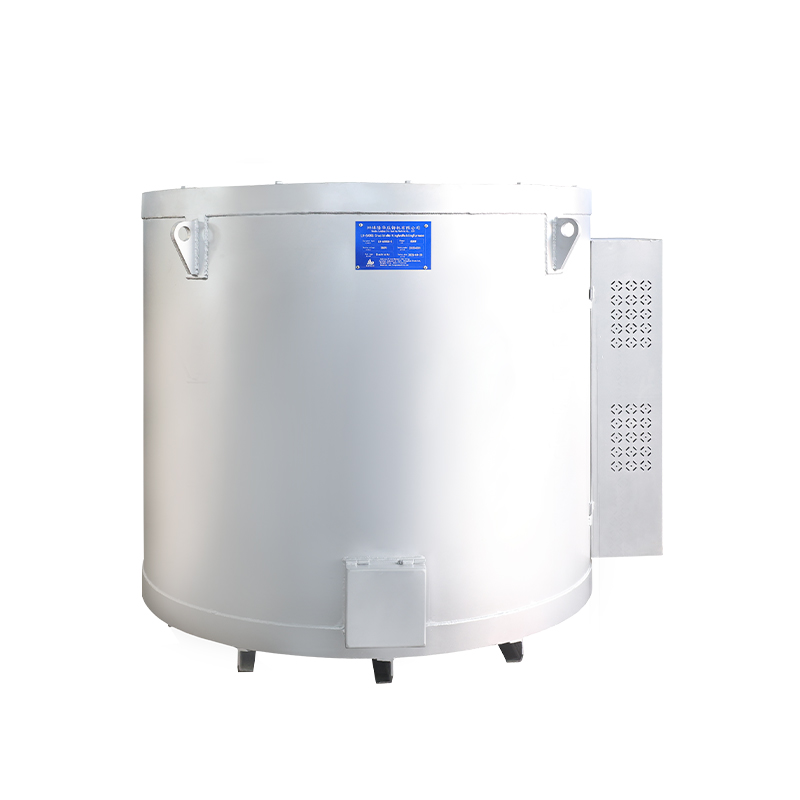
The mechanics of electric resistance heating provide excellent thermal stability. Gas burners cycle on and off in aggressive bursts, causing temperature swings. Electric furnaces utilize Proportional-Integral-Derivative (PID) controllers paired with thyristors (SCRs) to modulate power input continuously. The system dials in the exact wattage required to maintain the setpoint without overshooting.
Tight temperature tolerances dictate automated mold filling success. A 10°C drop alters the aluminum's viscosity. This changes the flow dynamics inside the die cavity, causing premature solidification or misruns. Electric heating ensures the metal enters the shot sleeve at the exact same temperature for every single shot. The PID controller reacts to minor temperature drops instantly, applying proportional power to the heating elements before the bath temperature falls out of spec.
Pairing a furnace with automated dosing systems requires specific physical and software configurations. Physically, the furnace must feature appropriately sized access ports. The dipping well must accommodate the ladle cup's geometry without restricting movement. You must factor in clearance for multi-axis robotic arms when designing the lid and superstructure.
On the software side, the furnace relies on precise metal level sensors. Foundries typically use laser or radar-based sensors to communicate the exact bath height to the robot. As the metal level drops, the robot automatically adjusts its vertical plunge depth. This extracts the correct volume of aluminum, preventing short shots or ladle crashes against the crucible floor.
Removing humans from the immediate vicinity of molten metal drives foundry automation. Automated charging systems, such as inclined ingot loaders or vibratory conveyors, feed solid metal into the bath based on real-time level monitoring. This removes the need for manual intervention and yields major safety benefits.
Elimination of heavy lifting and repetitive manual charging tasks.
Reduction of operator exposure to radiant heat and direct contact with high-temperature components.
Removal of personnel from the direct splash zone during metal charging.
Prevention of forklift traffic near the automated cell.
Maintaining thermal stability while continuously introducing cold material is a major challenge. When cold ingots drop into the bath, the localized temperature drops. Advanced electric furnaces manage this thermal recovery through multi-zone heating and intelligent power distribution.
Furnace builders isolate the charging well from the dipping well using a silicon carbide baffle wall. This ensures the temperature drop remains confined to the melting zone. The PID controllers immediately ramp up power to the charging zone elements. The dipping well remains at the precise casting temperature for the auto-ladle. The metal flows under the baffle wall, ensuring only fully melted, temperature-stabilized aluminum reaches the dipping zone.
Evaluating energy efficiency requires analyzing the kilowatt-hours required to melt one kilogram of aluminum (kWh/kg). The thermal efficiency of an electric system typically ranges between 85% and 95%. The radiant heat absorbs directly into the crucible and the metal bath. Gas furnaces often operate at 20% to 40% efficiency, with the majority of thermal energy escaping through the exhaust flue.
The superior energy transfer of electric systems reduces overall consumption. You must calculate the exact power draw during the melting phase versus the holding phase. Holding requires significantly less power. Well-insulated electric furnaces can hold molten aluminum at temperature using only a fraction of their maximum rated kilowatt output.
The metallurgical benefits of electric heating directly impact casting yield. Gas combustion produces water vapor and carbon dioxide. When water vapor contacts molten aluminum, it dissociates. The metal absorbs hydrogen gas, which manifests as porosity in the final casting. High-velocity burners also create turbulence that accelerates oxidation.
An electric aluminum melting furnace operates in a dry, calm environment. This lack of combustion byproducts prevents hydrogen absorption. It minimizes oxide skin disruption, significantly reducing dross formation. Foundries see a decrease in the reliance on automated rotary degassing and aggressive chemical fluxing. Cleaner metal in the furnace means fewer rejected parts at the end of the line.
Industrial emissions standards force foundries to evaluate their carbon footprint. The electric furnace serves as a primary tool for meeting strict industrial emissions standards. Transitioning away from fossil fuels eliminates direct Scope 1 CO2 emissions on the factory floor.
This ensures compliance with environmental regulations and improves indoor air quality for plant personnel. You eliminate the need for complex exhaust scrubbing infrastructure. The factory roof requires fewer penetrations for ventilation stacks, simplifying plant maintenance and reducing heating and cooling losses in the building.
High-volume facilities often face localized power grid constraints. Fully electrifying the melting process may exceed available plant amperage. Hybrid melting configurations offer a practical alternative for these situations.
Foundries utilize highly efficient gas-fired shaft furnaces for bulk melting in a centralized location. They then transfer the molten metal to electric holding furnaces situated at the automated die casting cells. This approach leverages the rapid melting capacity of gas. It utilizes the precise temperature control, clean environment, and robotic compatibility of electric holding at the point of use.
Electric systems require a higher initial purchase price compared to standard gas-fired equivalents. You must build a realistic ROI calculation framework factoring in energy costs, reduced scrap, and lower dross loss. Dross loss represents a massive hidden cost in aluminum foundries.
When you reduce dross generation from 4% down to 1%, the material savings accumulate rapidly. Add the reduction in scrap rates due to stabilized metal temperatures. The savings generated by higher automated cell uptime and improved casting yield offset the initial capital premium over the equipment's lifecycle.
Electric furnaces rely on consumable heating elements. These are typically made of silicon carbide (SiC) or heavy-duty metallic alloys. These elements degrade over time due to thermal cycling, oxidation, and exposure to fluxing agents. You must schedule maintenance without disrupting automated cell uptime.
SiC elements require replacement based on operating temperatures and environment. Maintenance teams must utilize predictive diagnostics. They monitor the gradual increase in element electrical resistance. When resistance hits a specific threshold, they schedule replacements during planned machine maintenance windows. This prevents unexpected element failure during a production run.
Element Type | Average Lifespan | Primary Degradation Factors | Maintenance Action |
|---|---|---|---|
Silicon Carbide (SiC) | 12 - 18 Months | Thermal cycling, aggressive fluxing, oxidation. | Monitor resistance; replace when resistance increases by 40%. |
Metallic Alloy (Ni-Cr) | 1 - 3 Years | Overheating, physical damage from charging. | Visual inspection for sagging; check terminal connections. |
Molybdenum Disilicide | 2 - 4 Years | Low-temperature oxidation (pest effect). | Ensure operation above 700°C; avoid prolonged idling at low temps. |
Automated ingot charging introduces specific risks to furnace longevity. Rapidly dumping heavy, cold aluminum ingots into an electric furnace causes severe thermal shock to the crucible. Crucibles made of clay-graphite or silicon carbide are susceptible to cracking if subjected to sudden, extreme temperature differentials.
Aggressive mechanical impact from dropping ingots fractures the crucible walls. Foundries must program automated loaders to lower ingots gently. Preheat the charge material when possible. This protects the crucible and prevents splash-induced damage to the heating elements located above the bath.
Introducing high-voltage electrical elements near highly conductive molten metal presents critical safety risks. If a crucible fails or an element shorts, leakage currents travel through the molten aluminum. This creates a lethal hazard for operators and risks catastrophic damage to the robotic ladle.
Integrated ground fault detection systems are mandatory. These systems continuously monitor the electrical isolation of the bath. If the system detects a fault, it immediately severs power to the heating elements. It triggers the automated cell's emergency stop (E-stop) matrix, halting all robotic movement until maintenance secures the area.
The hidden costs of electric furnace installation lie in the facility's power infrastructure. Industrial electric melting requires significant amperage. Plant engineers must audit their plant’s electrical grid, transformer capacity, and peak load management before committing to an electric furnace.
Verify existing transformer capacity and assess busbar routing. If the facility lacks sufficient capacity, upgrading transformers and pulling new heavy-gauge copper lines adds substantial time to the integration project. Proper load balancing ensures the furnace does not trip main breakers during peak thermal ramp-up phases when the elements draw maximum current.
Proper sizing dictates the success of the automated cell. Undersizing the furnace starves the die casting machine. The robot waits for metal to reach the correct temperature, destroying cycle time efficiency. Oversizing wastes energy through unnecessary heat radiation and increases the footprint.
Calculate the required melt rate (kg/hr) and holding capacity based on the die casting machine's shot weight, cycle time, and utilization rate. Maintain a holding capacity that is at least three to five times the hourly melt rate. This ensures thermal stability during continuous automated dosing. If you melt 200 kg/hr, specify a furnace with at least an 800 kg holding capacity.
An electric furnace in an automated cell acts as a data node. It must communicate seamlessly with the central die casting cell controller. Specify the necessary communication protocols required for the furnace to share real-time data.
The furnace PLC must support industrial networks such as Profinet, Ethernet/IP, or OPC UA. This connectivity allows the furnace to share bath temperature, metal level, power draw, and heating element diagnostics directly with the SCADA system and the robotic ladle controller. The robot knows exactly when the furnace is charging and when the metal is at the correct temperature for extraction.
Conduct a plant power audit to determine available transformer capacity and peak load thresholds for your specific casting cells.
Calculate your current dross losses and scrap rates tied to temperature variance to establish a baseline for improvement.
Evaluate your crucible protection protocols and program automated charging systems to prevent mechanical and thermal shock.
Consult with furnace OEMs to map out exact PLC integration requirements for your existing robotic ladles and cell controllers.
A: Metallic heating elements typically last 1 to 3 years, while silicon carbide (SiC) elements average 12 to 18 months based on operational temperatures. Aggressive fluxing, volatile material contamination from dirty scrap, or poor maintenance accelerates degradation.
A: Electric heating eliminates combustion water vapor and gas turbulence. This drastically reduces hydrogen porosity and oxide inclusions in the final aluminum cast, providing a calm, clean melting environment.
A: Yes, provided the furnace well is dimensionally compatible with the ladle cup. The furnace PLC must communicate metal level and temperature data to the robot controller via protocols like Profinet or Ethernet/IP.
A: The primary challenges include higher initial capital cost, reliance on robust facility electrical infrastructure, slower initial thermal ramp-up times compared to gas burners, and the risk of crucible thermal shock if cold ingots are loaded too rapidly.
A: It eliminates manual heavy lifting of ingots through automated charging compatibility. It minimizes human contact with high-temperature components and removes operators from the immediate splash zone of molten metal.
A: Power requirements scale directly with the required melt rate, typically measured in kW per kg/hr of aluminum. A standard cell-side furnace may draw anywhere from 50 kW to over 200 kW, requiring a dedicated power audit.
A: For automation, electric is generally superior due to precise temperature control, lack of exhaust heat disrupting sensors, and easier integration into clean, automated cells, despite higher electricity costs in some regions.
