
EMAIL:
lh@longhuamachine.com
TELL/whatsapp:
+8619305527239  English English
Views: 0 Author: Site Editor Publish Time: 2026-08-25 Origin: Site


Miscalculating furnace capacity creates immediate problems on the foundry floor. Buy a unit that is too large, and you waste massive amounts of energy heating empty space. Buy one that is too small, and your molding lines sit idle waiting for metal. The real problem is matching your daily, fluctuating production demands with a static piece of equipment. The theoretical maximums printed on a manufacturer's spec sheet almost never match what happens during a real shift. Charging, skimming, and alloy changes eat up time.
First-time buyers setting up a new casting line face different challenges than veteran operators upgrading old equipment. A mistake early on locks your facility into years of poor performance. You need a reliable framework to evaluate melting rates, holding volumes, and material-specific behaviors. By looking at these variables systematically, you can specify the exact metal melting unit size required to keep your operation running without interruption.
Throughput vs. Volume: Melting capacity (lbs/hr or kg/hr) dictates production speed, while holding capacity dictates the total volume available for batch processing or continuous casting.
Manufacturer Baselines vs. Reality: Manufacturers often rate unit capacity based on a dense baseline metal (like lead); sizing must account for your specific alloy's density to determine true usable volume.
Utilization Buffers: Optimal sizing requires calculating a theoretical "no-downtime" peak demand and adding a strategic buffer (typically 15-20%) to account for charging, skimming, and maintenance.
Infrastructure Limits: Desired capacity must be cross-referenced against facility constraints, including available electrical power (kW/kVA), gas supply, and structural floor limits.
Melting rate defines the continuous output capability of a furnace. We measure this in pounds per hour (lbs/hr) or kilograms per hour (kg/hr). This metric tells you how fast solid charge material transforms into a pourable liquid state. Theoretical maximums fail in practice because they assume perfect, uninterrupted thermal transfer. Real foundry operations require opening furnace doors. Every time that door opens, ambient air rushes in, and internal temperatures drop. Charging cold ingots or bridging scrap metal takes time. Skimming dross or slag halts the melting process entirely. Pouring cycles interrupt continuous operation.
Physical limits dictate melting rates independently of the equipment's physical size. Massive holding furnaces have strict melting rate ceilings based on their burner configurations or induction coil power ratings. A heavy industrial unit might have a 300,000 lb holding capacity but only melt 11,000 lbs/hr. If you rely solely on total volume to gauge production speed, you will starve your casting lines. The burners or coils can only push so much heat into the metal per hour before you risk damaging the refractory lining.
Holding capacity is the total static volume required to maintain molten metal at its designated pouring temperature. This volumetric measurement dictates how much liquid metal sits ready for use. The relationship between holding volume and thermal stability dictates your process control. Larger holding capacities resist temperature fluctuations. When you drop cold alloy additions or gating returns into a large molten bath, the sheer mass of the existing liquid absorbs the thermal shock. The entire bath stays above critical pouring temperatures.
Smaller holding volumes react aggressively to new charges. Operators have to wait for the furnace to recover its temperature before pouring can resume. Specifying a holding capacity means balancing the need for thermal stability against the energy required to keep that volume molten during non-peak hours. You also have to consider the "heel"—the molten metal left in the furnace to help start the next melt cycle efficiently.
Original Equipment Manufacturers standardize capacity ratings to provide a baseline for comparison across different models. A manufacturer will often list a furnace as having a "2,700 lbs capacity" based specifically on the density of lead or the volume of water. Lead is exceptionally dense. If you buy a 2,700 lb lead-rated furnace intending to melt aluminum, the physical crucible will overflow long before you reach 2,700 lbs of the lighter metal.
You must convert these baseline ratings into accurate volumetric capacities for your specific production metals. Divide the manufacturer's rated weight by the density of the baseline metal to find the true cubic volume of the crucible. Once you know the cubic volume, multiply that figure by the density of your specific alloy. This gives you the actual working capacity of the furnace on your floor.
Metal Density Comparison for Furnace Sizing
Metal Type | Approximate Density (lbs/in³) | Volume Required for 1,000 lbs (in³) |
|---|---|---|
Lead (Common OEM Baseline) | 0.410 | 2,439 |
Copper | 0.323 | 3,095 |
Iron / Steel | 0.284 | 3,521 |
Aluminum | 0.098 | 10,204 |
Magnesium | 0.063 | 15,873 |
Density dictates the sizing process for an aluminum alloy melting furnace. Aluminum has a remarkably low density compared to ferrous metals. Achieving a specific weight capacity requires a massive physical crucible volume. A crucible designed to hold 1,000 lbs of brass will not hold anywhere near 1,000 lbs of aluminum.
Dross formation complicates aluminum capacity planning. Aluminum oxidizes rapidly when exposed to atmosphere at melting temperatures. This oxidation creates a layer of dross on the surface of the melt, requiring additional headspace. As dross and corundum accumulate along the refractory walls at the melt line throughout a shift, they physically reduce the usable internal capacity of the crucible. Sizing must account for this gradual loss of volume between thorough cleaning cycles. If you size the furnace exactly to your volume needs, corundum buildup will leave you short on metal by the end of the week.
Operating a magnesium alloy melting furnace requires strict atmospheric controls. Magnesium is highly reactive and ignites if exposed to oxygen at melting temperatures. You have to use protective cover gases, traditionally sulfur hexafluoride (SF6) or modern SO2 alternatives. The gas delivery systems, distribution rings, and specialized tight-sealing lids take up physical space within the furnace architecture. This directly impacts the usable volume.
The thermal dynamics of magnesium dictate capacity requirements. Magnesium needs precise, uniform temperature control. If you charge cold material too rapidly into a tightly sized bath, the localized temperature drop can freeze the bath or disrupt the protective gas layer. This leads to severe oxidation or combustion risks. A larger holding volume relative to the charge rate provides the thermal mass necessary to safely absorb cold ingots without destabilizing the melt.
High-density metals present the opposite challenge of lightweight alloys. The extreme weight-to-volume ratios place immense structural load limits on the furnace infrastructure. When melting copper, brass, or iron, the physical weight stresses tilting mechanisms, hydraulic cylinders, trunnion bearings, and the structural steel frame. A crucible might have the physical volume to hold more material, but the mechanical components are rated for a much lower maximum weight.
Extreme temperature requirements shrink internal capacity. Industrial mining applications and raw gold processing push temperatures up to 1650°C. Containing this intense heat requires exceptionally thick refractory linings. As the refractory wall thickness increases to protect the outer steel shell and retain heat, the internal holding capacity of the crucible decreases proportionally. Calculate capacity based on the internal dimensions after the specific high-temperature refractory has been installed, not the bare steel shell dimensions.
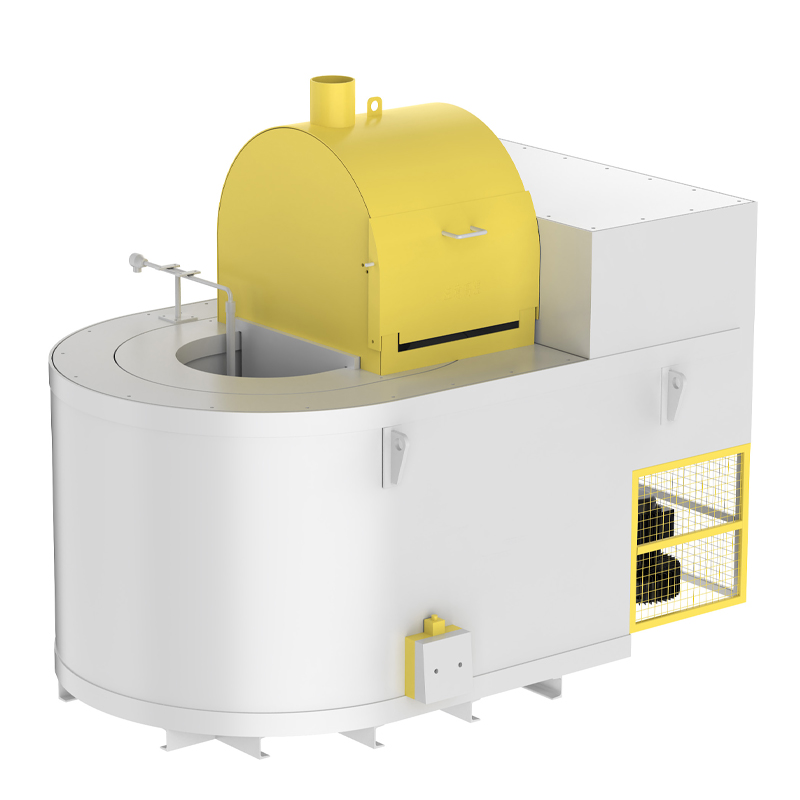
Small-batch units serve highly specialized applications. You see these in jewelry manufacturing, rapid prototyping, specialty alloy development, low-volume custom foundries, and first-time industrial setups. At this scale, absolute throughput matters less than precision and flexibility. Operators frequently switch between different alloys.
Coreless induction setups or removable small crucible configurations work best here. These units require a minimal footprint and operate on standard industrial electrical drops without requiring dedicated substations. The primary capacity concern is ensuring the crucible is large enough to pour the single largest mold in the shop without running dry mid-pour. You do not want to stop a pour halfway through because the crucible is empty.
Mid-range operations form the backbone of standard die casting, automotive component manufacturing, and mid-sized commercial foundries. These facilities require a steady, reliable supply of metal to keep automated or semi-automated lines running across multiple shifts. You have to analyze the trade-offs between continuous melting systems and batch holding furnaces.
Continuous systems melt metal as it is consumed, requiring precise synchronization with the casting line. Batch systems melt a large volume upfront and hold it. Motor-tilting mechanisms become critical safety and operational features in the 50kg to 300kg range, allowing operators to safely transfer molten metal to transport ladles. Integration with automated pouring systems dictates capacity. The furnace must hold enough metal to supply the auto-pour without causing interruptions.
Bulk melting units support primary metal production, large-scale recycling operations, and continuous extrusion plants. These are massive infrastructure investments that dictate the layout of the entire facility. Evaluation at this scale shifts toward reverberatory furnaces and large-scale coreless induction units.
Energy recovery systems capture waste heat from the flue gases and preheat incoming charge material. Bulk charging logistics, such as vibratory conveyors or specialized charging vehicles, must match the furnace door dimensions and melting rate. The disparity between massive holding volume and hourly melting limits is most pronounced here. A furnace holding 100,000 lbs may only melt 5,000 lbs per hour. Operators must carefully manage the bath level to ensure the melt rate keeps pace with the continuous casting draw.
Production Scale and Infrastructure Requirements
Operation Scale | Typical Weight Range | Primary Equipment Type | Facility Demands |
|---|---|---|---|
Small-Batch / Precision | 1kg to 250kg | Removable Crucible, Small Induction | Standard electrical drops, localized exhaust hoods. |
Mid-Range Industrial | 250kg to 5,000kg | Motor-Tilt Batch, Continuous Melters | Dedicated power substations, auto-pour integration, reinforced flooring. |
Bulk Melting | 5,000kg to 300,000+ lbs | Reverberatory, Large Coreless Induction | Heavy structural floor reinforcement, energy recovery systems, bulk exhaust handling. |
Procuring a furnace larger than necessary seems like a safe strategy to accommodate future growth. It actually introduces immediate, severe operational penalties. The primary issue is energy inefficiency. Maintaining a large bath of molten metal requires constant energy input, known as the parasitic load. When production demand is low, the furnace still consumes massive amounts of electricity or gas simply to hold the metal at temperature. This drastically increases the cost per pound of cast metal.
Metallurgical degradation presents an equally severe risk. Prolonged holding times in an oversized unit expose the molten metal to the atmosphere and refractory linings for extended periods. In aluminum, this leads to increased hydrogen gas pick-up, resulting in porosity in the final castings. It accelerates oxidation, creating excessive dross and increasing overall melt loss. The longer metal sits, the more its chemical composition drifts. You end up spending time and money on costly fluxing and rotary degassing corrections.
Undersizing a furnace chokes the entire foundry operation. The most immediate impact is the creation of production bottlenecks. Molding lines, die casting machines, and automated pouring systems sit idle waiting for the furnace to melt the next batch. The financial impact of idle capital equipment and labor waiting on molten metal quickly eclipses any initial savings gained by purchasing a smaller furnace.
Equipment fatigue accelerates rapidly in undersized units. To keep up with demand, operators push the furnace beyond its optimal thermal cycles. Constantly draining the crucible and hitting it with maximum burner output to melt the next charge subjects the refractory lining to brutal thermal shock. Aggressive cycling accelerates refractory wear, causes cracking, and significantly increases the risk of premature component failure. You will face unplanned downtime and expensive relining procedures much sooner than expected.
Accurate sizing begins with a strict formulaic approach to map the absolute pounds per hour required during maximum production shifts. Assume zero interruptions for this initial math. This establishes your baseline throughput.
Determine the finished weight of the casting.
Weigh the runners, risers, and gating systems associated with that casting.
Add the finished weight and the gating weight together to find the total poured weight per mold.
Multiply this total poured weight by the maximum number of molds your line produces per hour.
If a finished casting weighs 10 lbs, but the gating weighs 8 lbs, your total poured metal required is 18 lbs. If your line produces 50 molds per hour at 18 lbs per mold, your theoretical baseline requirement is 900 lbs/hr.
Theoretical math never survives the shop floor. You must adjust the baseline capacity to account for routine operational interruptions. Melting stops during shift changes, daily crucible cleaning, dross skimming, and alloy switchovers. If a furnace is rated to melt 900 lbs/hr, but operators spend 15 minutes of every hour skimming and charging, the actual output drops to 675 lbs.
Apply a standard 15-20% capacity buffer to bridge the gap between theoretical math and shop floor reality. Taking the 900 lbs/hr baseline and adding a 20% buffer yields a target melting rate of 1,080 lbs/hr. This ensures the furnace recovers temperature quickly after charging and maintains the molding line's pace even with routine interruptions.
A properly calculated capacity requirement means nothing if your facility cannot support the equipment. Match your desired capacity with available utilities. Calculate the required kilowatts (kW) per pound of metal to ensure the facility's electrical grid can handle the draw. This is critical during peak demand periods when induction coils pull maximum power.
Physical footprint and spatial logistics dictate the final decision. A larger furnace requires more floor space and demands adequate ceiling clearance for overhead hoists used during charging and maintenance. Ventilation requirements scale with furnace size. Massive units require heavy-duty exhaust hoods and makeup air systems to ensure safe charging and pouring at scale. If the infrastructure cannot support a single large unit, split the capacity across two smaller furnaces.
Specifying the correct capacity for a metal melting unit requires balancing throughput requirements, material density realities, and operational efficiency. Relying on manufacturer baseline ratings without converting them to your specific alloy results in severe miscalculations. Look beyond the physical size of the crucible and focus heavily on the actual hourly melting rate to keep casting lines operational. Prioritize units that meet your peak demand at 80-85% utilization to leave room for operational realities.
Before initiating technical consultations with furnace manufacturers, execute the following steps:
Compile a documented audit of your exact lbs/hr requirements, strictly including all runner, riser, and gating weights.
Determine the precise density and thermal characteristics of your specific alloy to convert baseline OEM ratings into true volumetric capacity.
Map your facility's utility limits, specifically available kW/kVA, gas pressure, and structural floor load maximums.
Measure your ceiling clearances and hoist capacities to ensure the chosen unit can be safely installed, charged, and maintained.
A: Calculate the total poured weight per mold. This includes the finished part, runners, risers, and gating. Multiply this total weight by the maximum number of molds produced per hour. Finally, add a 20% operational buffer to account for charging, skimming, and temperature recovery.
A: Melting capacity is the throughput rate, measured in lbs/hr or kg/hr, indicating how fast solid metal turns liquid. Holding capacity is the total static volume of the crucible. High holding capacity provides thermal stability but does not guarantee a fast melting rate.
A: Yes. Aluminum has a much lower density than steel. To hold the same physical weight of aluminum as steel, the furnace requires a significantly larger internal crucible volume. Manufacturer baseline ratings based on dense metals must be converted for aluminum.
A: Add a 15-20% buffer to your theoretical maximum hourly requirement. This buffer bridges the gap between theoretical continuous melting and real-world interruptions like door openings, dross skimming, alloy additions, and routine shift maintenance.
A: Generally, no. Magnesium requires specialized protective cover gas systems like SF6 or SO2 to prevent combustion. The refractory linings and tight-sealing lids designed for magnesium are highly specific. Cross-contamination with other metals poses severe safety and metallurgical risks.
A: Running a furnace below capacity creates massive energy waste due to parasitic loads, increasing the cost per pound melted. Extended holding times cause metallurgical degradation, leading to gas pick-up, excessive dross formation, and shifts in the alloy's chemical composition.
