
EMAIL:
lh@longhuamachine.com
TELL/whatsapp:
+8619305527239  English English
Views: 0 Author: Site Editor Publish Time: 2026-07-17 Origin: Site


Precision in thermal management dictates the difference between high-integrity castings and unacceptable scrap rates on the foundry floor. When operators miscalculate the Al Alloy Melting process, the physical consequences hit production immediately. Undershooting the required temperature causes premature solidification, leading directly to flow defects, cold shuts, and incomplete mold filling. Conversely, overshooting the thermal target triggers exponential hydrogen absorption, excessive dross formation, and accelerated refractory wear that degrades equipment.
This technical guide evaluates the precise thermal requirements based on specific alloy compositions. We examine how these metallurgical parameters dictate the selection of an aluminum alloy furnace and the integration of advanced control systems. By establishing strict temperature protocols, foundries can stabilize their casting operations, reduce metal loss, and maintain consistent mechanical properties across production runs.
Composition Dictates Range: Pure aluminum melts at 660.3°C (1220.5°F / 933.47 K), but industrial alloys operate within a solidus-liquidus range (e.g., Al-Si alloys starting as low as 577°C/1070°F).
Melting vs. Pouring: Operational targets must account for superheating; pouring temperatures typically require an additional 50°C to 100°C above the liquidus point to ensure proper mold filling.
Equipment Specialization: High-volume molten metal processing requires bifurcating the thermal load between high-power melting furnaces and precision-regulated holding furnaces.
Control is Critical: Investing in automated furnace temperature control mitigates the primary drivers of porosity and metallurgical degradation.
Understanding the phase transition of aluminum alloys requires moving past the idea of a single melting point. Industrial alloys transition through a semi-solid state defined by a specific melting range. The solidus temperature marks the exact point where melting begins. The liquidus temperature indicates complete liquefaction. Operators must target the liquidus temperature to achieve the complete phase transformation necessary for casting. If you pour metal that remains partially in the solidus phase, the resulting sludge will clog gating systems and ruin the casting structure.
Foundry personnel must map these states for every alloy they pour. The gap between solidus and liquidus dictates how the metal behaves in the mold. A narrow range means the metal freezes quickly, requiring faster fill times. A wide range creates a mushy zone that feeds shrinkage porosity if not managed with proper risering and thermal gradients.
The fundamental aluminum melting temperature for pure elemental aluminum sits at 660.3°C (1220.5°F / 933.47 K). This specific point serves as the thermodynamic baseline for all subsequent alloy calculations. Pure aluminum rarely sees the inside of a casting mold for structural applications due to its low mechanical strength. However, knowing this baseline helps metallurgists understand how specific alloying elements shift the thermal behavior up or down the scale.
When you contrast the melting characteristics of aluminum with other metals like steel or copper, a distinct thermal profile emerges. Aluminum melts at a relatively low temperature, but it possesses a massive latent heat of fusion. This means the metal requires a significant, sustained energy input during the actual phase change from solid to liquid. You can bring aluminum up to 660°C quickly, but pushing it through the phase change demands heavy kilowatt-hours or high BTU input. This physical reality heavily influences furnace burner design, electrical element sizing, and overall energy consumption metrics on the shop floor.
Alloying elements fundamentally alter the thermal requirements of the base metal. Silicon (Al-Si) sees heavy use in foundries to improve fluidity and reduce shrinkage. Eutectic and hypoeutectic compositions lower the melting threshold significantly. For instance, 300-series alloys can begin melting as low as 577°C (1070°F). Copper and magnesium additions (Al-Cu / Al-Mg), common in high-strength aerospace and automotive applications, demand higher thermal inputs and present much narrower processing windows.
Consider the 2024 aluminum alloy as a practical case study. It exhibits a precise melting range with a solidus of 502°C (935°F) and a liquidus of 638°C (1180°F). Managing this wide solidification range presents specific technical challenges during casting. Operators must maintain precise thermal control to prevent hot tearing and micro-porosity as the metal cools through that extended mushy zone.
Common Aluminum Alloys and Their Melting Ranges | ||||
Alloy Designation | Primary Alloying Element | Solidus Temperature (°C) | Liquidus Temperature (°C) | Typical Application |
|---|---|---|---|---|
A356 | Silicon / Magnesium | 555 | 615 | Automotive wheels, structural parts |
380 | Silicon / Copper | 540 | 595 | General die casting |
2024 | Copper | 502 | 638 | Aerospace components |
7075 | Zinc / Magnesium | 477 | 635 | High-stress structural parts |
Molten metal processing requires temperatures exceeding the liquidus point. This additional thermal energy, known as superheat, compensates for inevitable heat loss during transfer operations, ladle transport, and mold filling. Without adequate superheat, the metal loses fluidity prematurely, resulting in misruns, cold shuts, and scrapped parts.
To calculate the correct superheat, operators must follow a strict sequence of evaluations:
Identify the exact liquidus temperature of the specific alloy batch based on the spectrometer reading.
Measure the temperature drop during the transfer from the melting furnace to the ladle.
Calculate the thermal loss during the transit time from the ladle to the pouring station.
Factor in the chilling effect of the gating system and the mold material itself.
Add these thermal loss values to the liquidus temperature to establish the baseline pouring temperature.
Different casting methodologies demand specific temperature profiles. Sand casting generally requires higher pouring temperatures, typically ranging from 700°C to 750°C (1292°F to 1382°F). The metal needs this extra heat to overcome slower cooling rates and the physical friction of flowing through sand gating systems. Die casting operations demand tighter temperature tolerances. Operators must keep the metal just hot enough to fill the cavity under high pressure, protecting expensive tooling life and managing rapid solidification cycles. Investment casting requires precise calculations regarding mold pre-heating and pouring temperatures to ensure complex, thin-wall sections fill completely without premature freezing.
Pushing temperatures higher than necessary incurs severe metallurgical and financial penalties. Excessive heat causes an exponential increase in hydrogen solubility. When the metal cools, this dissolved hydrogen precipitates out, leading directly to gas porosity in the final casting. Furthermore, high temperatures accelerate oxidation rates at the melt surface. This increases melt loss through heavy dross formation, literally burning up good aluminum. Finally, running furnaces hotter than required drives up unnecessary energy consumption and destroys refractory linings prematurely.
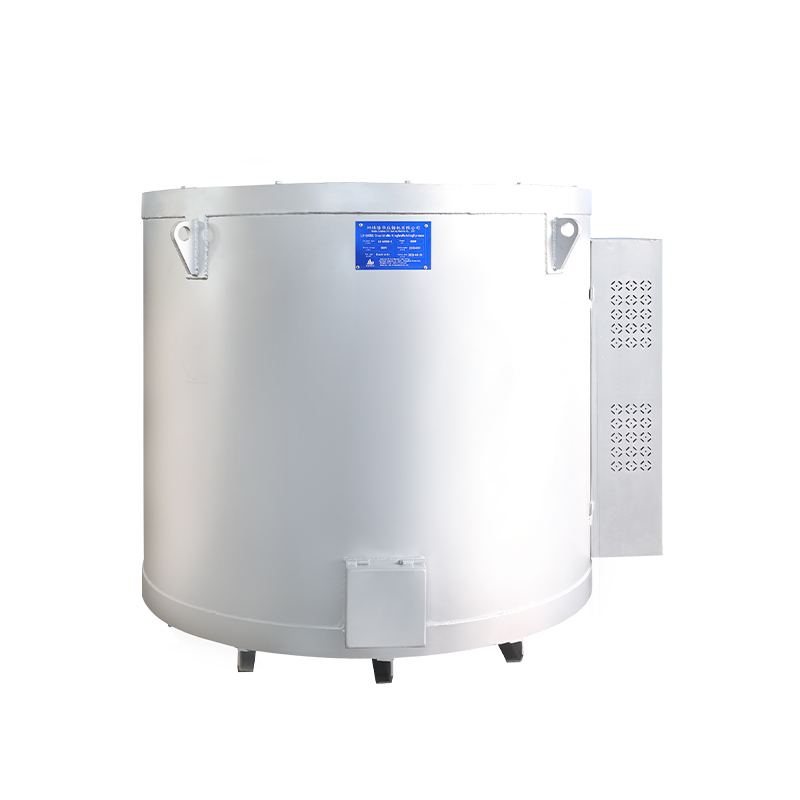
Selecting the appropriate melting equipment requires evaluating several hard metrics. Foundries must balance melt rate, energy efficiency, metal loss percentages, and temperature uniformity to determine the optimal solution for their specific production volume and alloy mix. A furnace that melts quickly but burns up 5% of the charge in dross will destroy profit margins over a year of operation.
Different furnace architectures serve distinct operational needs on the foundry floor. Reverberatory furnaces handle high-volume, continuous melting operations. They use radiant heat from roof-mounted burners or elements. The choice between gas-fired and electric heating depends entirely on local utility costs and emission compliance requirements. Induction furnaces provide rapid melting capabilities and inherent magnetic stirring, which homogenizes the melt perfectly. The higher initial capital expenditure for induction equipment is often offset by significantly lower melt loss percentages. Crucible furnaces provide flexibility for smaller batch operations and facilities requiring frequent alloy changeovers without cross-contamination.
Comparison of Primary Melting Furnace Types | ||||
Furnace Type | Best Application | Melt Loss Rate | Energy Efficiency | Capital Cost |
|---|---|---|---|---|
Reverberatory (Gas) | High volume, continuous | 3% - 5% | Moderate | Medium |
Induction (Coreless) | Rapid melt, clean metal | < 1% | High | High |
Crucible (Electric) | Small batch, frequent changes | 1% - 2% | High | Low |
Decoupling the melting process from the casting process is essential for high-volume production. A dedicated holding furnace stabilizes the temperature of the molten metal after it leaves the primary melter. It provides a quiet, controlled environment for degassing procedures and fluxing. More importantly, it acts as a thermal buffer to maintain consistent production pacing, ensuring the die casting machines or pouring lines never wait for hot metal.
Accurate measurement forms the foundation of thermal management. Operators must evaluate the reliability of Type K versus Type N thermocouples in aggressive molten aluminum environments. Type K thermocouples drift over time at high temperatures, while Type N offers better long-term stability. Utilizing proper protection tubes, such as those made from silicon nitride or sialon, is necessary to prevent premature sensor failure. Bare thermocouples will dissolve in molten aluminum in hours.
Basic on/off firing mechanisms fail to meet modern quality standards. They create massive temperature swings that damage refractory and degrade metal quality. Advanced PID (Proportional-Integral-Derivative) controllers provide precise regulation, anticipating the thermal curve and adjusting input before the temperature overshoots. For electric furnaces, integrating SCR (Silicon Controlled Rectifier) systems prevents severe thermal cycling. SCRs modulate the power smoothly, extending the lifespan of heating elements and maintaining the melt within a tight ±2°C window.
Maintaining these control systems requires a strict maintenance schedule:
Verify thermocouple accuracy weekly using a calibrated master probe.
Inspect protection tubes daily for cracks, metal buildup, or chemical attack.
Clean the thermocouple connections to prevent millivolt signal degradation.
Tune the PID parameters quarterly to account for refractory wear and changing thermal mass.
Temperature control directly impacts secondary metallurgical processes. The efficiency of rotary degassing units depends heavily on the metal temperature. If the metal is too cold, the argon bubbles cannot effectively capture hydrogen. If it is too hot, the metal re-absorbs hydrogen from the atmosphere as fast as the degasser removes it. Similarly, the chemical activation of fluxing agents used to remove oxide inclusions requires the metal to sit within a specific, optimized temperature window to react properly.
Aluminum alloys lose significant mechanical integrity at elevated temperatures long before reaching their melting points. This hot-shortness zone typically occurs above 200°C to 250°C. This physical reality is a critical consideration for downstream operations like extrusion, forging, and welding, where structural failure can occur under stress if the metal is worked too hot. Operators must monitor pre-heating ovens carefully to avoid pushing billets into this danger zone.
A direct trade-off exists between high-temperature melting and the accelerated wear of furnace refractory linings. Molten aluminum is highly reactive and will reduce silica in standard firebrick, leading to severe corundum growth. Foundries must implement mitigation strategies through the proper selection of refractory materials. Utilizing non-wetting high-alumina castables or silicon carbide refractories significantly reduces metal penetration, stops corundum formation, and extends lining life.
Pushing a furnace beyond its rated melt capacity to increase throughput always yields diminishing returns. Operators often crank up the burners to melt faster, but this practice leads to poor thermal efficiency. The heat goes up the stack instead of into the metal. It increases energy costs per ton melted and ultimately compromises metal quality due to inadequate temperature homogenization and localized overheating.
Safety remains the absolute priority in molten metal operations. The introduction of moisture at high temperatures poses a severe risk of catastrophic steam explosions. One drop of water expands to 1600 times its volume instantly when hitting molten aluminum. Facilities must strictly adhere to OSHA and NFPA compliance requirements regarding furnace operation. All charge material must be pre-heated and completely dry. Tools, skimmers, and ladles must be coated and heated before touching the melt.
Successful aluminum melting requires treating the operation as a dynamic process dictated by exact alloy chemistry and casting methodology, rather than a static temperature target. Precision control yields superior metallurgical results, lowers scrap rates, and drives operational efficiency on the foundry floor.
Audit your current melt loss percentages this week to identify immediate inefficiencies in your melting practices.
Consult with your metallurgical team to define the exact liquidus and pouring parameters for every specific alloy you cast.
Upgrade basic on/off burner controls to advanced PID systems to eliminate thermal overshooting.
Request detailed technical specifications from furnace OEMs to ensure any new holding equipment aligns perfectly with your thermal requirements.
A: Pure aluminum melts at exactly 660.3°C (1220.5°F / 933.47 K). However, pure aluminum is rarely cast for structural applications due to its low mechanical strength, making alloy melting ranges more relevant for industrial foundries.
A: Silicon lowers the melting threshold of aluminum. Eutectic and hypoeutectic compositions, such as those found in 300-series alloys, can reduce the starting melting point to approximately 577°C (1070°F), improving fluidity for complex castings.
A: The 2024 aluminum alloy has a solidus of 502°C (935°F) and a liquidus of 638°C (1180°F). This wide solidification range requires precise thermal management during processing to prevent defects like hot tearing.
A: A holding furnace decouples the melting and pouring stages. It stabilizes the metal temperature, provides a controlled environment for degassing and fluxing, and ensures a consistent supply of metal to the casting line.
A: Melting temperature (liquidus) is where the metal becomes fully liquid. Pouring temperature includes additional heat (superheat) to compensate for thermal loss during transfer and to ensure adequate fluidity for complete mold filling.
A: Accurate control requires advanced PID controllers, proper placement of reliable thermocouples (like Type N), and the use of non-wetting protection tubes to ensure precise, continuous temperature monitoring without sensor degradation.
A: Aluminum alloys experience significant degradation in mechanical properties at temperatures above 200°C to 250°C. This loss of strength occurs long before the actual melting point, which is critical for welding and tooling operations.
