
EMAIL:
lh@longhuamachine.com
TELL/whatsapp:
+8619305527239  English English
Views: 0 Author: Site Editor Publish Time: 2026-08-10 Origin: Site


Hydrogen absorption remains the biggest hurdle in modern aluminum casting. It leads directly to excessive porosity, weakened mechanical properties, and unacceptably high scrap rates. You cannot resolve these quality issues without deploying the right purge gas. The overall efficiency of an Aluminum Degassing Machine relies heavily on the specific type and purity of gas you choose. This gas physically separates destructive hydrogen and non-metallic inclusions from your valuable melt.
Foundry managers often struggle to balance gas costs against metal quality. Using the wrong gas can introduce moisture or create excess dross. We will explore how different purge gases operate inside the molten bath. You will learn to evaluate Nitrogen, Argon, and active gas blends based on metallurgy, operating expenses, and hardware compatibility. This objective framework helps process engineers select the perfect gas to optimize their casting requirements.
Understanding gas behavior inside liquid metal is essential. Atmospheric humidity poses a constant threat in every foundry. Water vapor easily breaks down when it contacts liquid aluminum. It splits into oxygen and hydrogen. The hydrogen then dissolves rapidly into the liquid metal. As the metal cools and solidifies, hydrogen solubility drops sharply. The trapped gas tries to escape, forming tiny pinholes known as porosity.
To remove this dissolved gas, we rely heavily on the principle of flotation. Inert gas bubbles act like tiny vacuums. They are injected deep into the melt through an aluminum degassing machine. Hydrogen diffuses naturally into these bubbles. This happens because the hydrogen partial pressure inside the fresh bubble is zero. The bubbles then rise safely to the surface, carrying the trapped hydrogen gas out of the melt.
These bubbles perform another vital job. They physically carry oxides and other non-metallic inclusions upward. The process works in a few distinct steps:
This inclusion flotation is a critical function of any reliable aluminum liquid refining equipment. Without proper bubble dispersion, the metal remains dirty and prone to mechanical failure.
Foundries generally choose between two primary inert gases. Each offers distinct advantages and specific drawbacks. Your choice dictates both your operating expenses and your final metal quality.
Nitrogen is the most common choice worldwide. It dominates the industry because it offers a low operational expenditure. Most suppliers can deliver nitrogen easily and cheaply. It is highly effective for standard commercial alloys.
However, nitrogen carries notable limitations. It can react with liquid aluminum at extremely high temperatures. If your melt exceeds 1380°F (750°C), nitrogen might form aluminum nitride (AlN). This creates a wet, heavy dross that traps good aluminum. Furthermore, you must purchase high-purity grades. The gas must possess a very low dew point. Using cheap nitrogen often introduces moisture, which completely defeats the degassing process.
Argon represents the premium tier of purge gases. It is completely inert. It will never react with molten aluminum or alloying elements like magnesium. Foundries casting high-magnesium alloys strongly prefer argon. It prevents the rapid oxidation and dross formation seen with nitrogen.
Using argon results in drier, easier-to-skim dross. It provides marginally better metal yield. You lose less usable aluminum during skimming. However, argon is significantly more expensive than nitrogen. You must calculate a break-even scenario. The higher metal yield must justify the increased gas cost. Facilities producing critical aerospace components often find this extra expense worthwhile.
| Criteria | Nitrogen (N2) | Argon (Ar) |
|---|---|---|
| Cost | Low (Highly accessible) | High (Premium pricing) |
| Chemical Reactivity | Can form AlN at high temps | Completely inert |
| Dross Characteristics | Can be wet/heavy if temp is high | Dry and easy to skim |
| Best Use Case | Standard commercial alloys | High-magnesium & aerospace alloys |
Sometimes, inert gases alone cannot clean the melt sufficiently. Heavily contaminated metal requires a chemical reaction. This is where active gases enter the equation.
Suppliers offer gas blends utilizing small percentages of chlorine. A typical blend might contain 90% nitrogen and 10% chlorine. The chlorine chemically reacts with alkali metals in the melt. It actively removes sodium, calcium, and lithium by forming chloride salts. These salts float to the surface for easy removal. This chemical action is essential for heavy industrial scrap metal recycling. Scrap metal usually contains very high impurity levels.
Despite their effectiveness, active gases present serious challenges. Chlorine is highly toxic and extremely corrosive. It degrades equipment rapidly. Facilities using chlorine face strict environmental compliance regulations. You must install expensive scrubber systems to capture toxic fumes.
Because of these hazards, the industry is shifting. Many modern foundries now prefer solid flux injections. Specialized injection machines shoot powdered flux deep into the melt using an inert carrier gas. This method mimics the chemical cleaning of chlorine blends. It provides a much safer alternative to handling hazardous active gases.
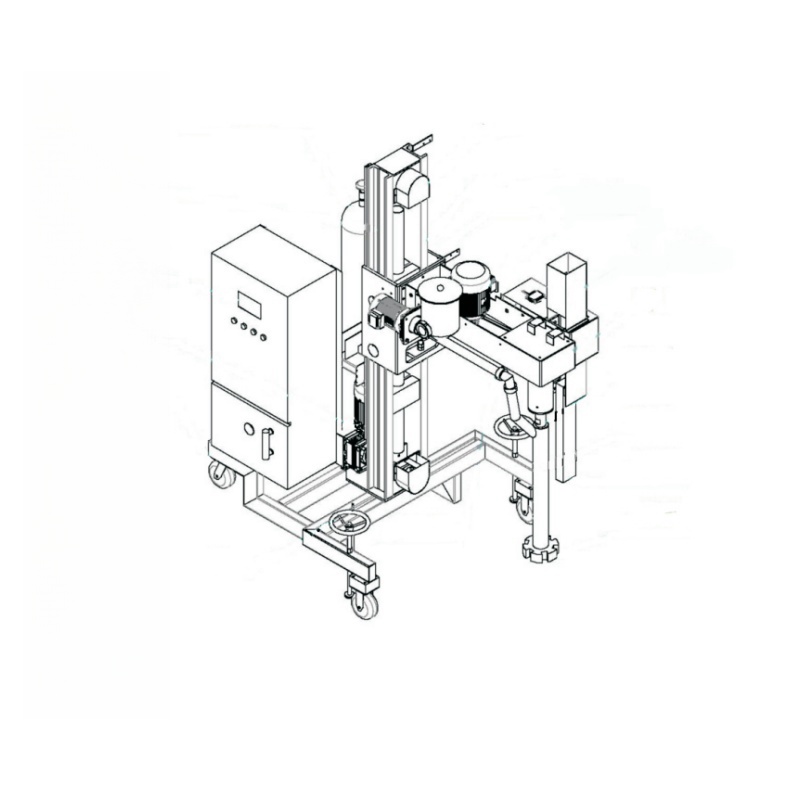
Your gas choice directly impacts your hardware. You must match your gas to your equipment carefully to maximize lifespan and efficiency.
Equipment compatibility is a major concern. Highly reactive or corrosive gases degrade graphite shafts and rotors much faster. If you run a chlorine blend, expect to replace your consumables frequently. The corrosive nature of the gas attacks the graphite structure. Even standard nitrogen requires quality graphite. Poor quality rotors will oxidize and snap during operation.
Flow rate and pressure settings also require attention. Argon and Nitrogen have different gas densities. Argon is heavier. You must calibrate your flow meters specifically for the gas you use. Proper calibration ensures optimal bubble size. You need tiny, well-dispersed bubbles. Large, disruptive bubbles cause surface turbulence. Turbulence breaks the protective oxide skin on the melt. This re-introduces atmospheric hydrogen and creates excess dross.
You must also evaluate scalability and delivery systems. Foundries can choose between cylinder supply, bulk liquid storage, or on-site nitrogen generation.
Base your delivery system choice on your foundry capacity and your daily uptime requirements.
You cannot improve what you do not measure. Validating your refining process proves your gas choice works. It also confirms your equipment operates correctly.
First, define your success criteria. A successful degassing cycle should achieve two things. It must reduce hydrogen porosity to acceptable limits. It must also clean the metal of suspended oxides. The final casting must meet specified mechanical property targets.
Foundries use specific testing methods to measure this success. Reduced Pressure Testing (RPT) is the visual and physical standard. An operator pours a small sample of liquid aluminum into a crucible. They place it in a vacuum chamber and let it solidify. The vacuum magnifies any trapped hydrogen gas. The operator then cuts the sample in half. They visually inspect the cross-section for porosity.
For more objective data, foundries use the Density Index (DI). This involves calculating the ratio between two samples. One sample cures in normal air. The second sample cures under a vacuum. Comparing their specific gravities yields a precise DI percentage. A lower percentage indicates cleaner, gas-free metal.
Continuous monitoring ensures repeatable quality. Evaluating your molten aluminum gas removal equipment requires vigilance. You must track gas flow rates and rotor speeds (RPM) continuously. Record the exact treatment time alongside your DI metrics. If your DI starts slipping, you can quickly identify the process variable at fault.
Switching gases or upgrading equipment brings implementation realities. You must watch out for hidden costs. Gas purity matters immensely. Many foundries try to save money by purchasing cheap, "welding-grade" gas. This is a common mistake. Welding-grade gas often contains high moisture content. Injecting wet gas into liquid aluminum actively adds hydrogen to the melt. You will spend money just to make your metal worse. Always specify high-purity gas with an ultra-low dew point.
Furthermore, gas type cannot compensate for poor maintenance. Process variables matter more than the gas itself. If your impellers are worn out, they will not shear the gas properly. If your dispersion nozzles are clogged, you will get large, ineffective bubbles. Regular maintenance guarantees your operating expenses translate directly into quality casting.
Take clear, next-step actions to optimize your process. First, audit your current melt quality using RPT and DI testing. Second, calculate your precise monthly gas consumption. Third, consult equipment manufacturers regarding your delivery systems. Ask them to project your ROI if you upgrade from cylinders to bulk storage or on-site generation. Proper planning keeps your operating expenses predictable and manageable.
Selecting the correct purge gas directly influences your casting success. Nitrogen remains sufficient for most standard operations due to its economy and availability. Argon provides a necessary quality edge when casting high-specification or high-magnesium alloys. Gas blends remain strictly reserved for heavily contaminated scrap applications.
Ultimately, the best gas is only as effective as the aluminum liquid refining equipment delivering it. Simply buying premium Argon will not fix a broken rotor. Optimal results require a holistic approach. You must pair high-purity gas with an efficient rotor design. Maintain strict process control over flow rates and treatment times. By mastering these elements, you will drastically reduce porosity, minimize scrap rates, and produce superior aluminum castings.
A: Absolutely not. Compressed air contains high levels of moisture and oxygen. Injecting it into liquid aluminum will severely oxidize the melt. It will also introduce massive amounts of hydrogen porosity. You must always use a high-purity inert gas.
A: The gas must have a very low dew point, typically below -60°F (-50°C). Any trace moisture in the gas lines breaks down into hydrogen upon contacting the liquid metal. This entirely defeats the purpose of the treatment and worsens metal quality.
A: Flow rates depend entirely on your crucible size and rotor design. If the flow is too low, you suffer from poor efficiency. If the flow is too high, it creates surface turbulence. This turbulence re-introduces atmospheric hydrogen and creates excess dross.
A: It is only worth it if the cost savings from reclaimed metal yield offset the higher cost of Argon gas. This is typically true for high-magnesium alloys. We recommend performing a localized cost-benefit analysis before making the switch.
