
EMAIL:
lh@longhuamachine.com
TELL/whatsapp:
+8619305527239  English English
Views: 0 Author: Site Editor Publish Time: 2025-09-18 Origin: Site


You might wonder what an aluminum die casting machine does. It shapes molten aluminum into precise parts quickly and efficiently. In 2025, you should care because aluminum die casting powers modern manufacturing and offers huge opportunities for beginners and novice makers.
The projected market size for aluminum die casting machines in 2025 is USD 49.66 billion.
Learning about aluminum and its role in manufacturing sets you up for success. As a beginner, you gain practical skills and confidence to work with aluminum and master the aluminium die casting machine.
Aluminum die casting machines shape molten aluminum into precise parts quickly, making them essential for modern manufacturing.
Understanding the advantages of aluminum die casting, such as versatility and cost-effectiveness, can help you make informed decisions in your projects.
Familiarize yourself with the die casting process, including melting, injection, and solidification, to improve your skills and avoid common mistakes.
Choose the right type of die casting machine—hot chamber for low-melting alloys and cold chamber for aluminum—to match your production needs.
Prioritize safety and maintenance to ensure smooth operation and longevity of your aluminum die casting machine.
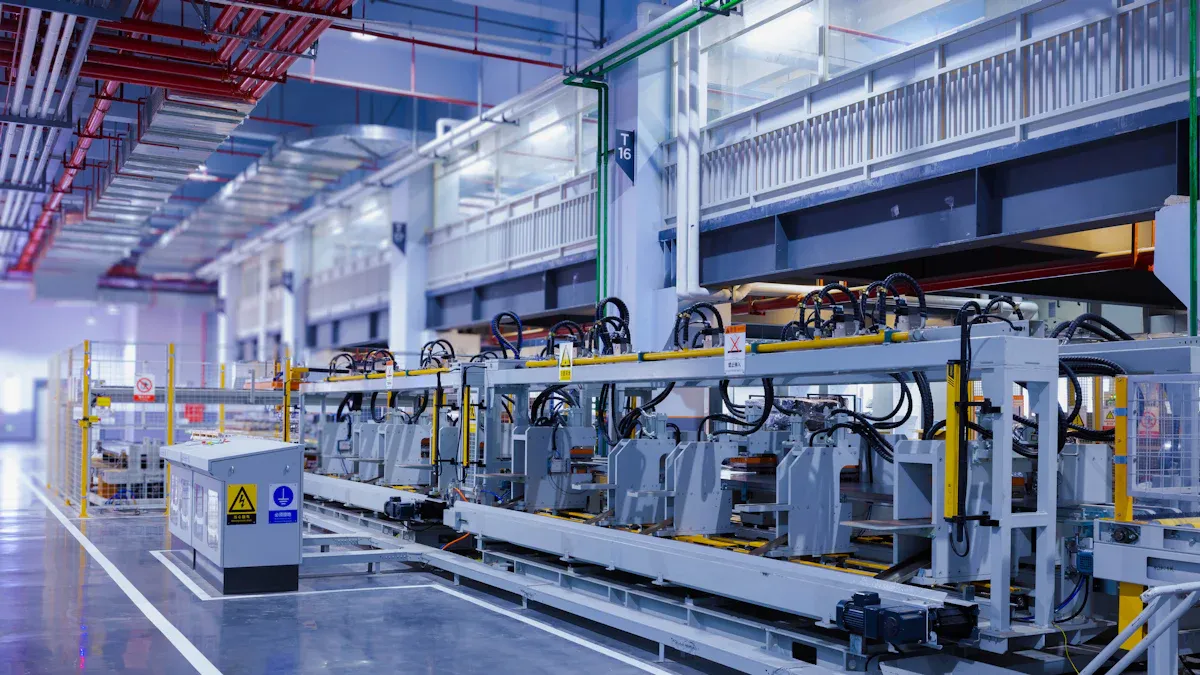
You might hear the term aluminum die casting and wonder what it really means. In simple terms, you use an aluminum die casting machine to force molten aluminum into a steel mold, called a die. The machine shapes the metal quickly, creating strong and precise parts. This casting process stands out because you can make complex shapes with smooth surfaces and tight tolerances.
Let’s look at why so many industries choose aluminum die casting over other methods:
Advantage | Description |
|---|---|
Versatility | You can use it for everything from car parts to electronics. |
Reliability | The process gives you consistent quality every time. |
Accuracy | You get parts with exact measurements and fine details. |
Repeatability | The machine produces the same part over and over, perfect for mass production. |
Cost-effectiveness | You save money when making large quantities. |
These aluminum die casting advantages make it a favorite in manufacturing. You get reliable results, and the process works well for both small and large parts.
Aluminum is the star of the show for several reasons. In 2025, you see even more benefits thanks to improved alloys and better machine technology. Here’s why aluminum stands out:
Property | Description |
|---|---|
Enhanced Material Properties | New alloys give you stronger, tougher parts. |
Corrosion Resistance | Aluminum resists rust, so your parts last longer outdoors. |
Aesthetic Quality | The casting process creates smooth, attractive finishes. |
Cost-Effectiveness | You waste less material, which saves you money. |
Sustainability | Aluminum is easy to recycle, making it a green choice. |
You also get a fine-grained structure, which boosts strength and durability. Aluminum die casting machines let you create complex shapes in one step, cutting down on assembly time. The process uses less material, so you help the environment while saving costs. If you want to get started in aluminum casting, you’ll find that aluminum die casting machines offer a smart, future-ready solution.
You might wonder how an aluminium die casting machine actually turns aluminum into finished parts. The overall process starts with heating aluminum until it melts. You then inject this molten metal into a steel mold using high pressure. The mold shapes the aluminum into the exact form you need. After the metal cools and solidifies, you open the mold and remove the finished part.
Here’s a simple breakdown of the aluminum die casting process:
Melting: You heat aluminum in a furnace until it becomes liquid.
Injection: The machine pushes molten aluminum into the die at high speed and pressure.
Solidification: The metal cools quickly inside the mold, taking on its final shape.
Ejection: You open the die and the machine ejects the solid part.
Trimming: You remove any excess material from the casting.
This process lets you create complex shapes with smooth surfaces and tight tolerances. You get consistent results, which is why aluminum die casting is so popular in manufacturing.
Tip: If you want to avoid common problems, pay close attention to temperature control and mold design. These steps help you get better results from your aluminium die casting machine.
During the die casting process, you may run into a few challenges. Here are some of the most common issues:
Porosity issues, which create small voids or cavities inside the metal.
Gas porosity from trapped gases due to moisture or poor venting.
Shrinkage porosity, which happens when the metal contracts as it cools.
Reduced strength, making parts more likely to fail.
Compromised pressure tightness, which can cause leaks in hydraulic or automotive parts.
Poor surface finish, leading to rough or unattractive surfaces.
Machining challenges, since porous areas can wear out tools and cause inaccuracies.
Understanding these challenges helps you improve your casting process and get better results from your aluminum die casting machine.
Every aluminium die casting machine has several key parts that work together to shape aluminum. You need to know what each component does to get the most out of your machine.
Die/Mold: This part shapes the aluminum. It has fixed and movable sections that create the final form.
Injection System: This system pushes molten aluminum into the die cavity.
Clamping Unit: It holds the die tightly during the casting process.
Hydraulic System: This system powers the movement of different machine parts.
Ejector System: It removes the solidified aluminum part from the die.
Control System: You use controllers and sensors to manage machine operations.
Cooling System: This system keeps the temperature under control during casting.
Lubrication System: It reduces friction in moving parts, helping the machine run smoothly.
Safety System: This protects you and the machine from accidents.
Different models of aluminum die casting machines have unique features. Here’s a quick comparison between hot chamber and cold chamber machines:
Component/Feature | Hot Chamber Die Casting Machine | Cold Chamber Die Casting Machine |
|---|---|---|
Metal Type | Zinc, tin, and other low melting point alloys | Aluminum, copper, and high melting point alloys |
Injection Mechanism | Continuous flow from a pressurized chamber | Metal ladled from a separate furnace into the chamber |
Corrosion Resistance | Higher chance of corrosion due to molten metal exposure | Reduced chance of corrosion |
Productivity | High productivity and intricate castings | Suitable for large parts |
Advantages | Improved surface finish, close dimensional tolerance | Can handle high melting-point metals |
You’ll find that cold chamber machines are best for aluminum die casting because they handle higher melting points. Hot chamber machines work better for metals like zinc and tin.
If you want to get the most out of your aluminium die casting machine, learn how each component works. You’ll make better decisions and avoid common mistakes in the casting process. This knowledge helps you create high-quality aluminum parts for any manufacturing project.
When you start learning about aluminum die casting, you’ll notice two main types of machines: hot chamber and cold chamber. Each type works best for different alloys and applications. You want to pick the right aluminium die casting machine for your project, so let’s break down the differences.
Hot chamber machines work well with metals that melt at lower temperatures, like zinc. You get faster cycles because the molten metal is always ready inside the machine. Cold chamber machines handle aluminum and other high-melting alloys. You need to ladle the molten aluminum into the machine for each cycle, which takes more time but gives you more flexibility.
Here’s a quick table to help you draft your decision:
Feature | Hot Chamber Die Casting | Cold Chamber Die Casting |
|---|---|---|
Material Compatibility | Suitable for lower melting point alloys | Handles higher melting point alloys |
Speed and Efficiency | Faster due to immediate availability of molten metal | Slower cycle time but more versatile |
Applications and Size | Preferred for smaller, high-volume components | Excels in producing larger, structurally complex parts |
You’ll find hot chamber machines are great for small, high-volume parts. Cold chamber machines are better for large, complex aluminum die casting projects. If you want to draft parts with high strength, cold chamber is the way to go.
Tip: If you plan to work with aluminum, choose a cold chamber aluminium die casting machine. You get better results for high pressure die casting and low pressure die casting processes.
Hot chamber die casting is faster and more cost-effective for low-melting alloys.
Cold chamber die casting is more versatile for high-melting alloys but has slower cycle times.
You also need to decide how much control you want over the aluminum die casting process. Machines come in three main styles: manual, semi-automatic, and automatic. Each style fits different skill levels and production needs.
Manual Machines
You control every step. You load the aluminum, operate the injection, and handle the draft and ejection. Manual machines work best for small batches or learning the basics. You get hands-on experience with the die casting process.
Semi-Automatic Machines
These machines automate some steps, like injection or ejection. You still need to monitor the process and make adjustments. Semi-automatic machines help you draft parts faster and reduce errors. You get a balance between control and efficiency.
Automatic Machines
Automatic machines handle almost everything. You set the draft, load the aluminum, and let the machine run. These machines use sensors and controllers to manage the process. You get consistent results and high output, perfect for large-scale aluminum die casting manufacturing.
If you want to scale up your aluminum casting, automatic machines save you time and effort. You can focus on design and quality while the machine handles the draft and casting process.
No matter which aluminium die casting machine you choose, you need to understand the process and draft your parts carefully. High pressure die casting and low pressure die casting machines offer different benefits, so pick the one that fits your project. You’ll find that aluminum die casting machines make it easy to create strong, precise parts for any application.
Are you ready to choose your first aluminium die casting machine? This buyer’s guide helps you make smart decisions, whether you want to start a small workshop or scale up to high volume production. You need to look at cost, size, features, safety, and maintenance before you buy or use any aluminum die casting machine. Let’s break down each factor so you can pick the best solution for your needs.
When you shop for an aluminum die casting machine, you notice the price tag varies a lot. The aluminum die casting machine price depends on several things. You want to understand these cost factors so you don’t get surprised later.
Cost Factor | Description | Impact on Investment |
|---|---|---|
Tooling Costs | Initial investment for creating molds (dies) ranges from $15,000 to $150,000. | High-quality tooling ensures consistency and reduces future costs. |
Material Selection | Different metals (aluminum, zinc, magnesium) have varying costs and properties. | Material choice affects overall cost and availability. |
Part Complexity | Intricate designs require more complex molds, increasing tooling and production costs. | Complexity raises both tooling and production expenses. |
Production Volume | Higher volumes lead to lower per-unit costs due to economies of scale. | Spreads initial costs over more units, reducing per-part cost. |
You want to balance your budget with your production goals. If you plan to make lots of aluminum casting parts, higher upfront costs can pay off with lower per-part expenses. If you only need a few prototypes, you might choose a simpler die casting process and save money. Always ask for a full breakdown of costs before you commit.
Tip: Don’t forget to factor in ongoing expenses like maintenance, energy, and labor. These add up over time and affect your total investment in aluminum die casting.
Picking the right size and capacity for your aluminum die casting machine is key. You want a machine that matches your product design and fits your workshop. Here’s what you should check:
Look at the die-locking force. Make sure it’s greater than the expansion force during the casting process.
Check the die thickness. It should fit within the machine’s adjustment range.
Confirm the opening stroke. You need enough space to remove aluminum casting parts easily.
Measure the guide post distance. Your die’s outer contour size must fit without interference.
Calculate the pressure chamber volume. The casting weight should be less than 75% of the chamber volume to prevent overflow.
If you choose a machine that’s too small, you risk damaging your dies or getting poor results. If you go too big, you waste energy and money. Always match your aluminum die casting machine to your actual production needs.
You want your aluminum die casting machine to have features that make your process smooth and efficient. Here are some must-have features for beginners:
User-friendly controls: Touchscreens and clear displays help you manage the die casting process with less training.
Automated safety systems: Sensors and alarms protect you during operation.
Flexible mold compatibility: The machine should handle different die sizes and shapes for various aluminum casting parts.
Efficient cooling systems: Good cooling keeps your process stable and improves part quality.
Quick-change tooling: Fast mold swaps save you time during high volume production.
Energy-saving modes: Lower your operating costs with smart energy management.
If you want to upgrade later, look for machines that support add-ons or software updates. This keeps your aluminum die casting solutions future-proof.
Operating an aluminum die casting machine means working with high temperatures and pressures. You need to follow strict safety precautions to protect yourself and your equipment. Here’s a checklist to keep you safe:
Make sure the safety guard door is in place before you start.
Check for people or debris in the machine’s movement range.
Inspect high-pressure nitrogen connections and discharge nitrogen before maintenance.
Set the machine to ‘manual’ when adjusting molds.
Shut down the machine immediately if you spot any emergency failures.
Release pressure in the accumulator before replacing hydraulic parts.
Clean the machine, especially the guide rails, before starting.
Check oil levels and lubricate moving parts as needed.
Open cooling water circuits if oil temperature rises.
Follow electrical safety rules and keep components dry.
Monitor the oil suction filter and replace it when necessary.
Stop the machine if oil temperature goes above 55°C.
Turn off the oil pump and power supply when you leave the machine.
Adjust mold clamping carefully to avoid exceeding nominal force.
Do regular maintenance as per the guidelines.
Clean the machine after long stoppages and protect against rust.
Maintenance keeps your aluminum die casting machine running smoothly. Here’s a table of recommended practices:
Maintenance Practice | Benefit |
|---|---|
Regular Cleaning | Prevents buildup of debris and contaminants, ensuring optimal machine performance. |
Lubrication | Reduces friction and wear on moving parts, enhancing machine efficiency and longevity. |
Routine Inspections | Identifies potential issues early, preventing unexpected breakdowns and minimizing downtime. |
Safety Checks | Ensures all safety features are functional, protecting operators and maintaining a safe work environment. |
Part Replacements | Addresses wear and tear proactively, avoiding costly repairs and maintaining production quality. |
You want to keep a maintenance log and schedule regular checks. This helps you catch problems early and avoid costly downtime in your aluminum die casting process.
Note: Skilled operation is crucial. Always get proper training before you use any aluminum die casting machine. High temperatures and pressures can cause serious injuries if you skip safety steps.
Choosing the right aluminium die casting machine takes careful planning. You need to consider cost, size, features, safety, and upkeep. If you follow this buyer’s guide, you set yourself up for success in aluminum die casting and manufacturing. You get reliable aluminum casting parts and a smooth casting process every time.
You see aluminum die casting everywhere in the automotive and aerospace industries. This process shapes parts that need to be strong, light, and reliable. When you look at a car, you might not realize that more than 70% of its castings come from the die casting process. Most of the aluminum used in automotive manufacturing goes through this method. You get engine blocks, transmission cases, and even wheels made with this process. The machine creates these parts quickly and with great accuracy.
In aerospace, you want parts that weigh less but stay strong. Aluminum die castings help you achieve that. These parts are much lighter than steel, so airplanes use less fuel. You find aluminum in turbine components, engine parts, and landing gear. The process gives you a great strength-to-weight ratio, which is crucial for flight safety and efficiency.
Most vehicle castings use aluminum die casting.
The process makes lightweight, fuel-efficient aircraft parts.
You get strong, detailed shapes for both cars and planes.
You use aluminum die casting machines to make many electronic and appliance parts. The process lets you create thin, complex shapes that fit perfectly into devices. You find aluminum in smartphone frames, laptop housings, and connectors. The casting process gives you smooth surfaces and precise details, which are important for electronics.
In appliances, you see aluminum in washing machine parts, refrigerator components, and even small kitchen gadgets. The machine helps you produce these parts in large numbers, keeping costs low and quality high. Aluminum resists corrosion, so your devices last longer.
Aluminum die casting creates durable, lightweight electronic parts.
The process allows for mass production of appliance components.
You get reliable, long-lasting products for everyday use.
You rely on aluminum die casting for many construction and industrial products. The process produces strong fittings, brackets, and machinery housings. Aluminum parts last a long time because they resist corrosion and handle high temperatures well. You see these parts in pumps, motors, and structural frames.
The machine gives you parts that keep their shape, even when thin or complex. Aluminum’s high thermal and electrical conductivity makes it a popular choice over steel or iron. You spend less on maintenance because these parts stay strong and stable.
Aluminum die casting makes robust, stable industrial components.
The process gives you lightweight, corrosion-resistant parts.
You benefit from longer equipment life and fewer repairs.
Tip: If you want parts that last and perform well, choose aluminum die casting for your next construction or industrial project.
When you start working with an aluminium die casting machine, you’ll run into lots of new words. Understanding these terms helps you talk with experts and troubleshoot your die cast machine. Here’s a handy table that breaks down the most common key terms you’ll see in the world of die casting machines:
Key Term | Description |
|---|---|
Die Casting | You inject molten metal into a die to form a precise part. |
Die Casting Die | The steel mold with two halves that shapes your aluminum or zinc part. |
Die Casting Alloy | The metal mix you use, like aluminum or zinc, each with unique properties. |
Die Casting Machine | The main equipment that closes the die, injects metal, and ejects the finished part. |
Die Cast Injection | The step where you force molten aluminum into the die using high pressure. |
Trim Die | The tool that removes extra material from your casting after it cools. |
Finishing | The process of cleaning, painting, or machining your die casting for a smooth look. |
Dimensional Tolerance | How closely your part matches the exact measurements you need. |
Defects | Common problems like warping, blisters, or porosity in your finished part. |
Draft | The angle in your part design that helps you remove it from the die easily. |
The blueprint that shows all the important features and tolerances for your die casting. |
If you want to get the best results from your aluminum die casting machine, you need to know these terms. They help you communicate with suppliers and avoid mistakes when setting up your die casting aluminum machine.
You’ll also see lots of abbreviations when you read about die casting machines. Here’s a quick list to keep you on track:
ADC: Aluminum Die Casting
DCM: Die Casting Machine
HPDC: High Pressure Die Casting
LPDC: Low Pressure Die Casting
ZnDCM: Zinc Die Casting Machine
AlDCM: Aluminum Die Casting Machine
TDC: Trim Die Casting
CAD: Computer-Aided Design (used for die and part design)
You’ll use these abbreviations every day, whether you’re searching for a new die casting aluminum machine or comparing a zinc die casting machine to an aluminum die casting machine. Knowing these shortcuts saves you time and helps you sound like a pro in the die cast machine industry.
Tip: Bookmark this glossary. You’ll find it useful whenever you work with die casting machines or talk to other manufacturers!
You want your aluminum parts to look great and perform well. Start with a clear design for manufacturability. Think about how the die casting process shapes your part. You can reduce weight and wall thickness to save material and make your part stronger. Always consider draft angle and tolerance zones. These help you remove the part from the die without damage and keep measurements accurate. If you design for manufacturing, you avoid costly changes later.
Here are some quick tips for beginners:
Keep wall thickness even. This prevents warping and cracking.
Add fillets to sharp corners. You get smoother flow and better strength.
Use ribs for support. Thin sections stay strong without extra weight.
Plan for easy ejection. Draft angles help your part release from the die.
Tip: Sketch your part and check if every feature fits the die casting process. You save time and money by catching problems early.
You might run into trouble if you skip important steps in the process. Here are three mistakes beginners often make and how you can avoid them:
Uneven wall thickness design causes shrinkage, warping, or cracks. Keep thickness consistent throughout your aluminum part.
Ignoring vent design leads to trapped air and porosity. Place air vents where needed to let gases escape.
Poor placement of injection points creates uneven flow and surface defects. Arrange gates so molten aluminum fills the die smoothly.
If you watch out for these issues, your aluminum die casting machine will produce better results. You get fewer defects and stronger parts.
You can learn more about aluminum die casting machines from many sources. Try online tutorials, manufacturer guides, and industry forums. You find videos that show the process step by step. Many suppliers offer free design checklists and troubleshooting tips. Books and e-learning courses explain how die casting machines work and how to improve your process.
Resource Type | What You Get |
|---|---|
Online Tutorials | Step-by-step videos and guides |
Manufacturer Docs | Machine specs and safety tips |
Forums | Advice from experienced users |
Books/Courses | In-depth process explanations |
Note: Join a community of die casting enthusiasts. You get answers fast and learn from real-world experience.
You learned how an aluminium die casting machine shapes parts for modern manufacturing.
Understanding the die casting process helps you make smart choices and avoid mistakes.
Keep exploring new techniques and resources to improve your skills.
The future of aluminum die casting in 2025 looks bright—your next project could be the start of something big!
You use an aluminium die casting machine for aluminum alloys. A zinc die casting machine works with zinc alloys. Aluminum needs higher temperatures and cold chamber machines. Zinc uses hot chamber machines and melts at lower temperatures.
You pick a die cast machine based on your metal, part size, and production volume. Aluminum die casting machines suit large, strong parts. Zinc die casting machines work best for small, detailed pieces. Always match your machine to your needs.
You can switch alloys, but you need to clean the die casting aluminum machine and adjust settings. Aluminum die casting machines handle aluminum and some magnesium alloys. Zinc die casting machines are not suitable for aluminum due to temperature limits.
You wear heat-resistant gloves and eye protection. Always check the aluminium die casting machine for leaks or damage. Keep the area clear. Follow the manufacturer’s safety checklist before starting any die cast machine.
You get lightweight, strong, and corrosion-resistant parts with aluminum die casting machines. The process creates complex shapes quickly. Automotive makers use die casting machines to produce engine blocks, wheels, and transmission cases with high precision.
