
EMAIL:
lh@longhuamachine.com
TELL/whatsapp:
+8619305527239  English English
Views: 0 Author: Site Editor Publish Time: 2025-10-22 Origin: Site


Selecting a die casting machine supplier impacts your production efficiency and product quality. You need to evaluate product range, machine types, and technical support. Manufacturers often face three main challenges in this process:
Adapting to new technology in the die casting process requires careful investment.
Finding suppliers with skilled workforce support is difficult.
Meeting changing customer demands, especially in automotive die casting, adds complexity.
You will find hot-chamber, cold-chamber, and high pressure die casting machines for different applications. A systematic approach helps you match your supplier with your process needs.
Evaluate the type of die casting machine needed based on the metal and application. Hot chamber machines work best for zinc and lead, while cold chamber machines suit aluminum and magnesium.
Define your production requirements clearly. Consider factors like production capacity, application, and metal type to match the right machine to your needs.
Check supplier credentials and industry reputation. Look for certifications like ISO 9001 and customer references to ensure quality and reliability.
Assess the machine features and technical support offered by suppliers. Modern machines should have automation compatibility and strong after-sales service to maintain efficiency.
Consider the total cost of ownership, including warranties and financing options. A good partnership with your supplier can lead to long-term cost savings and improved production quality.
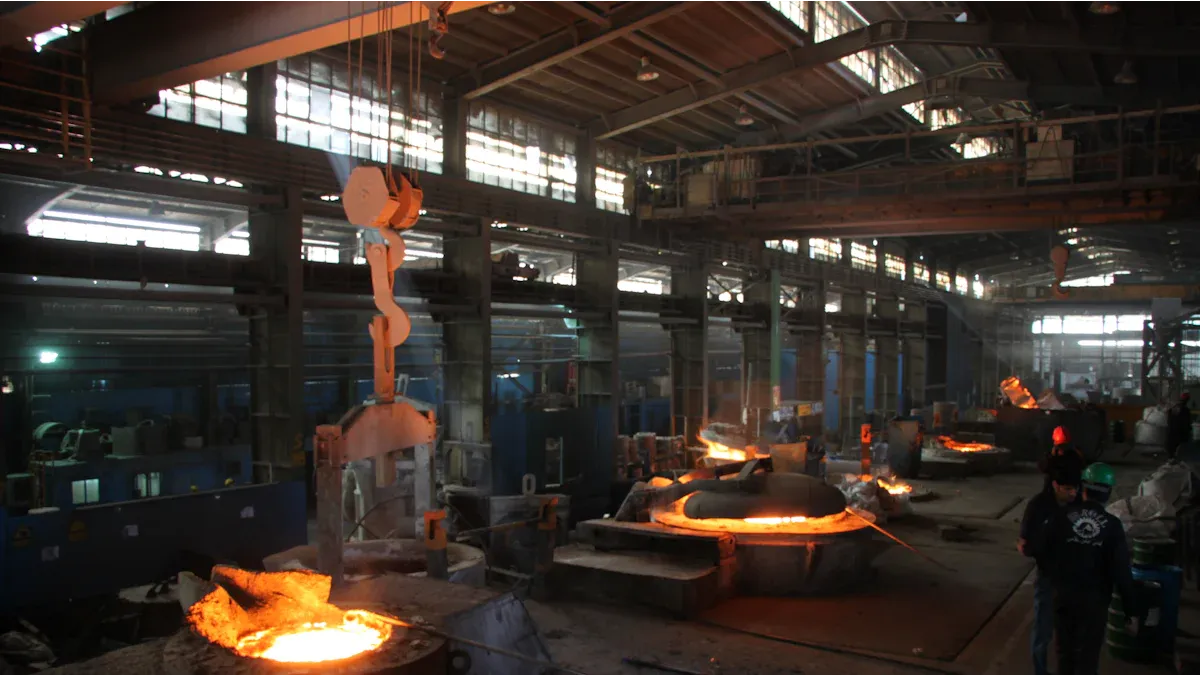
When you choose a die casting machine, you need to understand the main types of die casting machine and how each one fits your production needs. Each type works best with certain metals and applications. Here is a breakdown of the most common types of die casting machine:
A hot chamber die casting machine melts metal inside the machine itself. This process works best for metals with low melting points, such as zinc and lead. You will find that a hot chamber die casting machine offers fast cycle times, often less than 60 seconds. This makes it ideal for high-volume production of small to medium parts. The hot chamber machine provides excellent surface finish and easy automation. However, it is not suitable for metals like aluminum or magnesium.
Tip: Use a hot chamber die casting machine when you need to produce large quantities of zinc or lead parts quickly.
A cold chamber die casting machine melts metal in a separate furnace and then injects it into the die. This process is perfect for metals with higher melting points, such as aluminum and magnesium. You will notice that a cold chamber die casting machine has a slower cycle time, usually between 60 and 120 seconds. It is ideal for larger or heavier parts and offers superior mechanical properties. The cold chamber machine also provides better die life because the die is not exposed to constant heat.
Here is a table comparing hot chamber die casting machine and cold chamber die casting machine:
Feature | Hot Chamber Die Casting | Cold Chamber Die Casting |
|---|---|---|
Cycle Time | Faster, usually less than 60 seconds | Slower, around 60-120 seconds |
Production Cycles | Direct injection, faster cycles | Pre-filling, slower cycles |
Material Flexibility | Material-limited | More flexible with alloy choice |
Mechanical Properties | Good mechanical properties | Superior mechanical properties |
Suitability for Part Size | Small to medium parts | Larger and heavier parts |
Die Life | Shorter due to heat exposure | Longer due to separation from furnace |
Surface Finish | Excellent | Less porosity, better integrity |
Automation | Easily automated | Easily automated |
High pressure die casting uses a powerful plunger to inject molten metal into the die at very high speeds. This process creates parts with excellent detail and tight tolerances. You will often use high-pressure die casting for automotive, electronics, and appliance parts. Both hot chamber die casting machine and cold chamber die casting machine can use high-pressure die casting, depending on the metal. High-pressure die casting produces strong, precise parts with smooth surfaces.
Besides the main types of die casting machine, you may also encounter other methods:
Low pressure die casting: This process uses low pressure to fill the die, making it suitable for aluminum wheels and large castings. Low pressure die casting offers good mechanical properties and less porosity.
Vacuum die casting: This method removes air from the die before injecting metal, which reduces defects and improves part quality.
Gravity die casting: This process relies on gravity to fill the die, often used for simple shapes and thicker parts.
Note: The CRIMSON process uses a rapid induction furnace, which saves energy and reduces waste compared to traditional methods.
When you select a die casting machine, match the type to your metal and application. For example, use a cold chamber die casting machine for aluminum or magnesium, and a hot chamber die casting machine for zinc or lead. Understanding the types of die casting machine helps you make the right choice for your process.
Before you select a die casting machine, you need to define your production requirements. This step helps you match the right machine to your process and ensures you meet your business goals. Consider the following factors as you plan for your die casting operations.
Start by estimating your required output. Production capacity affects your choice of die casting machine and impacts your ability to meet deadlines for large volume production. You should look at several factors that influence capacity:
Factor | Description |
|---|---|
Mold Design | Good mold design ensures smooth metal flow and prevents defects in the process. |
Raw Material Quality | Stable alloy composition leads to strong, durable die castings. |
Production Environment | Consistent temperature and humidity help maintain product quality and process stability. |
Process Parameters | Control pressure, speed, and temperature for qualified results in die casting. |
If you plan to produce automotive parts or components for aerospace, you need a machine that can handle high output and strict quality standards.
Think about the final use of your products. The application determines the best metal and die casting method. For example, automotive and aerospace applications often require aluminium for its light weight and strength. The choice of metal affects the appearance, durability, and quality of your parts.
Product function guides your metal selection.
Cost can limit your options.
Metal properties, such as strength or conductivity, influence your decision.
Here is a quick reference for matching die casting methods to materials and applications:
Die Casting Method | Suitable Materials | Typical Applications |
|---|---|---|
Hot Chamber | Zinc, Magnesium | Small parts, high-volume production |
Cold Chamber | Aluminum, Copper | Larger, high-strength parts |
Vacuum | Aluminum, Zinc | High surface quality needs |
Gravity | Various metals | Simple, low-pressure applications |
Aluminum: Lightweight, corrosion-resistant, good for automotive and aerospace.
Zinc: Strong, ductile, great for complex shapes.
Magnesium: High strength-to-weight ratio, ideal for lightweight applications.
You may need custom features or integration with your existing systems. Some die casting machines offer flexible controls, automation, or special molds. Customization helps you meet unique process requirements and improve efficiency. Always discuss your needs with potential suppliers to ensure the machine fits your workflow.
Tip: Define your requirements clearly before contacting suppliers. This step saves time and helps you find the best match for your applications.
Choosing the right die casting machine supplier shapes your production quality and business success. You need to look beyond the machine itself and focus on the supplier’s credentials, reputation, and track record. This section guides you through the most important factors to consider.
Start by checking the credentials of each die casting machine supplier. Reliable suppliers follow international standards and hold certifications that prove their commitment to quality. These credentials show that the supplier uses strict quality control and advanced manufacturing methods.
Here is a table showing how leading suppliers demonstrate compliance with global standards:
Supplier Name | Compliance Measures |
|---|---|
Bengbu Longhua Die Casting Machine Co. | ISO-compliant manufacturing processes, EU CE certification, strict quality control, collaboration with research institutions, compliance with intellectual property standards. |
Apex Die Casting Company | Technologically advanced manufacturing methods, adherence to quality control systems, commitment to customer specifications. |
GC Precision Mold Co., Ltd. | ISO 9001 certification for Quality Management Systems, demonstrating systematic enhancement of quality and meeting customer requirements. |
Tip: Always ask for copies of certifications like ISO 9001 or CE. These documents confirm that the die casting machine supplier meets recognized standards.
You should also check if the supplier invests in research and development. Suppliers who work with research institutions often bring new technology and improvements to the die casting process. This can help you stay competitive, especially in industries like automotive where innovation matters.
A strong industry reputation signals that a die casting machine supplier delivers consistent quality and service. You can assess reputation by looking at several key factors:
Quality of Machines: Choose suppliers known for efficient and durable die casting equipment.
Customer Service: Select companies with responsive and helpful support teams.
Cost: Compare prices to make sure you get fair value.
Value for Money: Consider the total return on investment, including warranties and maintenance.
You can also look at how suppliers handle supply chain challenges. For example, some suppliers use dual-tooling or develop secondary sources to reduce lead times and improve reliability. This approach helps you avoid delays caused by global disruptions. Here is a table showing how supply chain strategies affect availability and lead times:
Evidence Description | Impact on Availability and Lead Times |
|---|---|
Traditional single-source casting arrangements created vulnerability to supplier disruptions | Increased costs and affected production efficiency due to limited sourcing options. |
Strategic Dual-Tooling Implementation at a secondary foundry | Reduced lead times by 6 weeks through improved supply chain resilience. |
Secondary supplier development and capacity building | Enabled a 70% reduction in expedite while improving reliability and cost predictability. |
Note: The availability of raw materials like aluminum and zinc can affect lead times. Some alloys may take longer to source due to global supply chain issues.
Client references and case studies give you a real-world view of a die casting machine supplier’s performance. You should always ask for references from customers in your industry. These references can tell you about the supplier’s reliability, consistency, and commitment to customer satisfaction.
Case studies often show how customers use the supplier’s machines to improve casting quality, save costs, and reduce development time. For example, some companies use advanced simulation tools to optimize the die casting process and achieve better results. This demonstrates the supplier’s ability to meet specific manufacturing needs.
You can also:
Read customer reviews and testimonials to learn about the supplier’s strengths and weaknesses.
Ask for examples of projects similar to yours, especially if you work in automotive or other demanding industries.
Check if the supplier has long-term relationships with well-known companies.
Tip: A trustworthy die casting machine supplier will gladly share client references and success stories. This transparency builds confidence in their ability to support your process.
By carefully evaluating credentials, reputation, and client feedback, you can choose a die casting machine supplier who will support your business for years to come.
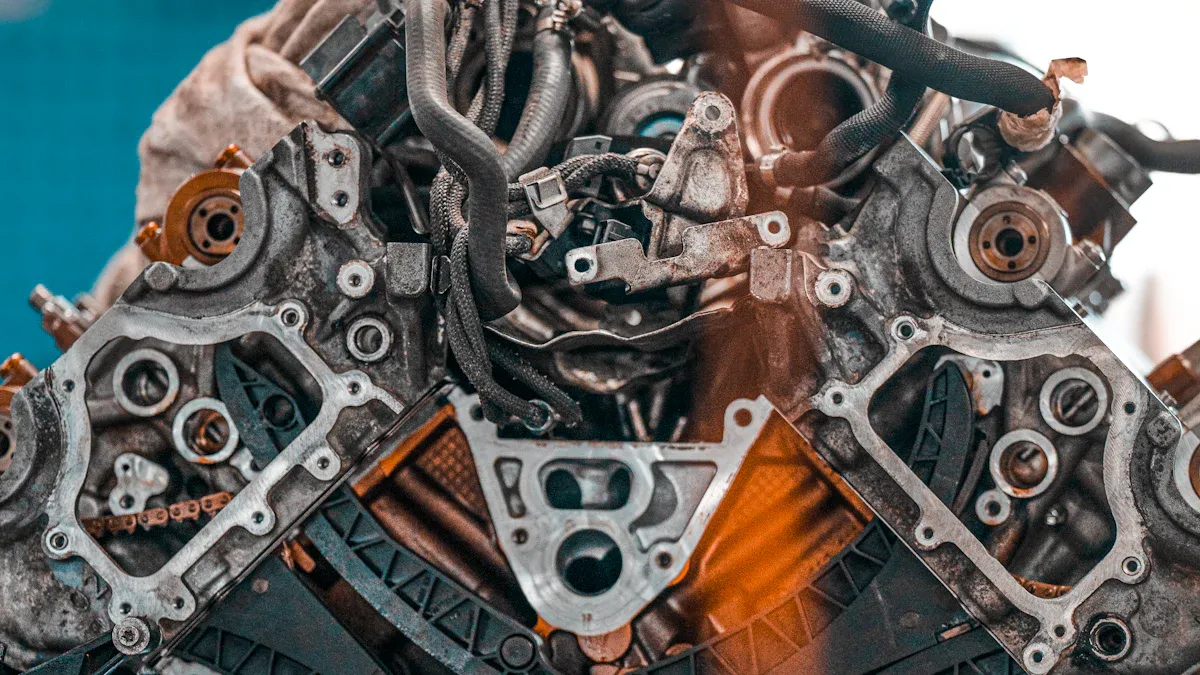
Choosing the right die casting machine means looking closely at quality, features, and the support you will receive. These factors shape your production results and long-term satisfaction.
Modern die casting machines offer advanced features that improve both efficiency and product quality. You should look for machines with strong clamping force, precise injection pressure, and fast cycle times. These features help you produce consistent parts and reduce waste. Many machines now include automation compatibility, real-time monitoring, and user-friendly touchscreens. These upgrades make it easier to control the die casting process and adjust settings quickly.
Feature | Description |
|---|---|
Clamping Force | Holds the die closed during injection. |
Injection Pressure & Speed | Controls the quality and speed of metal injection. |
Automation Compatibility | Integrates with automated systems for better efficiency. |
Cycle Time | Measures the time for one complete die casting cycle. |
Accuracy & Repeatability | Delivers consistent quality and precision. |
Safety & Control Systems | Includes advanced safety and control features. |
Energy Consumption | Reduces operational costs through efficient energy use. |
Durability & Maintenance | Ensures long machine life and easy upkeep. |
Touchscreens & Sensors | Improves user interface and real-time monitoring. |
Real-time Monitoring | Provides immediate feedback and process adjustments. |
You may also find innovations like electric servo motors, integrated vacuum assist, and closed loop control systems. These features help you achieve better results and lower maintenance needs.
Reliable technical support keeps your die casting machine running smoothly. You should expect regular training for your team, which builds confidence and problem-solving skills. Good suppliers offer predictive maintenance systems that help prevent breakdowns and increase uptime. When you have access to skilled educators and service teams, you can solve issues quickly and keep your process efficient.
Regular training and service improve uptime and throughput.
Predictive maintenance reduces costly downtime.
Quality training ensures operators handle real problems with skill.
After-sales service is a key part of your supplier relationship. Fast response times mean you get help when you need it most. Leading companies like Bengbu Longhua Die Casting respond within one hour, while others may take up to eleven hours. Quick support helps you avoid long delays and keeps your production on track.
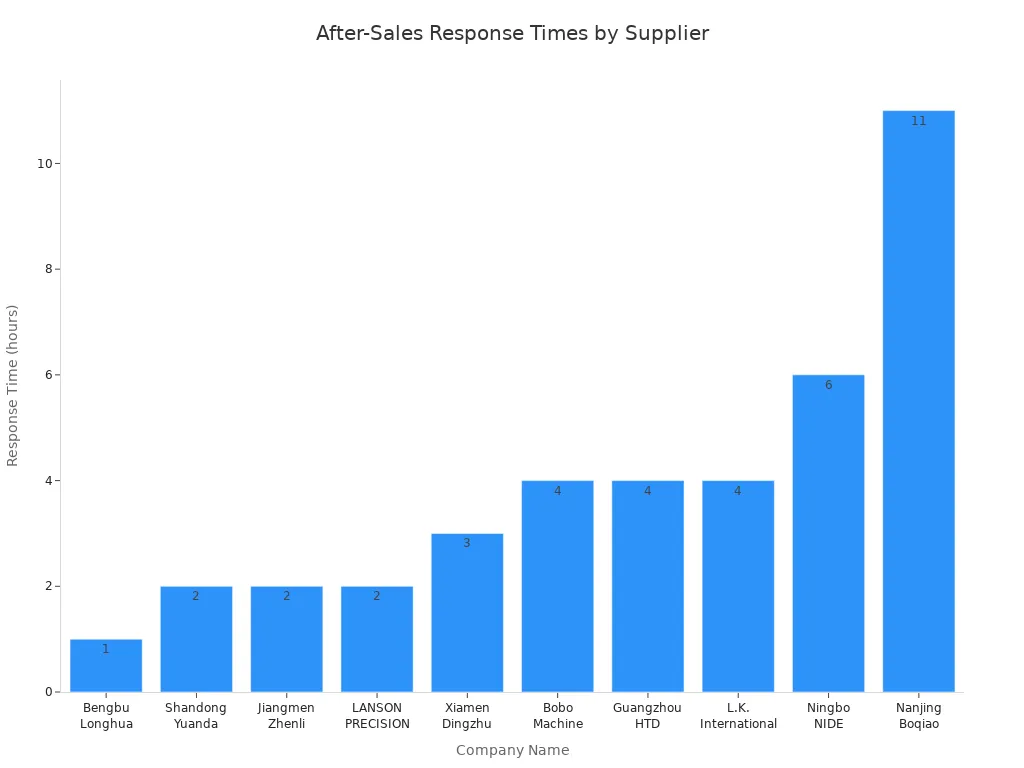
You should also check if your supplier offers installation, training, maintenance, and spare parts. These services ensure your die casting machine stays in top condition and your team stays productive.
Tip: Choose a supplier with strong after-sales support to protect your investment and keep your process running smoothly.
When you choose a die casting machine, you need to look beyond the initial price. The long-term value depends on the total cost of ownership, warranty and financing options, and the potential for a strong partnership with your supplier.
You should always calculate the total cost of ownership before making a decision. The price you pay for a die casting machine is only part of the story. Over a 5- to 10-year period, several factors can increase your costs:
The total cost of ownership for die casting machines can increase the piece price by 30%.
Tooling is a major expense. You need to review tooling policies carefully.
Capacity buffers and dual sourcing help you manage costs and avoid production delays.
Hidden costs often come from complex tooling and the need for high-quality molds. Inefficiencies in the die casting process, such as extra machine hours or more cycles, can also raise your expenses.
By understanding these factors, you can make better choices and avoid surprises later.
Warranty terms and financing options vary among die casting machine suppliers. You should compare these details to protect your investment and manage cash flow. Here is a quick comparison:
Supplier | Warranty Terms | Financing Options |
|---|---|---|
Shibaura Machine | Standard Warranty | Financing Services available |
Deco Products | N/A | Emphasizes financial stability and lack of debt |
Some companies, like Deco Products, have strong financial stability because they are debt-free. This can influence their pricing and the financing options they offer. Always ask about warranty coverage, service response times, and available payment plans.
Tip: A good warranty and flexible financing can lower your risk and help you plan for the future.
A strong partnership with your die casting machine supplier supports your long-term growth. Scalable agreements offer many benefits:
Predictability: You gain assurance and stability in your manufacturing process.
Quality Improvements: You can invest in better tools and processes to improve part quality.
Cost Reductions: Predictable demand helps lower manufacturing and material costs.
Reduced Indirect Labor Costs: Streamlined processes save time and reduce supplier management work.
Risk Mitigation: You secure materials and guarantee capacity, which helps prevent supply chain disruptions.
When you build a long-term relationship, your supplier becomes a valuable partner in your business success.
You can select the best die casting machine supplier by following a clear process. Match the die casting machine type to your business needs and confirm the supplier’s expertise in the die casting process. Use a checklist to guide your decision:
Review supplier certifications and experience.
Check material expertise and production capacity.
Inspect equipment and maintenance practices.
Assess lead times and support services.
Building a long-term partnership with your supplier helps you improve technology and maintain trust.
You should check the die casting machine supplier’s certifications, product range, and after-sales support. Ask about their experience with zinc alloy die casting machines, aluminum die cast machines, and high pressure die casting machines.
You should use a cold chamber die casting machine for aluminum die cast machine applications. Choose a hot chamber machine for zinc alloy die casting machine needs. The metal type and part size help you decide.
After-sales service ensures your die casting machine supplier helps you with installation, training, and maintenance. Good support reduces downtime and keeps your zinc alloy die casting machine or high pressure die casting machine running smoothly.
Yes, many die casting machine suppliers offer customization. You can request special features for your aluminum die cast machine or high pressure die casting machine. Customization helps you meet unique production requirements.
A reliable die casting machine supplier helps you lower costs by providing efficient cold chamber die casting machines and high pressure die casting machines. Quality machines reduce waste and improve productivity.
