
EMAIL:
lh@longhuamachine.com
TELL/whatsapp:
+8619305527239  English English
Views: 0 Author: Site Editor Publish Time: 2025-10-17 Origin: Site


A hot chamber die casting machine melts metal with a low melting temperature, then injects it directly into a mold for high volume production and fast cycle times. You need to focus on material selection because only metals with low melting points will work in this process. Common choices include:
Zinc (420°C)
Magnesium (650°C)
Tin (232°C)
Lead (327°C)
You will see key metal components like the furnace, injection system, and mold working together to shape the final part.
Hot chamber die casting is ideal for metals with low melting points like zinc and magnesium, allowing for fast production and high-quality parts.
The process involves four main steps: melting the metal, injecting it into the mold, cooling, and ejecting the finished part.
Using the right metals improves efficiency and quality. Zinc and magnesium are preferred due to their good fluidity and corrosion resistance.
Hot chamber machines offer faster cycle times compared to cold chamber machines, making them suitable for high-volume production of small parts.
Automation in hot chamber die casting can enhance consistency and safety, reducing cycle times and improving overall quality.

When you use a hot chamber die casting machine, you work with a system designed for speed and efficiency. This machine melts metals like zinc, magnesium, and lead, then injects the molten metal directly into a mold. The injection mechanism sits inside the furnace, always in contact with the liquid metal. This setup allows you to achieve fast cycle times and high production rates.
You will find several key components in a hot chamber die casting machine. Here is a table that shows the main parts and their functions:
Component | Function |
|---|---|
Furnace | Heats the metal to a molten state for injection into the mold. |
Burner | Provides the gas and air mixture required for combustion in the furnace. |
Hot chamber | Maintains the molten metal at the right temperature and pressure for injection into the mold. |
Casting system | Injects molten metal from the hot chamber into the mold using various components. |
Mould | Shapes the molten metal into the required parts. |
Ejector pin | Releases the solidified part from the mold. |
You benefit from the convenience of melting and injecting metal in one place. This design makes hot chamber die casting ideal for high-volume production. You can expect about 15 cycles per minute, which means you can produce hundreds of parts every hour.
Tip: Hot chamber die casting works best with metals that do not react with steel and have lower melting points. You should avoid using aluminum in this process because it can cause iron contamination.
You might wonder how hot chamber die casting compares to cold chamber die casting. The main difference lies in how each machine handles the molten metal. In hot chamber die casting, the injection system stays submerged in the molten metal, so you get faster cycles and less manual handling. In cold chamber die casting, you must ladle the molten metal into the injection chamber for each shot, which slows down the process.
Here is a quick comparison:
Aspect | Hot Chamber Die Casting | Cold Chamber Die Casting |
|---|---|---|
Material Type | Low-melting-point alloys (zinc, magnesium) | High-melting-point metals (aluminum, copper) |
Production Volume | High-volume, fast cycles | Lower volume, slower cycles |
Cycle Time | About 7 seconds per part | Much longer due to manual feeding |
Part Size | Small parts | Larger parts possible |
Working Environment | Built-in furnace, cleaner | Separate furnace, more dust |
You should choose hot chamber die casting when you need to produce many small parts quickly, especially with metals like zinc or magnesium. If you need to cast larger parts or use metals with higher melting points, cold chamber die casting may suit your needs better.
The hot chamber die casting process follows a precise sequence to ensure you get high-quality parts every time. You will see how each step in the manufacturing process works together to create strong, detailed castings. Here is a clear breakdown of the main steps:
Step Number | Description |
|---|---|
1 | Fill the hot chamber with molten metal |
2 | Inject the metal into the die cavity |
3 | Apply high pressure for quality casting |
4 | Cool and solidify the metal to form the final part |
You start the die casting process by melting the chosen metal alloy in the furnace. The hot chamber die casting machine keeps the metal at a steady temperature, which is important for good fluidity. This property helps the molten metal flow smoothly into every part of the mold. For most hot chamber die casting operations, you work with metals like zinc or magnesium. These metals melt at lower temperatures, making them ideal for this manufacturing process.
Metal Alloy | Temperature Range (°C) |
|---|---|
Aluminum | 650–680 |
Magnesium | 650–680 |
The furnace and melting pot maintain these temperatures to keep the metal ready for injection. You must monitor the temperature closely. If the metal gets too hot or too cold, you may face challenges in hot chamber die casting, such as poor surface finish or incomplete filling.
Note: Good fluidity is a best practice for hot chamber die casting. It helps prevent defects and ensures the metal fills the mold completely.
Once the metal reaches the right temperature, you move to the injection stage. The gooseneck, made from strong steel, connects the molten metal bath to the die. The plunger sits inside the gooseneck and acts like a syringe. When you activate the plunger, it pushes the molten metal through the gooseneck and into the die cavity. This step is crucial in the die casting process because it determines how well the mold fills.
The gooseneck connects the molten metal reservoir to the die.
The plunger pushes the molten metal through the gooseneck into the die cavity.
This process works like a syringe, making sure the entire mold fills quickly and evenly.
During injection, you apply high pressure—usually between 10 and 175 MPa. This pressure helps the metal fill every detail of the mold and reduces the risk of air pockets. Applying the right pressure is a best practice for hot chamber die casting. It improves the quality of the final part and reduces the chances of defects.
Tip: If you do not use enough pressure, you may see challenges in hot chamber die casting, such as porosity or misruns. These defects happen when air gets trapped or the metal does not fill the mold completely.
After injection, the molten metal needs to cool and solidify inside the die. The cooling phase usually takes between 5 and 30 seconds, depending on the size and shape of your part. Once the metal hardens, the ejection system pushes the finished part out of the mold. Ejection typically takes 1 to 4 seconds.
Phase | Duration (seconds) |
|---|---|
Cooling | 5 to 30 |
Ejection | 1 to 4 |
You must allow enough time for cooling to avoid surface defects like cold shuts or misruns. These problems can occur if the metal solidifies before the mold fills completely. Proper ejection is also important in the die casting process. If you remove the part too soon, you risk damaging the casting or the mold.
Note: Automation in hot chamber die casting machines can help you achieve consistent cooling and ejection times. Automated systems reduce cycle times, improve quality, and make the manufacturing process safer and more efficient.
By following these steps, you can produce high-quality parts with a hot chamber die casting machine. Paying attention to temperature, pressure, and timing helps you avoid common defects and ensures a smooth manufacturing process from start to finish.
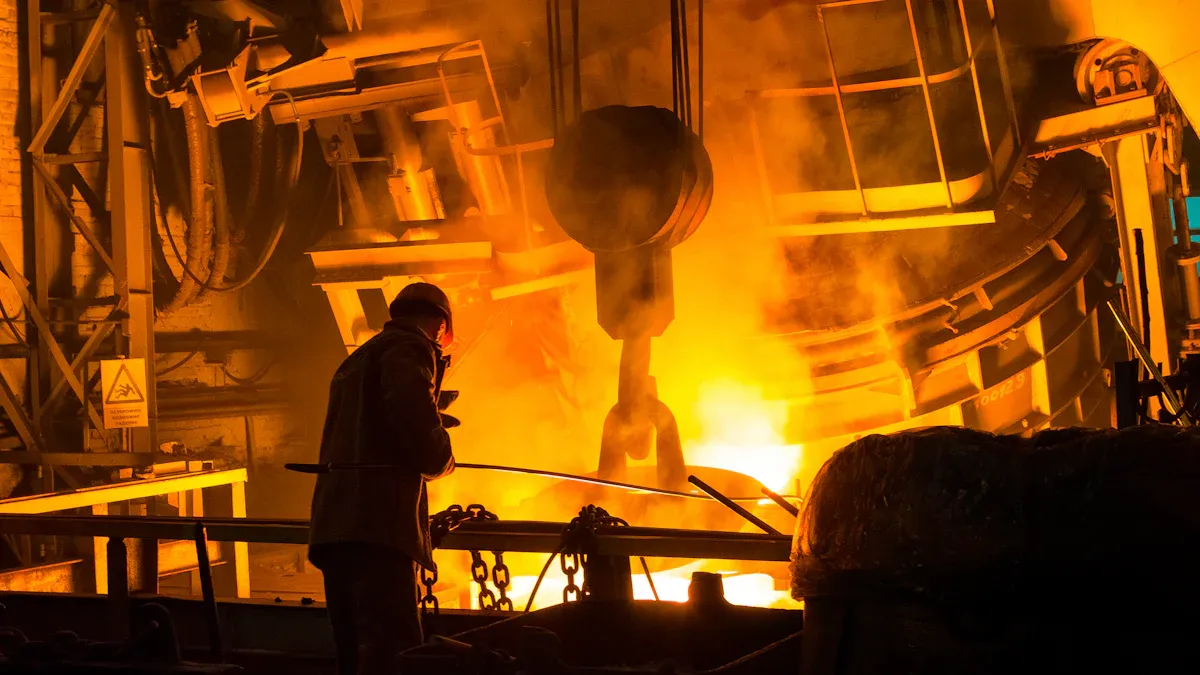
When you use a hot chamber die casting machine, you rely on several important metal components. Each part plays a specific role in creating high quality die casted metal parts with a good surface finish. Let’s look at the main metal components and how they work together.
The furnace and melting pot form the heart of your hot chamber die casting machine. You use the melting furnace pot to heat your metal alloy until it becomes liquid. Electric heating tubes inside the pot keep the temperature steady, so the metal stays ready for casting. This setup helps you achieve a good surface finish and consistent results.
Component | Function |
|---|---|
Melting Furnace Pot | Heats metal alloy to a molten state using electric heating tubes. |
You must keep the temperature just right. If the metal gets too hot or too cold, you may see problems with the final part.
The injection system moves the molten metal from the melting pot into the mold. You find a plunger and a gooseneck in this system. The plunger pushes the metal through the gooseneck and into the die cavity. This action happens quickly and under high pressure, which helps fill every detail of the mold.
Evidence Point | Description |
|---|---|
Injection System Function | Delivers molten metal into the die cavity at the required speed and temperature, maintaining pressure until solidification is complete. |
Thermal Behavior Importance | Proper temperature management in components like the nozzle is critical to prevent incomplete injection or metal slugging. |
Design Influence | The design and positioning of injection system components affect the flow of molten metal, impacting efficiency and quality of castings. |
You need a well-designed injection system to make sure your metal components fill the mold completely and produce a good surface finish.
The die and mold shape your molten metal into the final part. You use engineered closed steel for these metal components because it can handle the high pressure and temperature during injection. This strong material keeps the mold precise and durable, so you get high quality die casted metal parts every time.
You also benefit from the efficiency of heating the metal directly in the machine. This method requires metal components that can withstand both heat and pressure, making the die and mold essential for reliable hot chamber die casting.
After the metal cools and hardens, you need to remove the finished part from the mold. The ejection mechanism does this job. It pushes the part out gently, so you avoid damage. This step is important for keeping your metal components in good shape and ensuring the final product meets quality standards.
The ejection mechanism helps you maintain the integrity and quality of your cast parts by removing them without damage.
By understanding how each of these metal components works, you can operate your hot chamber die casting machine more effectively and produce parts with a good surface finish.
When you use a hot chamber die casting machine, you need to choose the right metals for the process. The common metals used in hot chamber die casting include zinc, magnesium, aluminum, and lead. Each metal has unique properties that make it suitable for this method.
Zinc stands out as one of the most popular metals for hot chamber die casting. You benefit from its low melting point, which lets you create detailed parts quickly and efficiently. Zinc alloys offer good fluidity, so the molten metal fills the mold easily. You also get strong, lightweight parts that resist corrosion and keep their shape over time.
Key Property | Description |
|---|---|
Low melting points | Enables efficient processing and intricate designs. |
Good fluidity | Allows for smooth surfaces and thin walls in castings. |
High strength-to-weight ratio | Provides durability while keeping components lightweight. |
Excellent corrosion resistance | Ensures longevity and reliability of the cast components. |
Long-term dimensional stability | Maintains precision over time, crucial for tight tolerances. |
Compatibility with finishing | Allows for various finishing processes to enhance the final product. |
You can use zinc to make automotive parts, electrical enclosures, and many other products. Its compatibility with finishing processes gives you more options for the final look.
Magnesium is another important metal for hot chamber die casting. You will notice that magnesium alloys are very light, which makes them perfect for parts where weight matters. Magnesium also offers a high strength-to-weight ratio and good corrosion resistance.
Advantages of Magnesium Die Casting | Disadvantages of Magnesium Die Casting |
|---|---|
Corrosion Resistance | Stability |
Light Weight | Post-Production Processing |
Recyclable | Production Costs |
High Strength-to-Weight Ratio | |
Abundant Material Supply | |
Good Stiffness-to-Weight Ratio | |
Heat Resistant Steel |
You get faster production cycles with magnesium in a hot chamber die casting machine. However, you should know that magnesium parts can be more porous and sometimes cost more to produce.
You may wonder about aluminum in hot chamber die casting. Aluminum is less common because its higher melting point does not match the design of a hot chamber die casting machine. The process works best with low-melting-point metals like zinc and magnesium. If you need to use aluminum, you often switch to cold chamber die casting.
Hot chamber die casting is primarily suitable for low-melting-point metals.
Aluminum's higher melting point makes it incompatible with the hot chamber process.
The hot chamber process is designed for metals like tin, zinc, and magnesium.
Lead is another option for hot chamber die casting. You use lead alloys when you need good lubricity and toughness. Lead melts at a low temperature, so it fits well with the hot chamber die casting machine. You often see lead in wear-resistant parts like bearings and pulleys.
You choose these metals for hot chamber die casting because they have low melting points, good fluidity, and strong corrosion resistance. These properties help you fill molds quickly and create durable parts.
Low melting points for energy efficiency
Good fluidity for mold filling
Corrosion resistance for durability
Wear resistance for longevity
Hot cracking resistance to endure cooling stresses
Lower melting point metals, like zinc, allow for faster cycle times and reduced energy costs. When you select the right metal, you improve both the efficiency and quality of your hot chamber die casting products.
You can achieve fast, efficient production with a hot chamber die casting machine by following clear steps: melt the metal, inject it into the mold, cool, and eject the part. Choosing metals like zinc or magnesium ensures strong, precise results. Typical uses include:
Automotive parts
Electrical connectors
Consumer product components
Industrial machinery parts
Always match your process and material to your project’s needs for the best results.
You get the best results with zinc alloys and magnesium alloys. These metals melt at lower temperatures, so your hot chamber die casting machine can process them quickly. Aluminum usually needs a die casting aluminum machine with a cold chamber design.
You can use die casting machines for aerospace components if you select the right metal. Zinc die casting machines and die casting aluminum machines often serve aerospace needs. Hot chamber die casting machines work well for small, precise parts.
Your hot chamber die casting machine melts and injects metal in one place. The die casting aluminum machine with a cold chamber design requires you to ladle molten metal into the injection system. Hot chamber machines work faster and suit low-melting-point metals.
You achieve fast cycle times and high-volume production. The hot chamber die casting machine gives you consistent quality, especially with zinc alloys. You also reduce manual handling and improve efficiency compared to other die casting machines.
You should avoid using aluminum in a hot chamber die casting machine. Aluminum’s high melting point can damage the machine. Choose a die casting aluminum machine with a cold chamber system for aluminum parts.
