
EMAIL:
lh@longhuamachine.com
TELL/whatsapp:
+8619305527239  English English
Views: 0 Author: Site Editor Publish Time: 2025-09-22 Origin: Site


The main difference between hot chamber and cold chamber die cast machines lies in how each handles molten metal. Hot chamber machines melt the metal inside the machine, which suits low melting point alloys like zinc and tin. Cold chamber machines use a separate furnace, making them ideal for high melting point metals such as aluminum. Material compatibility plays a key role in your selection, as using the wrong process can damage equipment or lower quality.
Choosing the right die cast machine improves efficiency and product quality.
Machine Type | Revenue (2023) | Projected Revenue (2030) | CAGR (2024-2030) |
|---|---|---|---|
Cold Chamber | USD 1,439.2M | USD 1,918.8M | 4.3% |
Machine Type | Projected Market Value (2025) | Projected Market Value (2035) | CAGR (2025-2035) |
|---|---|---|---|
Hot Chamber | USD 72,182.9M | USD 117,578.3M | 5.0% |
Hot chamber die casting is best for low melting point alloys like zinc and magnesium, offering fast production rates and high quality.
Cold chamber die casting is ideal for high melting point metals such as aluminum, providing versatility and longer tool life.
Choosing the right die cast machine impacts production speed, casting quality, and material compatibility, so analyze your project needs carefully.
Hot chamber machines allow for quicker cycles, making them suitable for high-volume production of small parts with excellent surface finish.
Cold chamber machines handle larger, more complex castings, making them essential for industries like automotive and aerospace.
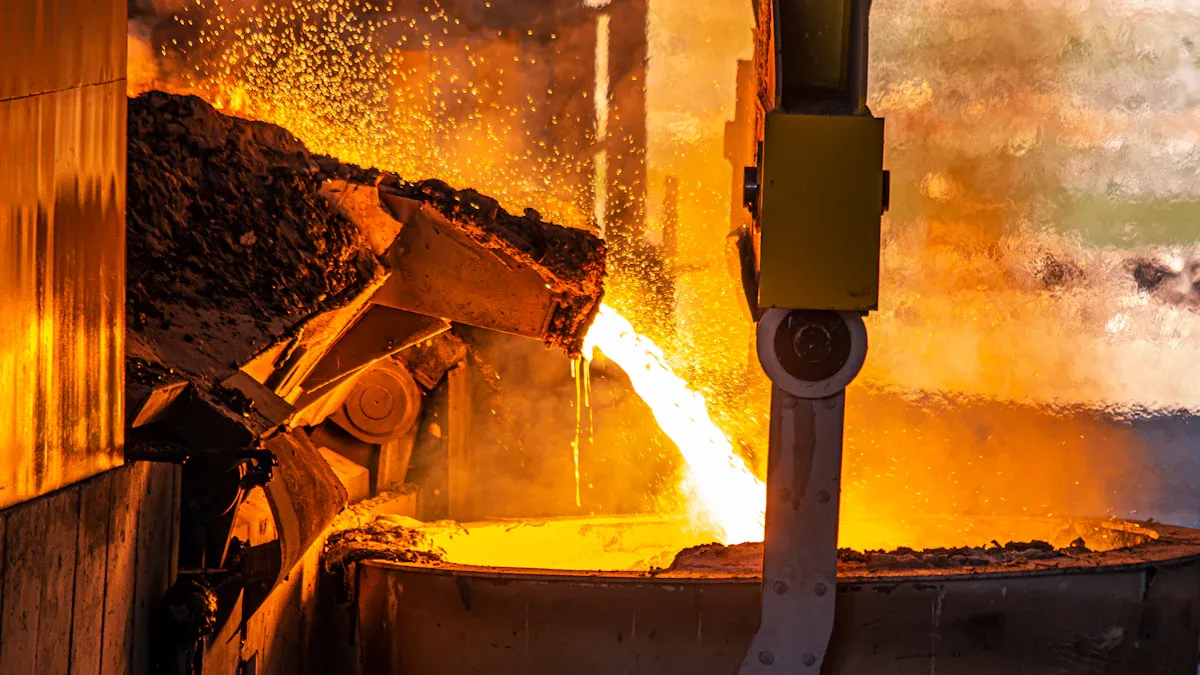
You use hot chamber die casting when you need speed and efficiency. The process starts with molten metal stored inside the chamber’s integrated furnace. This setup keeps the temperature stable for injection. Here are the key steps you follow in hot-chamber die casting:
Molten metal preparation happens inside the chamber, so you do not need a separate furnace.
The gooseneck mechanism draws the molten metal into a cylinder.
A plunger pushes the metal through a nozzle into the die cavity.
The die shapes the molten metal as it fills the cavity.
The metal cools and solidifies under pressure, which reduces shrinkage and strengthens the casting.
Ejector pins push the finished casting out of the die, and the cycle repeats.
This method allows you to achieve fast cycles and high production rates, especially when you use low melting point alloys.
You should select low melting point alloys for hot chamber die casting. These alloys include:
Zinc: Melting point around 380–420 °C, offers exceptional fluidity for casting.
Magnesium: Melting point about 650 °C, provides a strong strength-to-weight ratio.
Lead and tin alloys: These have lower melting points and work well in hot chamber casting.
You benefit from using these materials because they do not damage the chamber’s injection system. Their lower melting points make them ideal for hot-chamber die casting.
Hot chamber die casting gives you several advantages:
You get high production rates because the chamber heats the metal directly.
The process supports automatic filling, which reduces defects in the casting.
You achieve faster cycle times, with some machines reaching up to 15 cycles per minute.
The chamber design allows for consistent quality and repeatability in casting.
Tip: If you need large quantities of small, precise castings, hot chamber die casting is a smart choice.
You face some limitations with hot chamber die casting:
The chamber restricts you to low melting point alloys, such as zinc and magnesium.
You cannot use high melting point metals, which limits your options for casting.
The selection of alloys affects the final product’s strength, weight, and surface finish.
If you need to cast aluminum or other high-temperature metals, you must choose a different die casting machine.
Advantage | Disadvantage |
|---|---|
Fast cycles | Limited alloy selection |
High production rates | Not suitable for aluminum casting |
Consistent quality | Restricted to lower melting points |
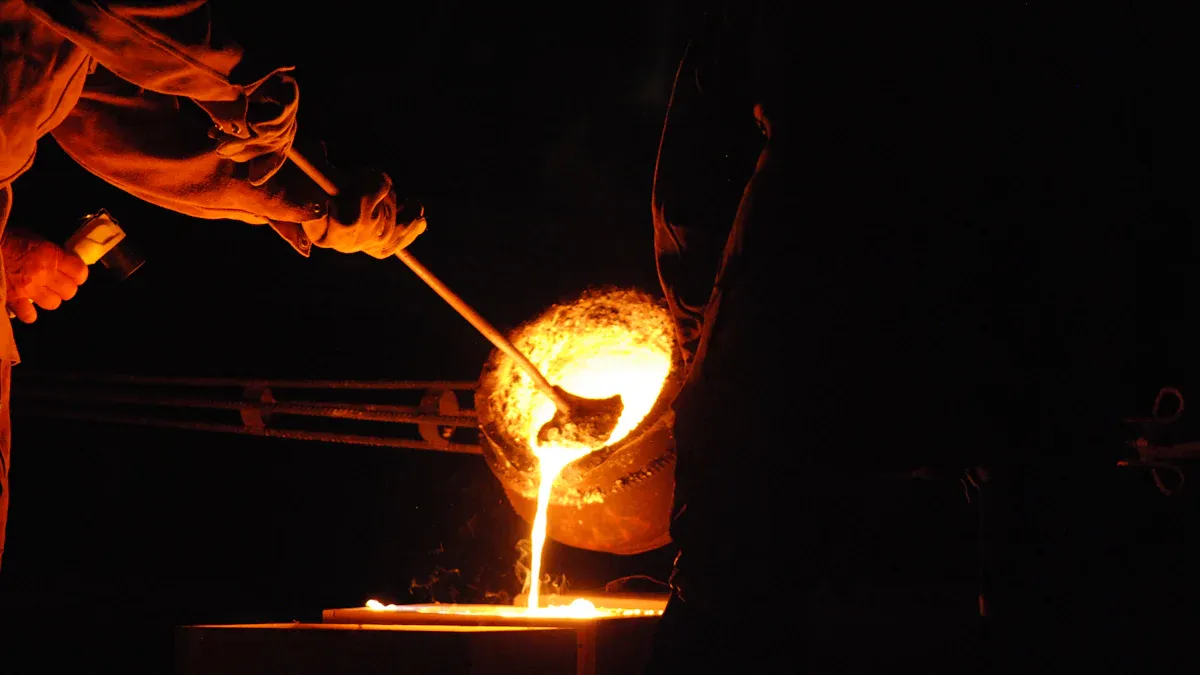
You use cold chamber die casting when you work with metals that have higher melting points. The process starts with molten metal prepared in a separate furnace. You pour the molten metal into the chamber, which sits outside the die. A plunger pushes the molten metal into the die cavity. The die shapes the casting as the metal fills the cavity. The casting cools and solidifies inside the die. You then remove the finished casting and repeat the cycle.
The main difference between hot chamber and cold chamber die casting is the location of the melting process. In cold chamber die casting, you do not melt the metal inside the chamber. This method works best for high melting point alloys. The process handles metals with high melting temperatures, such as aluminum and copper alloys.
Here is a table that compares hot chamber and cold chamber die casting:
Features | Hot Chamber Die Casting | Cold Chamber Die Casting |
|---|---|---|
Temperature | High temperatures, above melting point | No need to preheat metal |
Metallic State | Injection in molten state | Injection in solid or semi-solid state |
Production Speed | Relatively slow | Relatively fast |
Energy Consumption | High | Low |
Forming Accuracy | High | Low, may be affected by fluidity |
Surface Quality | Better, fewer imperfections | May contain pores and blemishes |
Applicable Materials | Low melting point alloys | High melting point alloys |
Applications | High precision, surface quality | Fast production, low cost |
You select high melting point alloys for cold chamber die casting. These alloys include:
Aluminum and copper alloys: You use these metals because they have higher melting points and need a separate furnace.
Magnesium alloys: You can use these when you need strong and lightweight castings.
Brass and other high melting point alloys: These metals work well in cold chamber die casting.
You choose these materials because the chamber does not touch the molten metal for long periods. This reduces wear and extends the life of the die.
Cold chamber die casting gives you several benefits:
You gain greater control over high melting point alloys, which increases versatility.
The chamber and die experience less thermal stress, so you get longer service life.
You can monitor the casting process closely, which helps you produce consistent and defect-free castings.
You can use a wide range of alloys, including those with high melting temperatures.
Tip: If you need to cast aluminum or copper alloys, cold chamber die casting is the best choice.
You face some challenges with cold chamber die casting:
The process has slower production rates compared to hot chamber die casting.
You wait longer for each casting cycle because you must pour molten metal into the chamber for every shot.
The die may produce castings with more pores or blemishes, which affects surface quality.
You need more energy to melt high melting point alloys, which can increase costs.
Advantage | Disadvantage |
|---|---|
Versatile alloy selection | Slower production rates |
Longer die and chamber life | Longer cycle times |
Consistent quality | Surface may have more imperfections |
When you compare hot chamber and cold chamber die cast machines, you notice clear differences in the die casting process. Hot chamber machines keep a built-in pool of molten metal inside the chamber. This design allows the casting machine to inject metal directly into the die. You benefit from immediate access to molten metal, which increases speed and efficiency. Cold chamber machines, on the other hand, use an external source of molten metal. You must pour the metal into the chamber for each casting cycle. This step adds time to the die casting process and slows down high volume production.
Here is a table that highlights the main process differences:
Feature | Cold Chamber Die Casting | |
|---|---|---|
Molten Metal Source | Built-in pool inside chamber | External source, poured each cycle |
Die Casting Process | Direct injection | Manual ladling, then injection |
Speed and Efficiency | Faster cycles | Slower, more versatile |
Maintenance | Less frequent checks | More checks for high-temp parts |
Note: Hot chamber die cast machines work best for high volume production of small castings, while cold chamber machines handle larger, more complex parts.
Material compatibility plays a major role in the performance and longevity of your die cast machine. Hot chamber machines work with lower melting point alloys, such as zinc, magnesium, and tin. These materials do not damage the chamber or the die, so you get longer machine life and consistent casting quality. Cold chamber machines handle higher melting point alloys, like aluminum and copper. You need a cold chamber casting machine if you want to use these metals, as they would quickly wear out a hot chamber system.
Different alloys affect:
Mechanical strength
Corrosion resistance
Thermal stability
Durability of both the die and the chamber
To choose the right die cast machine, you should:
Analyze your casting application requirements.
Consider heat resistance, corrosion resistance, surface finish, strength, and durability.
Tip: Selecting the right alloy for your die casting process ensures better surface finish, dimensional accuracy, and longer die life.
Production speed is a key factor in high volume production. Hot chamber die cast machines offer faster cycles because the chamber always holds molten metal. You can achieve up to 15 cycles per minute with some machines. This speed makes hot chamber casting ideal for high volume production of small, precise castings. Cold chamber die cast machines have slower cycle times. You must pour molten metal into the chamber for every shot, which adds time to each cycle. This step reduces the overall speed of the die casting process.
Hot chamber machines use less energy per cycle because they do not need to reheat metal each time.
Cold chamber machines consume more energy and have higher operating costs due to the need for external melting and longer cooling times.
If you want the fastest production rates for small castings, choose a hot chamber die cast machine.
You should match your die cast machine to your application needs. Hot chamber machines excel at producing small, high-volume components with excellent surface finish and dimensional accuracy. You often see these machines used for electronic housings, connectors, and small automotive parts. Cold chamber machines are better for larger, more complex castings. You use them for automotive parts like engine blocks, transmission cases, and structural components. These machines also work well for products that require high strength and a durable surface finish.
Hot chamber die cast machines:
Best for high volume production of small castings
Provide smooth surface finish and tight tolerances
Used in electronics, toys, and small automotive parts
Cold chamber die cast machines:
Handle larger castings and more complex shapes
Suitable for aluminum die casting machine applications
Common in automotive, aerospace, and industrial machinery
Remember: The right die cast machine helps you achieve the best balance of production speed, casting quality, and surface finish for your specific application.
When you select a die cast machine, you must consider several project factors. You need to match the melting point of your alloy to the right machine. Hot chamber die cast machines work best with zinc and magnesium. Cold chamber die cast machines handle aluminum, brass, and copper. You should also think about production speed and part complexity. If you want high-speed, mass production of small parts, choose a hot chamber die cast machine. For larger or more intricate parts, a cold chamber die cast machine is the better choice.
Factor | Hot Chamber | Cold Chamber |
|---|---|---|
Melting Point of the Alloy | Zinc, magnesium | Aluminum, brass, copper |
Production Volume and Speed | High-speed, mass production | Moderate volume, slower speed |
Part Complexity and Size | Small, less complex | Large, intricate |
Cost Constraints | Lower setup cost, higher maintenance | Higher setup cost, longer tool life |
Quality and Mechanical Properties | Better surface finish | Higher strength, tight tolerances |
Tip: Always check material compatibility and production speed before you decide.
You need to look at both initial investment and long-term costs. Hot chamber die cast machines usually have lower setup costs because they use integrated furnaces and require less maintenance. Cold chamber die cast machines need separate furnaces and more energy, which increases initial costs. However, cold chamber die casting offers longer tool life and can save money in high-volume production.
Cost Aspect | Cold Chamber Die Casting | Hot Chamber Die Casting |
|---|---|---|
Initial Setup Costs | Significant upfront investment in tooling | Lower setup cost |
Operational Costs | More energy-efficient, less labor-intensive | More energy-efficient, less labor-intensive |
Long-Term Savings | High-volume production savings | Cost-effective for smaller runs |
You want to produce high-quality cast parts that meet your project needs. Hot chamber die cast machines give you better surface finish and are ideal for lower-volume runs. Cold chamber die cast machines deliver high density and strength, which is important for high-pressure die casting and large-volume production.
Casting Method | Quality Requirements | Volume Requirements |
|---|---|---|
Cold Chamber Die Casting | High density, strength, complex alloys | Large-volume, complex parts |
Hot Chamber Die Casting | Smooth surface, less dense metals | Lower-volume, cost-effective |
You see die cast machines in many industries. Automotive companies use cold chamber die cast machines for engine brackets and gearbox cases. Aerospace firms rely on aluminium die casting machines for lightweight, heat-resistant parts. Energy sectors use die casting aluminum machines for turbine blades and valves. Electronics manufacturers prefer zinc die casting machines for connectors and housings. Medical device makers use die casting machines for monitoring devices and ultrasound systems.
Industry | Applications |
|---|---|
Automotive | Hydraulic cylinders, engine brackets, gearbox cases |
Aerospace | Lightweight, heat-resistant parts |
Energy | Valves, turbine blades, filtration components |
Electronics | Enclosures, connectors, heat sinks |
Construction | Building frames, window frames |
Medical | Monitoring devices, ultrasound systems |
Note: You should always match your die cast machine to your industry’s specific requirements for quality and production volume.
You can see the main differences between hot chamber and cold chamber die cast machines in the table below:
Feature | Hot Chamber Die-Casting | Cold Chamber Die-Casting |
|---|---|---|
Metal Type | Low melting point metals | High melting point metals |
Heating Chamber Location | Integrated within the machine | External to the machine |
Production Speed | Faster production cycles | High production, slower cycles |
When you choose a die cast machine, think about the process, material compatibility, and production speed. Hot chamber machines work best for low melting point metals and give you a smooth surface. Cold chamber machines handle high melting point metals and produce a strong surface. Your choice affects the surface finish, cycle time, and the type of surface you achieve. Always match your die cast machine to your project’s surface and performance needs.
You use a hot chamber die cast machine for low melting point metals like zinc. You choose a cold chamber die cast machine for high melting point alloys such as aluminum. The melting process location sets them apart.
You cannot use aluminum in a hot chamber die cast machine. Aluminum requires higher temperatures, so you need an aluminum die casting machine or an aluminium die casting machine with a cold chamber design.
You get faster cycles with hot chamber die casting machines. These die cast machines suit high-volume production of small parts. For larger aluminum castings, you should use a cold chamber die casting aluminum machine.
You use zinc die casting machines for zinc alloys. These die cast machines also handle magnesium and tin. You get smooth surfaces and precise shapes with these materials.
You should match your alloy to the die cast machine. For aluminum, select an aluminum die casting machine. For zinc, use a zinc die casting machine. Consider your part size, production speed, and surface finish needs.
