
EMAIL:
lh@longhuamachine.com
TELL/whatsapp:
+8619305527239  English English
Views: 0 Author: Site Editor Publish Time: 2025-09-30 Origin: Site


You can melt metal for casting by following a clear process: choose your metal, prepare your Metal Melting Unit, heat the metal according to its working principle, pour it into a mold, and let it cool. Safety comes first, so always use proper gloves, goggles, and ventilation. Starting a basic workspace costs around $5,000 for hobbyists. Small-scale casting uses energy, produces emissions, and requires pollution control, but recycling reduces waste and helps the environment. Begin your journey with confidence and attention to safety.
Choose the right metal for your project by considering its properties, cost, and application. This ensures the best results for your casting.
Always prioritize safety by wearing proper gear like gloves, goggles, and fire-resistant clothing. This protects you from burns and harmful fumes.
Prepare your workspace and materials thoroughly before melting. Clean metal and preheat molds to avoid defects and improve casting quality.
Monitor the melting temperature closely. Each metal has a specific melting point, and precise control prevents overheating and ensures smooth pouring.
Regularly maintain your Metal Melting Unit. This includes checking for leaks and cleaning to ensure safe and efficient operation.
Choosing the right metal is the first step in successful casting. You need to consider the properties, cost, and application of each metal before you start. Different metals offer unique advantages for various projects.
Many industries rely on a few key metals for casting. Each metal brings its own strengths and is suited for specific uses. Here is a table that summarizes the most common metals, their characteristics, and typical applications:
Metal | Characteristics | Applications |
|---|---|---|
Cast Iron | Long service life, good wear resistance, ease of casting | Automobiles, pipes, heavy machinery |
Aluminum | Lightweight, corrosion-resistant, good conductor of heat and electricity | Automobiles, aircraft, electronics |
Steel | Strong, tough, withstands wear | Construction, mining, heavy machinery |
Zinc | Corrosion-resistant, melts easily, high precision in small parts | Automotive, electronics, hardware |
Magnesium | Lightweight, strong, increasing demand in fuel-efficient applications | Cars, planes |
Others | Includes copper, brass, titanium, and special alloys with excellent features | Electricity, medicine, high-performance industries |
When you select a metal, you should look at several factors:
Mechanical properties such as strength and hardness.
Corrosion resistance for harsh environments.
Thermal and electrical conductivity for specialized parts.
Compatibility with your casting process.
Cost and availability for your budget.
Tip: Always assess the demands of your project, including load, exposure, and weight, before choosing a metal.
Each metal melts at a different temperature. Knowing the melting point helps you pick the right equipment and ensures safety during casting. Here is a table with the melting points of popular metals:
Metal | Melting Point (°C) | Melting Point (°F) |
|---|---|---|
Aluminum | 660.3 | 1220.5 |
Copper | 1084.6 | 1984.3 |
Iron | 1538 | 2800 |
Brass | ~930–940 | ~1710–1724 |
The melting point affects your choice of furnace. Your equipment must handle the high temperatures required to melt your chosen metal. Metals become workable only in their liquid state, so understanding these temperatures is essential for safe and effective casting.

A metal melting unit is the heart of any casting operation. You use it to heat solid metal until it becomes liquid, ready for pouring into molds. The metal melting unit determines the speed, safety, and efficiency of your casting process. You must choose the right type to match your project needs and the metal you want to melt.
You will find several types of metal melting furnace in the industry. Each one offers unique features and efficiency levels. The most common options include resistance furnaces, arc furnaces, and induction melting units. You can compare their efficiency and characteristics in the table below:
Type of Furnace | Description | Efficiency Characteristics |
|---|---|---|
Resistance Furnace | Uses electrical resistance for heating, precise temperature control. | High uniformity of heat, clean process. |
AC Arc Furnace | Generates electric arc, mainly for steelmaking. | Effective for refining and alloying. |
DC Arc Furnace | Uses direct current, ideal for specialty steels. | Precise control of temperature and composition. |
Submerged Arc Furnace | Electrodes submerged in molten metal, reduces heat loss. | Highly efficient for ferroalloy production. |
Mains Frequency Furnace | Uses electromagnetic induction for melting metals. | Good for melting and holding ferrous and non-ferrous metals. |
Channel Induction Furnace | Channel-shaped crucible for melting. | Efficient heating and melting. |
Coreless Induction Furnace | No core, flexible charge size and composition. | Highly efficient, excellent temperature control. |
You need to check the energy efficiency of your metal melting unit. Daily checks help you spot leaks and keep the water cooling system working. Monthly inspections let you remove slag and tighten bolts. Periodic reviews include cleaning heat exchangers and greasing motor bearings. You must also maintain hydraulic systems by checking filters and flushing lines.
Induction melting uses electromagnetic fields to heat and melt metal. You get fast, clean, and precise results with this method. Induction melting units are popular for their high efficiency and energy efficiency. You can see how induction melting compares to other methods in the table below:
Type of Melting | Energy Consumption (kWh/t) |
|---|---|
Induction Melting | 570 |
Cast Iron | 550-575 |
SG Iron | 550-600 |
MS/SS | 600-650 |
Light Scrap Al | 600-625 |
Solid Scrap Al | 500-575 |
Steel | 625 |
You benefit from induction melting because it offers excellent temperature control and reduces energy waste. An induction melting furnace works well for both ferrous and non-ferrous metals. You should follow safety standards like OSHA, EPA, NFPA, and IEEE to keep your workspace safe. These standards cover workplace safety, environmental protection, fire safety, and electrical safety.
Tip: Always choose a metal melting unit that matches your metal type and casting volume. Regular maintenance keeps your equipment safe and efficient.
The melting process is the core of metal casting. You need to follow several steps to ensure safety, quality, and efficiency. Each stage requires careful attention to detail and precise temperature control. Let’s break down the melting process into three main phases: preparation, heating and melting, and pouring and cooling.
Before you start the melting process, you must prepare your workspace and materials. Good preparation helps you achieve clean results and protects you from accidents. Here are the essential steps you should follow:
Clean and sort your metal. Remove dirt, oil, and other impurities. Only melt the desired metal to avoid contamination.
Preheat your metal if needed. Preheating eliminates moisture and reduces the energy required for melting.
Inspect your Metal Melting Unit. Check for leaks, ensure the cooling system works, and confirm all safety features are active.
Set up your mold. Make sure the mold is dry and free of debris. Moisture in the mold can cause dangerous steam explosions during pouring.
Wear safety gear. Use gloves, goggles, and protective clothing. Good ventilation keeps harmful fumes away.
Tip: Careful preparation reduces the risk of defects and improves the quality of your casting.
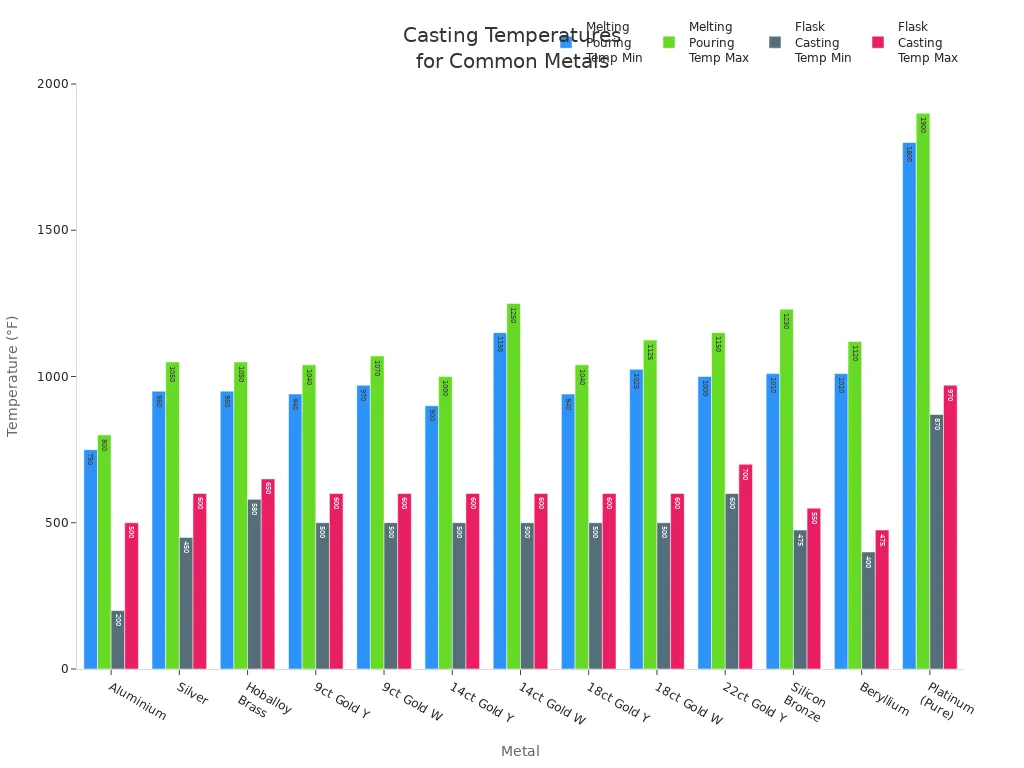
You need to heat the metal to its melting point using your Metal Melting Unit. Precise temperature control is vital for a successful melting process. Different metals require different temperature ranges. The table below shows the melting pouring temperature and flask casting temperature for popular metals:
Metal | Melting Pouring Temperature (°F) | Flask Casting Temperature (°F) |
|---|---|---|
Aluminium | 750 - 800 | 200 - 500 |
Silver | 950 - 1050 | 450 - 600 |
Hoballoy Brass | 950 - 1050 | 580 - 650 |
9ct Gold Y | 940 - 1040 | 500 - 600 |
9ct Gold W | 970 - 1070 | 500 - 600 |
14ct Gold Y | 900 - 1000 | 500 - 600 |
14ct Gold W | 1150 - 1250 | 500 - 600 |
18ct Gold Y | 940 - 1040 | 500 - 600 |
18ct Gold W | 1025 - 1125 | 500 - 600 |
22ct Gold Y | 1000 - 1150 | 600 - 700 |
Silicon Bronze | 1010 - 1230 | 475 - 550 |
Beryllium | 1010 - 1120 | 400 - 475 |
Platinum (Pure) | 1800 - 1900 | 870 - 970 |
You can use several heating methods in the melting process. Each method offers unique advantages:
Sand casting gives you flexibility and works well for intricate designs.
Die casting provides precision and strength, making it ideal for automotive and electronics.
Investment casting achieves fine detail and is popular in aerospace and healthcare.
Continuous casting is efficient for producing uniform sheets and materials.
Your Metal Melting Unit must reach and maintain the correct temperature for your chosen metal. You should monitor the temperature closely. Precise temperature control prevents overheating and ensures the metal flows smoothly into the mold. If you use induction melting, you benefit from fast heating and energy efficiency. Always follow safety standards and keep your workspace organized.
Once the metal reaches the proper temperature and becomes fully liquid, you move to the pouring stage. You must act quickly and carefully during this part of the melting process.
Pour the molten metal into the prepared mold. Use steady hands and avoid splashing.
Fill the mold completely to prevent air pockets and defects.
Allow the metal to cool and solidify. Cooling time depends on the type and thickness of the metal.
Remove the casting from the mold once it has cooled. Inspect the finished product for cracks or imperfections.
Note: Rapid cooling can cause stress and cracks. Controlled cooling helps you achieve strong, high-quality castings.
You should clean your Metal Melting Unit after each use. Regular maintenance extends the life of your equipment and keeps the melting process safe. Always dispose of waste materials properly and recycle whenever possible.
Staying safe during metal melting for casting is essential. You protect yourself and others by following best practices and using the right equipment. Let’s look at the most important steps you should take.
You need to wear the right safety gear every time you work with molten metal. This gear shields you from burns, splashes, and harmful fumes. Here’s what you should use:
Aluminized hoods to protect your head and neck from heat and splashes.
Face shields and visors for clear vision and face protection.
Hard hats for head safety, especially from falling objects.
High-temperature gloves to keep your hands safe from extreme heat.
Fire-resistant outer layers to guard against radiant heat.
Respiratory protection to block toxic fumes.
Tip: Always check your safety gear for damage before starting any melting process.
Handling molten metal requires careful attention. You must keep water and contaminants away from the furnace. Store scrap metal in a dry, covered area and inspect it before melting. Wear flame-resistant clothing, heat-resistant gloves, and molten metal-resistant boots. Use automated pouring systems and heat-resistant barriers to reduce spills. Regularly inspect and maintain your equipment to prevent accidents.
Common Injuries | Prevention Measures |
|---|---|
Burns | Use personal protective equipment (PPE) |
Eye damage | Ongoing training for safe handling |
Toxic gas inhalation | Regular maintenance of equipment |
Note: Never rush the melting process. Take your time to ensure safety at every step.
Beginners often make mistakes that can lead to accidents or poor results. Watch out for these common errors:
Using the wrong mold materials, which can crack or deform.
Failing to control the metal melting temperature, causing defects.
Skipping mold preheating, leading to cracks and surface flaws.
Pouring too fast or too slow, which creates turbulence and air pockets.
Forgetting proper venting, resulting in gas porosity.
You can avoid these mistakes by following instructions, monitoring temperatures, and designing molds carefully. Clean your workspace and equipment to prevent contamination. Good habits keep your melting projects safe and successful.
Starting with a Metal Melting Unit can feel overwhelming, but you can master the basics with a few smart strategies. Always read the manual for your Metal Melting Unit before you begin. You should set up your workspace in a well-ventilated area to avoid harmful fumes. Keep your tools organized and within reach. Use a checklist to make sure you have all safety gear ready.
Tip: Preheat your mold and metal to reduce energy use and prevent moisture-related accidents.
You should monitor the temperature closely. A digital thermometer helps you keep the Metal Melting Unit at the right setting for your chosen metal. Clean your metal scraps before melting to avoid contamination. If you notice impurities, remove them before pouring. Practice pouring with water or sand before using molten metal. This builds confidence and helps you avoid spills.
Quick Checklist for Beginners |
|---|
Read Metal Melting Unit manual |
Prepare safety gear |
Preheat mold and metal |
Organize workspace |
Monitor temperature |
Clean metal scraps |
You may encounter problems during the melting and casting process. Many issues relate directly to how you use your Metal Melting Unit and prepare your materials.
Oxidation and dross formation often happen when you expose metal to air at high temperatures or use dirty scrap. You can reduce this by keeping your Metal Melting Unit covered and using clean metal.
Metal contamination and impurities result from poor scrap selection or residue buildup. Always inspect and clean your metal before melting.
Incomplete melts or casting defects can occur if the metal is too cold, you use too little metal, or the pour gets interrupted. Small or long sprue holes, misaligned flask parts, or cracked sand cores also cause problems. Thin models and dry sand can lead to weak castings. Add olive oil or glycerin to sand if it feels too dry.
Inefficient energy use and high costs stem from poor insulation or outdated Metal Melting Units. Upgrade your equipment and check for heat loss.
Inconsistent metal quality comes from unstable temperatures or poor handling. Keep your Metal Melting Unit calibrated and handle molten metal with care.
Note: Always pour metal at the optimal temperature. Too cold, and it won't fill the mold; too hot, and you risk gas porosity. Clean metal ensures proper fusion and strong castings.
If you run into trouble, review your process step by step. Check your Metal Melting Unit settings, inspect your mold, and make sure your materials are clean and dry. Small changes can make a big difference in your results.
You can achieve successful metal casting by following these steps:
Obtain your casting geometry.
Make patterns and cores.
Prepare your mold.
Use your Metal Melting Unit for melting and pouring.
Clean your finished piece.
After you fill the tank, place electrodes into the metal and adjust them to control the arc. Add heat and oxygen to speed up melting.
Start with beginner projects like a firesteel, copper cup, or signet ring. Always wear safety gear and learn from each attempt. Explore guides and videos to build your skills.
A Metal Melting Unit is a device you use to heat and melt metals for casting. You can choose from induction furnaces, resistance furnaces, or arc furnaces. Each type offers different benefits for your casting projects.
You should let the Metal Melting Unit cool. Remove slag and leftover metal with a scraper. Wipe down surfaces and check for leaks. Regular cleaning keeps your Metal Melting Unit safe and efficient.
You can melt various metals in one Metal Melting Unit. Clean the unit between uses to prevent contamination. Always check the melting point and compatibility of each metal with your Metal Melting Unit.
You need gloves, goggles, and fire-resistant clothing. Use a face shield and respirator for extra protection. Safety gear protects you from burns, splashes, and fumes when you operate a Metal Melting Unit.
You must set the Metal Melting Unit to the correct temperature. If the metal is too cold, it will not fill the mold. If it is too hot, you risk defects. Accurate temperature control ensures strong and clean castings.
