
EMAIL:
lh@longhuamachine.com
TELL/whatsapp:
+8619305527239  English English
Views: 0 Author: Site Editor Publish Time: 2025-09-16 Origin: Site


Maintaining your zinc die casting machine ensures peak performance and minimizes unexpected downtime. You benefit from longer equipment life, fewer casting defects, and safer operation.
Regular cleaning and lubrication prevent wear and tear, extending the machine’s lifespan.
Routine inspections and servicing boost reliability and operational efficiency.
Zinc’s lower abrasiveness enhances tool life, giving you better bearing surfaces and reducing erosion on critical components.
Perform daily maintenance tasks like cleaning and lubrication to extend the life of your zinc die casting machine.
Conduct weekly and monthly inspections to catch potential issues early and maintain operational efficiency.
Use quality parts and certified components to ensure reliable performance and reduce wear on the machine.
Invest in operator training to enhance skills in maintenance and troubleshooting, leading to fewer defects and downtime.
Monitor key performance indicators regularly to make real-time adjustments and maintain optimal machine operation.
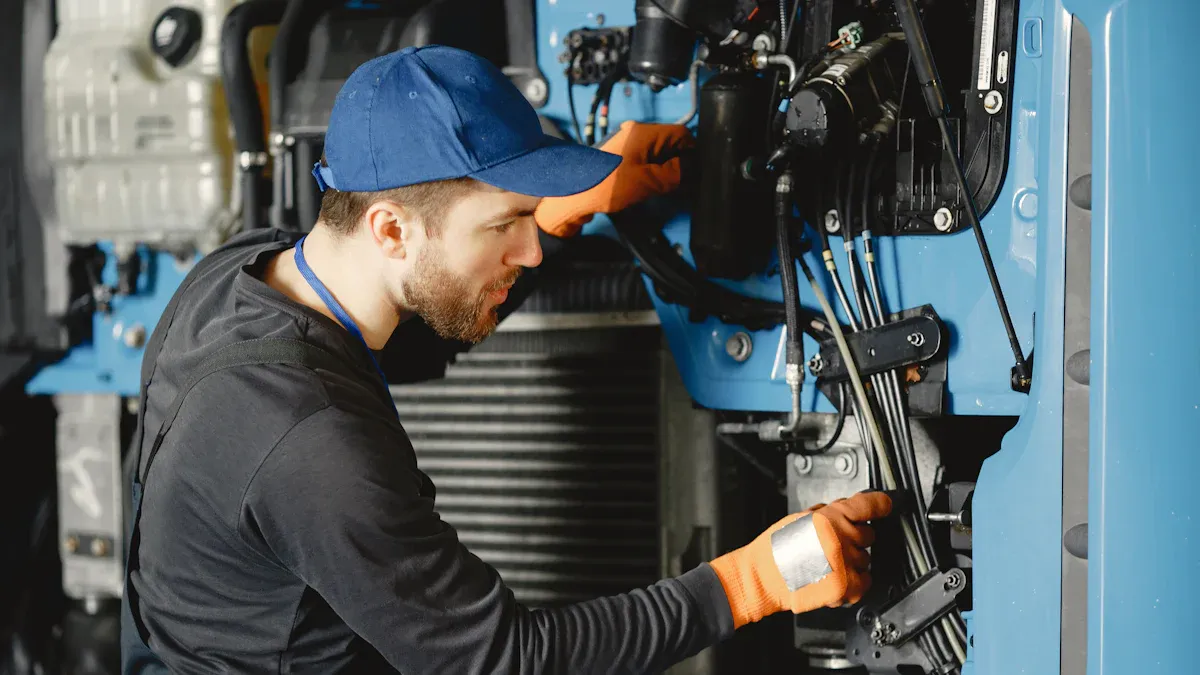
You need to perform daily maintenance to keep your zinc die casting machine running smoothly. Start each shift by removing zinc residues, lubricants, and debris from the machine. Use specialized cleaning agents designed for zinc die casting components. The table below outlines the most critical daily maintenance tasks recommended by manufacturers:
Maintenance Task | Description |
|---|---|
Cleaning | Remove zinc residues, lubricants, and debris after each production run using specialized cleaning agents. |
Lubrication | Check lubricant levels and ensure there are no leaks to prevent increased friction and wear. |
Electrical Inspection | Inspect electrical connections for any loose or damaged parts to avoid safety hazards and malfunctions. |
Tip: Regular maintenance and inspection are crucial for maintaining die casting molds. If your production rate is high, increase the frequency of these checks.
You should also check the hydraulic system for leaks and verify that the ejection system operates correctly. Always check the shot sleeve for wear and confirm that the clamp force and pressure meet specifications. Record each maintenance activity in a logbook to track machine performance and spot recurring issues.
Weekly and monthly checks help you catch problems before they become serious. Each week, check the alignment of the die casting molds and inspect the shot pressure. Examine the cooling channels for blockages and check the water intake and output temperature. Every month, perform a thorough inspection of the electrical system and test the pressure in the hydraulic system.
Check for visible cracks or damage on the mold.
Verify die alignment and inspect the finish and dimensions of a sample casting.
Check the gates and runners for any defects.
Inspect the lubrication system and confirm the proper lubricant mixture.
Test the ejection speed and pressure.
Keep a comprehensive checklist for all these tasks. Update it regularly to reflect any changes in your process or equipment.
Proper cleaning and lubrication extend the life of your zinc die casting machine. Use mild alkaline cleaners for zinc components. For heavy-duty cleaning, select alkaline cleaners with chelating agents. The table below lists effective and safe cleaning agents for zinc die casting machine components:
Cleaning Agent | Description | Safety Features |
|---|---|---|
Zinc Alloy Die Casting Release Spray | Suitable for general and complicated zinc alloy fittings die casting. | Non-toxic, no burning, no corrosion, no harmful smoke or smell. |
For more stubborn residues, you can use a mixture containing syrupy phosphoric acid, butyl alcohol, water, and a wetting agent. Always check the safety data sheet before using any chemical. After cleaning, check that all moving parts receive proper lubrication. Inspect the lubrication delivery system and confirm there are no blockages or leaks.
Note: Preheat the mold before starting production. This step prevents cracks and ensures the lubricant spreads evenly across the die casting molds.
Routine inspection of zinc alloy die casting molds prevents defects and ensures consistent quality. Begin with a visual inspection. Look for surface patterns, air marks, shrinkage, and other visible defects. Use a magnifying glass for a closer look. The table below summarizes common mold defects, their causes, and solutions:
Defect | Description | Causes | Solutions |
|---|---|---|---|
Flow Marks | Streaks and veins on the surface due to cooling of liquid metal. | Excessive mold cavity filling time, low mold temperature, improperly designed supply channels. | Adjust filling speed and mold temperature to reduce cooling time and avoid cold material sheets. |
Blistering | Porosity defect caused by gas trapping, leading to surface deformation. | High internal pressure from trapped gas. | Design molds to minimize gas entrapment and control internal pressure during casting. |
Porosity | General term for voids within the casting, affecting structural integrity. | Inadequate filling, gas entrapment, or improper cooling rates. | Optimize filling techniques and cooling rates to reduce void formation. |
You should also use advanced inspection methods such as ultrasonic testing, fluorescence testing, penetrant testing, and pressure testing. These methods help you detect internal and surface defects that are not visible to the naked eye.
Inspection Method | Description |
|---|---|
Visual Inspection | Analyze surface quality for patterns, air marks, shrinkage, and other visible defects. |
Ultrasonic Testing | Detect internal defects and measure thickness using sound waves. |
Fluorescence Testing | Use ultraviolet light to reveal small surface defects by applying fluorescent liquid. |
Penetrant Testing | Apply penetrant and imaging agents to identify cracks and holes on the surface. |
Pressure Testing | Check for leaks and density by observing bubbles in water under pressure. |
Tip: Always check for proper die temperature control and verify the adequacy of the lubrication system. Inspect cooling channels for blockages and check the finish and dimensions of a sample casting.
By following these maintenance routines and inspection steps, you reduce the risk of defects and extend the life of your zinc die casting machine. Consistent maintenance of molds and regular checks keep your production line efficient and reliable.

Effective troubleshooting of die casting machines helps you maintain high product quality and minimize downtime. You need to approach each fault methodically, using observation, listening, and testing to pinpoint the root cause. This section guides you through identifying common failures, diagnosing oil pump and motor problems, addressing cycle time delays, and resolving zinc alloy die casting defects.
You encounter a range of faults during zinc die casting machine operation. Systematic troubleshooting of die casting machine faults starts with a visual and auditory check. Listen for abnormal sounds from the mold area or hydraulic system. Observe for leaks, cracks, or irregular pressure readings. Test the ejection system and verify the die casting mold cooling system performance.
Common failures include no action on the whole machine, no total pressure, no shot action, furnace temperature cannot be controlled, and leakage of oil cylinder. You should check the following areas:
Cracks: Hot tears or excessive ejection pressure cause cracks in zinc alloy die casting mold. Check die conditions and adjust mold temperature.
Drag Marks: Insufficient draft and rough surfaces lead to drag marks. Optimize die design and adjust ejection timing.
Distortion: Weak castings distort easily. Control die temperature and cooling time.
Erosion: High metal speed and temperature erode die casting molds. Reduce metal speed and lower mold temperature.
Heat Checking: Temperature cycles rarely affect zinc alloys, but proper mold repair and maintenance prevent heat checking.
Soldering: Build-up on die surfaces requires adequate die spray and regular cleaning.
Flash: Metal penetration into die gaps signals weak die construction or insufficient locking force. Check mold locking and repair as needed.
Dimensional Consistency: Inconsistent casting temperature affects reproducibility. Stabilize mold temperature for reliable product quality.
Tip: Always check for leaks, cracks, and abnormal pressure readings before starting any repair. If you cannot locate the fault, call qualified service personnel.
Oil pump and motor failures disrupt zinc die casting machine operation and reduce efficiency. You must check the system thoroughly when you notice issues such as oil pump cannot start or thermal relay trips.
Cause of Failure | Inspection Steps |
|---|---|
Oil pump cannot be started | Check if the motor relay is closed. Inspect thermal relay, power circuit, and control circuit. |
Thermal relay trips when starting | Assess current load, voltage levels, and motor winding resistance. Check for overload conditions. |
If you find no total pressure or the oil pump cannot start, check the control circuit and motor relay first. Inspect for leakage of oil cylinder and verify pressure readings. If the motor overheats or the thermal relay trips, check the current load and voltage. Always record your findings and call for professional service if you cannot resolve the fault.
Cycle time delays in die casting production lower efficiency and product quality. You need to check several factors that influence the operation speed of your zinc die casting machine.
Factor | Description |
|---|---|
Cooling time | Modify the die casting mold cooling system using water or oil cooling units to reduce cooling time. |
Die casting duration | Use prefilling functions to link piston movement with mold closing, saving time. |
Extraction time | Optimize by adjusting start delay, course speed, return speed, and number of runs. |
Mold opening/closing | Adjust opening and closing speeds to impact cycle time. |
Lubrication | Fine-tune lubrication timing to improve cycle time efficiency. |
Check the mold temperature and cooling system regularly. Adjust the extraction timing and mold opening speed for optimal operation. If you notice persistent delays, inspect the lubrication system and verify that all moving parts receive adequate service.
Defects in zinc alloy die casting reduce product quality and increase scrap rates. You must check the zinc alloy die casting mold and casting process for faults that cause surface blistering, porosity, shrinkage, cracks, and intergranular corrosion.
Defect Type | Description | Root Causes |
|---|---|---|
Surface Blistering | Blisters on the surface of die-casting parts, visible after processing. | Holes from gas intrusion during solidification, intergranular corrosion due to harmful impurities, cracks from water lines, cold separation lines, and hot cracks during solidification. |
Porosity | Holes formed on the surface or inside of the casting. | Gas intrusion during filling, high gas content in the alloy, poor mold exhaust. |
Shrinkage | Cavities formed due to volume reduction during solidification. | Uneven thickness, local overheating, insufficient liquid metal feeding. |
Cracks | Various types of cracks including water marks and hot cracks. | Uneven thickness, premature ejection, stress during solidification. |
Intergranular Corrosion | Corrosion at grain boundaries leading to structural failure. | Harmful impurities like lead and cadmium, exacerbated by electroplating and humid environments. |
Surface Bubbles | Protuberant bubbles on the surface of die casting parts. | Porosity from gas intrusion and shrinkage, intergranular corrosion from harmful impurities, cracks from water marks, cold cracks, and hot cracks during solidification. |
You can reduce defects by using vacuum-assisted casting, which lowers air bubbles and improves part strength. Switching to Zamak 2 or Zamak 3 alloys helps resist thermal fatigue and extends the life of zinc alloy die casting mold. Automated monitoring systems catch defects in real time, reducing downtime and improving product quality. Maintain detailed documentation for every operation and service. Factories that keep strict records see up to 40% fewer defects and higher customer confidence.
Note: If you cannot resolve a fault or defect after checking all systems, call qualified service personnel for repair. Never attempt complex repairs without proper training.
Systematic troubleshooting of die casting machine faults ensures consistent product quality, reliable operation, and longer machine life. Regular checks, prompt service, and thorough documentation help you maintain your zinc die casting machine and zinc alloy die casting mold at peak performance.
You improve machine longevity by investing in operator training. Well-trained operators understand the importance of consistent maintenance and proper operation. You should focus on programs that teach safe practices, process control, and the fundamentals of die casting molds. Training courses cover high-pressure, gravity, and low-pressure processes. Operators learn how to check pressure, monitor machine cycles, and interpret process parameters.
Regular training reduces downtime and helps you spot issues early. Operators who know how to check for defects in die casting molds and maintain proper pressure levels keep machines running efficiently.
Training Program | Focus Area | Duration |
|---|---|---|
Machine Operation and Intro to Process Control | Essential for operators and process engineers | 2.5 days |
Hydraulics and Mechanical Basics for Die Casting | Foundational knowledge for high-pressure die casting machines | 2.5 days |
You should also encourage technical education programs that cover documentation, troubleshooting, and quality standardization. These skills help operators check for common defects and maintain accurate records.
You extend the life of your zinc die casting machine by using quality parts. Always select components that meet manufacturer specifications for pressure, temperature, and operation cycles. High-quality die casting molds resist wear and maintain alignment under repeated pressure. You should check each mold for cracks, erosion, and distortion before installation.
Use certified replacement parts for hydraulic systems and pressure controls.
Check the compatibility of new molds with your machine’s operation requirements.
Avoid rapid cooling or heating to prevent mold damage.
Only qualified personnel should perform repairs and maintenance. This practice ensures that every check and adjustment meets industry standards.
You maintain optimal operation by monitoring key performance indicators. You should check process parameters such as temperature, injection speed, and pressure during every shift. Real-time adjustments based on sensor feedback help you reduce downtime and waste.
KPI | Description |
|---|---|
Process Parameters | Monitoring temperature, injection speed, and pressure for high-quality castings. |
Real-time Adjustments | Immediate corrections based on sensor feedback to reduce downtime and waste. |
Continuous Data Streams | Extensive data collection from machines for a holistic view of production processes. |
Real-time SPC | Statistical Process Control to monitor and regulate quality in real-time. |
Scheduled Maintenance | Planning and scheduling regular maintenance to minimize unexpected downtimes. |
Continuous performance monitoring allows you to collect real-time data on temperature, flow, and pressure. You can check for deviations from standard operation and take corrective action before issues become serious. This approach helps you maintain the integrity of die casting molds and extend machine life.
You need a comprehensive checklist to maintain your zinc die casting machine. Start each day by inspecting the machine for visible damage and checking the pressure gauges. Examine the hydraulic system for leaks and verify the pressure settings. Check the mold alignment and confirm that the die casting molds are free from cracks or wear. Inspect the lubrication system and ensure that all moving parts receive proper lubrication. Review the ejection system and test its operation. Check the temperature controls and cooling channels for blockages. Record each check in your maintenance log.
Here is a sample daily checklist for your zinc die casting machine:
Item to Check | Action Required |
|---|---|
Pressure gauges | Verify readings and adjust as needed |
Hydraulic system | Inspect for leaks and check pressure levels |
Mold alignment | Confirm correct positioning and check for cracks |
Die casting molds | Inspect for wear, erosion, or distortion |
Lubrication system | Check delivery and refill lubricant if necessary |
Ejection system | Test operation and check for smooth movement |
Temperature controls | Monitor and adjust as needed |
Cooling channels | Check for blockages and clean if required |
Proactive daily checks help you detect defects early, such as inclusions or cold shuts. This approach reduces scrap rates and improves production quality. You increase maintenance efficiency and machine reliability by following a structured checklist.
You should update your checklist regularly to reflect changes in your process or equipment. Schedule weekly and monthly reviews to check deeper machine components. Inspect the pressure control systems and verify the accuracy of sensors. Examine the die casting molds for signs of erosion or distortion. Review the mold temperature settings and cooling system performance. Check the hydraulic pressure and test the ejection speed. Record all findings and update your checklist to include new maintenance points.
Review pressure readings and adjust control systems.
Inspect die casting molds for cracks, erosion, and alignment.
Check mold temperature and cooling system efficiency.
Test hydraulic pressure and ejection system speed.
Update your checklist based on machine performance data.
You improve machine reliability and extend the life of your zinc die casting machine by keeping your checklist current. Regular reviews ensure that you address all critical maintenance and troubleshooting points.
Consistent maintenance and systematic troubleshooting keep your zinc die casting machine running at peak performance. You improve safety and reduce defects by following a daily checklist and relying on qualified personnel.
Use checklists for every inspection.
Train operators to handle die casting aluminum machines and hot chamber die casting machines.
Stay proactive and keep learning about die casting machines for aerospace components.
You protect your investment and ensure reliable production when you care for your zinc die casting machine.
You should inspect your zinc die casting machine daily. Weekly and monthly checks help you catch deeper issues. Regular inspections keep your die casting aluminum machine and hot chamber die casting machine running smoothly and reduce downtime.
Look for cracks, erosion, and distortion on the mold surface. You may see drag marks or inconsistent dimensions. These signs appear in zinc die casting machines for aerospace components and die casting machine hot chamber systems.
You need to adjust your routine. Zinc die casting machines require different cleaning agents and lubrication compared to die casting aluminum machines. Always follow manufacturer guidelines for each machine type.
Cycle time increases when cooling channels clog or lubrication fails. You should check the mold temperature and ejection system. Proper maintenance of your zinc die casting machine and hot chamber die casting machine keeps cycle times low.
Only qualified personnel should repair zinc die casting machines for aerospace components. You protect your investment and ensure safety by using certified technicians for all maintenance and troubleshooting tasks.
