
EMAIL:
lh@longhuamachine.com
TELL/whatsapp:
+8619305527239  English English
Views: 0 Author: Site Editor Publish Time: 2025-10-01 Origin: Site


The container you melt metal in is called a crucible. You use a crucible to hold metals as you heat them in melting furnaces for metals like electric, gas, or induction furnaces. Each metal melting unit needs the right crucible for safe, clean, and efficient melting. Your choice affects more than just temperature. The design and insulation of the crucible can boost energy efficiency, and features like waste heat recovery help you melt metals faster. You also get more precise temperature control and better results for copper melting or induction heating.
A crucible is essential for melting metals. It holds the metal securely while heating, ensuring even melting and safety.
Different crucible materials, like graphite and silicon carbide, offer unique benefits. Choose the right one based on the metal type and melting method.
Always match your crucible to your melting furnace. This ensures efficient heating and prevents damage during the melting process.
Regular maintenance of your crucible extends its life. Inspect for cracks, clean gently, and store properly to avoid damage.
Safety is crucial when using crucibles. Preheat them, avoid overfilling, and always wear protective gear to prevent accidents.
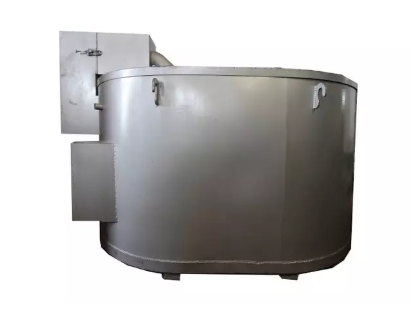
You might wonder what exactly a crucible is when you start working with a Metal Melting Unit. A crucible is a special container designed to hold metals and alloys while you heat them to high temperatures for melting. You use it in many industries, from jewelry making to large-scale metallurgy. The shape and material of a crucible help you achieve even heating and safe handling during the melting process.
Let’s take a look at how crucibles have changed over time. Here’s a quick timeline that shows their evolution:
Period | Description |
|---|---|
Sixth/Fifth Millennium B.C. | Early crucibles appeared in Eastern Europe and Iran. |
Chalcolithic | Wide, shallow clay vessels heated from the top with blowpipes. |
Iron Age | Similar designs used for copper and tin smelting. |
Medieval | Thinner walls and flat bases introduced, improving smelting efficiency. |
Post-medieval | New designs emerged, produced by specialists, showing a shift in manufacturing methods. |
You see, the design of crucibles has always focused on helping you melt metals more efficiently. Today, you can choose from several types, each made for specific melting needs. Here’s a quick table that shows common crucible materials and their properties:
Crucible Material | Best For | Max Temperature | Key Benefits |
|---|---|---|---|
Zirconia Crucibles | Precious metals, high-temp alloys | 2400°C | Thermal shock resistance, chemical inertness |
Graphite Crucibles | Aluminum, copper, brass | 1200°C | Cost-effective, good thermal conductivity |
Clay-Graphite Crucibles | Gold, silver, bronze | 1200°C | Durable, oxidation-resistant |
Silicon Carbide Crucibles | Iron, steel, high-temp metals | 1600°C | High thermal conductivity, thermal shock resistance |
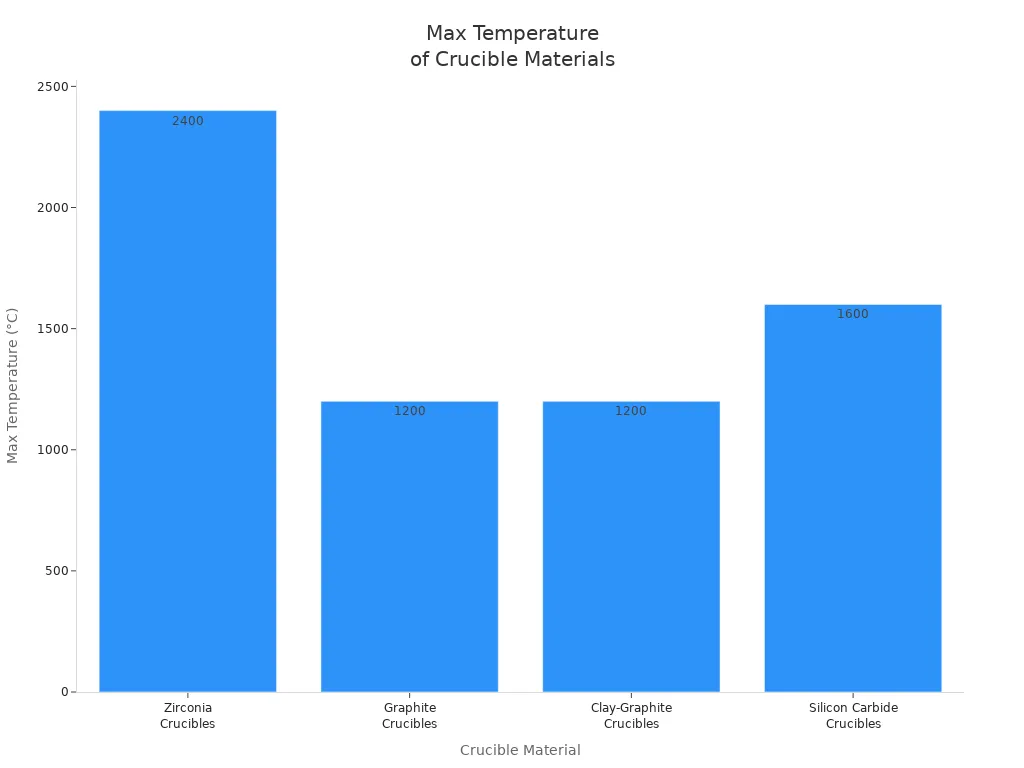
You’ll notice that each material offers different benefits for your Metal Melting Unit. For example, graphite crucibles work well for melting aluminum and copper because they handle high temperatures and conduct heat efficiently. Zirconia crucibles let you melt precious metals at even higher temperatures.
Tip: Always check for industry standards like ISO 9001 or YB/T 4145-2006 when you buy crucibles. These certifications help you ensure quality and safety for your melting projects.
When you use a Metal Melting Unit, the crucible plays a key role in the melting process. You place your metal or alloy inside the crucible, then heat it until it reaches its melting point. The crucible holds the material securely, allowing you to melt it evenly and safely.
You rely on the crucible to:
Contain the metal during heating
Transfer heat efficiently for uniform melting
Protect the molten metal from contamination
Allow easy pouring or shaping after melting
Crucibles come in different types for different melting jobs. Ceramic crucibles work well for chemical reactions and moderate temperatures. Platinum crucibles help you analyze precious metals in labs. Graphite crucibles handle high-temperature metals like steel and aluminum in industrial settings.
You’ll find that the right crucible makes your melting process smoother and more reliable. Whether you’re working with a small Metal Melting Unit for jewelry or a large industrial furnace, choosing the right crucible helps you get the best results.
Note: Always match your crucible to the type of metal and melting furnace you use. This keeps your process safe and efficient.
When you start working with a Metal Melting Unit, you’ll notice that not all crucibles are the same. Each type brings its own strengths and weaknesses to the melting process. Let’s break down the most common crucible types you’ll find in metal melting.
Graphite crucibles are a favorite for many who work with metal melting. You get high temperature tolerance—up to 3000°C—which means you can melt even the toughest metals. These crucibles heat up fast and spread heat evenly, so your melting process goes smoothly. They’re also cost-effective and easy to find.
Here’s a quick look at the pros and cons:
Advantage | Description | Impact on Application |
|---|---|---|
High temperature tolerance | Withstands up to 3000°C | Great for refractory metals |
Excellent thermal conductivity | Fast, even heating | Helps with rapid melting and cooling |
Cost-effective | Affordable and available | Popular for many melting jobs |
Thermal shock resistance | Handles quick temperature changes | Lasts longer in tough conditions |
Chemical stability issues | Reacts with oxygen at high temps | Best in vacuum or inert gas environments |
Carbon contamination risk | Carbon can enter molten metal | Not ideal for sensitive alloys |
Mechanical brittleness | Can crack if handled roughly | Needs careful handling |
Tip: If you want fast, efficient melting and don’t mind a little extra care, graphite crucibles are a solid choice.
Ceramic crucibles, like alumina and zirconia, show up often in labs and small-scale melting. You’ll find alumina crucibles handle high temperatures and resist chemicals, making them perfect for research. Zirconia crucibles work well for melting precious metals and super-alloys, but they don’t handle rapid temperature changes as well as graphite or silicon carbide.
Alumina: Moderate thermal shock resistance, high melting point.
Zirconia: Low thermal shock resistance, excellent for precious metals.
You might also see porcelain and quartz crucibles. Porcelain works for temperatures below 1200°C, while quartz resists thermal shock and chemical attack, making it useful for tube furnace melting.
Silicon carbide crucibles give you a great balance between durability and performance. They handle temperatures up to 1650°C, which covers most non-ferrous metal melting jobs. You’ll see them used for aluminum, copper, zinc, gold, and silver. These crucibles resist thermal shock, so you can heat and cool them quickly without worry.
Maximum Temperature Tolerance | Commonly Used Metals |
|---|---|
1600–1650°C | Aluminum, Copper, Zinc, Gold, Silver |
Aluminum alloys: Clean melts, low contamination.
Copper alloys: Less dross forms.
Precious metals: Low metal loss, stable shape.
Note: If your melting process involves quick temperature swings, silicon carbide crucibles can save you time and trouble.
Metal crucibles, usually made from steel or nickel alloys, play a big role in foundries. You’ll use them for bronze casting, upcast casting, and melting high-temperature alloys like nickel and titanium. They offer strength and durability, but you need to watch for reactions between the crucible and the molten metal.
Application Type | Description |
|---|---|
Bronze Casting | Smooth pouring, even cooling |
Upcast Casting | Produces rods and wires |
High-Temperature Alloys | Handles nickel and titanium melting |
You should always consider environmental factors, like humidity and oxygen, since these can affect how long your crucible lasts during melting.
Remember: The right crucible type makes your melting safer, faster, and more reliable. Always match your crucible to your Metal Melting Unit and the metal you plan to melt. ��️
When you choose a crucible for your melting projects, you want it to last through many cycles. Durability depends on the material and how often you heat and cool the crucible. Here’s how some popular types stack up:
Silicon carbide crucibles usually last longer. They resist oxidation and handle extreme temperatures, so you can use them for repeated melting without much wear.
Graphite crucibles work well but can erode faster, especially if you melt metals at high temperatures. Oxidation can weaken them over time.
Ceramic crucibles, like alumina, offer good durability for moderate melting jobs. They resist chemicals but may crack if you heat or cool them too quickly.
Metal crucibles are strong but can react with some molten metals, which may shorten their lifespan.
Tip: If you plan to do frequent melting, silicon carbide crucibles give you the best value for long-term use.
You need a crucible that can handle the heat of your chosen metal. Each material has a different temperature range. Check out this table to compare:
Crucible Material | Temperature Resistance Range | Notes |
|---|---|---|
High-Purity Graphite | Up to 3000°C (5472°F) | Great for melting metals without contamination. |
PTFE | -60°C to 260°C | Not for high-heat melting. |
Silicon Carbide | Up to 2500°C (4532°F) | Handles thermal shock well. |
Alumina | Up to 1900°C (3452°F) | Good for chemical resistance. |
Platinum | Up to 1800°C (3272°F) | Resists oxidation and corrosion. |
Other Ceramics | Up to 2000°C | Useful for high-temperature melting. |
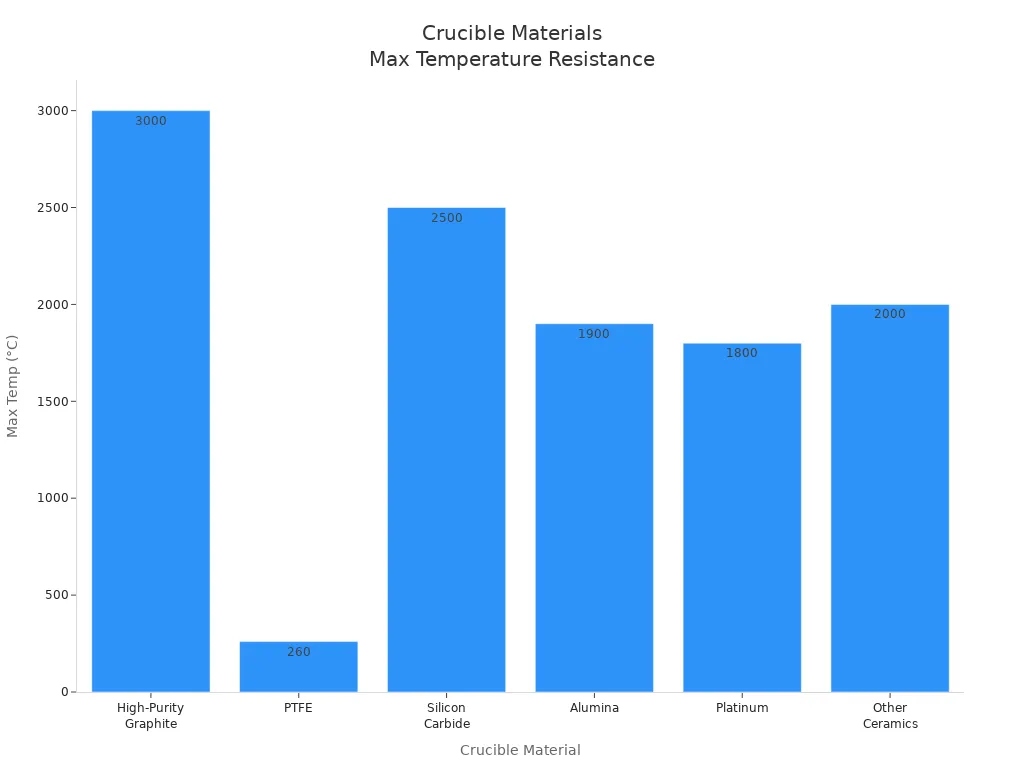
If you melt metals like gold or aluminum, graphite and silicon carbide crucibles give you plenty of heat resistance. For super-high temperatures, high-purity graphite is your best bet.
Crucible prices can vary a lot based on size and material. Here’s a quick look at graphite crucible costs:
Type of Graphite Crucible | Average Price (USD) |
|---|---|
Small (max 1kg) | $25 – $50 |
Medium (1 to 5kg) | $50 – $120 |
Large (over 5kg) | $120 – $300 |
Specialty (custom or high-purity) | $300 and above |
Ceramic and silicon carbide crucibles usually cost a bit more than basic graphite, but they last longer for frequent melting. Metal crucibles can be expensive, especially if you need special alloys.
Note: Investing in a higher-quality crucible saves you money in the long run if you do a lot of melting.
Not every crucible works with every metal. You need to match your crucible to the metal you plan to melt. Here’s what you should know:
Crucible Material | Features | Applications |
|---|---|---|
Boron Nitride (BN) | Handles thermal shock, stays non-stick, resists chemicals. | Great for high-purity melting and evaporation. |
Alumina (Al2O3) | Stands up to high heat, resists chemicals, affordable. | Works for melting metals and complex compounds. |
Graphite | Handles extreme heat, spreads heat well. | Best for gold, silver, platinum, and other precious metals. |
Molybdenum | High melting point, strong, resists shock. | Good for tough melting jobs and demanding metals. |
Niobium | Resists chemicals, keeps shape at high heat. | Useful for corrosive metals and pure melts. |
You can use graphite crucibles for melting gold, silver, and platinum. They heat up fast and don’t contaminate your metal.
Silicon carbide crucibles work best for copper-based alloys. They handle quick temperature changes and keep your melts clean.
For scientific melting, platinum or zirconium crucibles prevent contamination and keep your results pure.
Always check your crucible’s compatibility before starting a new melting project. This helps you avoid wasted metal and keeps your Metal Melting Unit running smoothly.
When you work with a metal melting unit, you need to pick the right furnace for your project. The three main melting furnaces for metals are electric, gas-fired furnaces, and induction furnaces. Each furnace type gives you different benefits for heating and melting metals. Let’s look at how they compare in speed, energy efficiency, and control.
Electric furnace types use electricity to heat metals. You get precise temperature control, which helps you melt metals cleanly and safely. These furnaces include resistance furnaces, AC arc furnaces, DC arc furnaces, and submerged arc furnaces. You can see how each operates in the table below:
Furnace Type | Operation Description |
|---|---|
Resistance Furnace | Uses electrical resistance for heating, ideal for precise temperature control and clean processes. |
AC Arc Furnace | Generates an electric arc for melting, primarily used in steelmaking and non-ferrous metals. |
DC Arc Furnace | Similar to AC but uses direct current, suitable for specialty steels requiring precise control. |
Submerged Arc Furnace | Electrodes are submerged in molten metal, preventing heat loss and enabling efficient alloy production. |
You can boost energy efficiency by keeping the furnace lid closed and avoiding unnecessary temperature increases. If you operate at only half power or add materials late, you use more energy. For example, running at 50% power can increase electricity use by 20 kWh per ton. If you keep the lid open too long, you add 15 kWh per ton. These small changes make a big difference in your industrial processes.
Gas-fired furnaces use natural gas or propane for heating and melting metals. You get moderate melting speed and reliable performance. Gas furnaces work well for copper melting and other non-ferrous metals. They offer clean combustion and are environmentally friendly, but their operating costs are higher than induction furnaces. Here’s a quick comparison:
Furnace Type | Melting Speed | Cost-Effectiveness |
|---|---|---|
Gas Furnace | Moderate | Higher operating costs compared to induction due to energy use |
You might choose gas-fired furnaces for their simplicity and efficient heating, especially when you need to melt large batches.
Induction furnaces use electromagnetic induction to heat and melt metals. You get high melting speed, excellent energy efficiency, and precise temperature control. Induction heating and melting furnaces work for copper melting, steel, and other alloys. You’ll find coreless induction furnaces and channel induction furnaces in many metal melting units.
Induction furnaces come with advanced safety features. You get closed-loop water cooling to prevent overheating, automated controls for temperature, and strong electrical safety protocols. These furnaces also use fume and emission control systems, like HEPA filters, to keep your workspace clean and safe.
Furnace Type | Melting Speed | Cost-Effectiveness |
|---|---|---|
Induction Furnace | High | Lower lifecycle costs due to energy efficiency and reduced labor costs |
If you want fast copper melting and precise control, induction furnaces are the top choice for industrial metal melting units.
Tip: Match your furnace to your metal melting unit and the metals you plan to melt. This helps you get efficient heating, clean results, and safe operation every time. ⚡
Selecting the right crucible for your Metal Melting Unit makes a huge difference in your melting results. You want a crucible that matches your furnace type, the metals you plan to melt, and your melting goals. Let’s break down what works best for electric, gas, and induction furnaces.
Electric furnaces give you precise temperature control and clean melting conditions. You need a crucible that can handle the specific alloy and furnace setup. Here’s a quick table to help you choose:
Alloy Type | Recommended Crucible | Avoidance Criteria |
|---|---|---|
Titanium | Yttria-coated graphite | Graphite (carbon pickup) |
Aluminum | Boron nitride | SiO₂-based refractories |
Nickel Superalloy | High-purity MgO | Low-grade MgO (silica risk) |
You should always check the crucible’s material. Graphite works well for steel melting because it resists thermal shock and conducts heat efficiently. For copper melting, boron nitride crucibles keep your melts clean and prevent contamination. Make sure your crucible matches the furnace’s operating frequency and capacity. This helps you avoid overheating and keeps your industrial processes running smoothly.
Tip: Always inspect your crucible before each use. Look for cracks or wear to prevent leaks and keep your melting safe.
Gas furnaces work well for melting metals like copper and aluminum. You want a crucible that resists high temperatures and chemical reactions. Here are some top choices:
Boron nitride crucibles: These handle high temperatures and offer low reactivity. You get superior thermal performance and chemical inertness.
Alumina crucibles: These are durable and cost-effective. They work well for everyday melting jobs and general laboratory use.
Boron nitride supports copper melting and other high-temperature applications. Its non-porous surface keeps your melts clean and helps with compound semiconductor growth. Alumina gives you reliable performance for routine melting tasks.
Note: Clean your crucible after each use. This keeps your Metal Melting Unit working efficiently and extends the life of your crucible.
Induction furnaces use induction heating to melt metals quickly and efficiently. You need a crucible that can handle rapid temperature changes and electromagnetic fields. Most induction furnace crucibles are formed by ramming granular refractory material between the coil and a hollow internal former. During the first heat, the former melts away, leaving a sintered lining that forms the crucible.
The furnace body has a cylindrical coil around the ceramic crucible.
Yokes made of transformer sheet metal guide the electromagnetic field.
The sintered lining ensures durability and high-quality output.
Induction heating gives you precise temperature control and monitoring features. You get fast copper melting and consistent results for industrial applications.
Safety tip: Always follow manufacturer guidelines for crucible installation and maintenance. This protects your Metal Melting Unit and ensures safe melting.
When you work with crucibles, safety comes first. You want to protect yourself and your equipment every time you use your Metal Melting Unit. Here are some important steps to follow:
Preheat the crucible near the furnace to remove any moisture. This helps prevent cracks when you start heating.
Burn a little charcoal or wood inside the crucible for a few minutes. This step gets rid of leftover moisture.
Slowly bake the crucible up to 500°C. Quick heating can cause it to crack.
Use a mix of borax and sodium carbonate as flux. This removes impurities from your metal.
Make sure the inside of the crucible has a smooth coating. This keeps metal from sticking.
Never overfill the crucible. Too much metal can cause it to break.
Use a spoon, not pliers, to handle molten metal. This protects the crucible from damage.
Keep strong flames away from the crucible. Direct contact can weaken the material.
Tip: Always wear heat-resistant gloves and safety goggles when handling hot crucibles. Safety gear keeps you protected from splashes and burns.
Taking care of your crucible helps it last longer and keeps your melting process smooth. Here are some best practices:
Store graphite crucibles in a dry place. Moisture can damage them.
Handle crucibles gently. Dropping or bumping them can cause cracks.
Preheat the crucible slowly before each use. This prevents thermal shock.
Fill the crucible only one-third to two-thirds full. Overloading can lead to breakage.
Use tongs that fit the crucible’s shape. This makes handling safer and easier.
Add materials based on the crucible’s capacity. Avoid overfilling.
Clean the crucible gently after each use. Scrubbing too hard can cause damage.
Keep the crucible away from the furnace walls during use.
Inspect the crucible often for cracks or wear. Replace it if you see damage.
Avoid using too many combustion aids or additives. These can shorten the crucible’s life.
Prevent direct oxidizing flames from touching the crucible.
If you use alumina crucibles, heat and cool them gradually. Sudden temperature changes can cause them to break. Always check for surface wear or cracks before starting a new melting session.
Note: Good maintenance means fewer interruptions and better results from your Metal Melting Unit.
You now know the container you use to melt metal is called a crucible. Picking the right crucible for your Metal Melting Unit matters a lot. The right choice keeps your metal pure and helps your crucible last longer. Different materials, like graphite or clay, handle heat and chemicals in their own way. This can change how well your metal melts and the quality you get.
Common mistakes to avoid:
Overloading the crucible
Ignoring material compatibility
Not controlling heating rates
Quick tip: Always match your crucible to both your Metal Melting Unit and the metal you plan to melt. Stay safe, work smart, and enjoy better results every time!
You should use a graphite or silicon carbide crucible for most home Metal Melting Units. These materials handle high heat and last longer. Always check your Metal Melting Unit’s manual for the best fit.
Look for cracks, chips, or thinning walls. If you see metal leaks or the crucible changes shape, replace it right away. Using a damaged crucible in your Metal Melting Unit can cause spills or accidents.
Yes, you can melt both metals in the same Metal Melting Unit. Clean the crucible between uses to avoid mixing metals. Use a crucible that works for both gold and silver, like graphite.
Let the crucible cool. Gently remove leftover metal with a wooden tool. Avoid water on hot crucibles. For stubborn residue, use a soft brush. Keeping your crucible clean helps your Metal Melting Unit work better.
