
EMAIL:
lh@longhuamachine.com
TELL/whatsapp:
+8619305527239  English English
Views: 0 Author: Site Editor Publish Time: 2025-10-01 Origin: Site


You will find several main types of metal melting unit in the industry, such as induction, electric arc, blast, crucible, and cupola furnace. Each metal melting furnace plays a vital role in transforming raw materials into products like molten aluminum for manufacturing. Induction technology helps you achieve faster process times, better energy use, and improved safety. Aluminum melting furnaces and other units support a global market that reached over USD 2 billion in 2024. These systems give you efficient and reliable results for every stage of metalworking.
Understand the main types of metal melting furnaces: induction, electric arc, blast, crucible, and cupola. Each type serves specific applications and offers unique benefits.
Induction furnaces provide high energy efficiency and precise temperature control, making them ideal for melting various metals like aluminum and copper.
Electric arc furnaces are flexible and can handle small batches of scrap metal, but they require careful management of energy consumption.
Blast furnaces are traditional units for large-scale iron production, but they contribute significantly to CO2 emissions, prompting a shift towards more efficient methods.
Regular maintenance and safety protocols are essential for all melting units to ensure safe operation and longevity of the equipment.
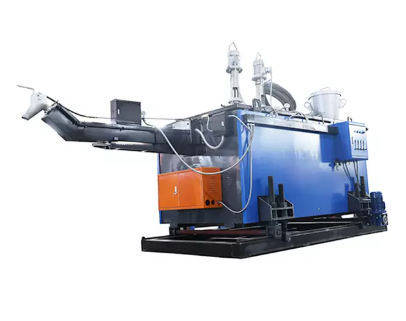
When you explore the world of metal melting, you encounter several main types of metal melting unit. Each one uses a different process to achieve the high temperatures needed for melting metals. The following table gives you a quick overview of the most common furnace types, their descriptions, and their main applications:
Furnace Type | Description | Applications |
|---|---|---|
Blast Furnaces | High-volume smelting for extracting iron from ore using preheated air. | Steel production, pig iron manufacturing. |
Electric Arc Furnaces | Efficient for industrial metal casting, using electric arcs for melting. | Preliminary smelting of raw materials. |
Induction Furnaces | Popular in foundries, offering excellent heat control and efficiency. | Melting iron, brass, steel, aluminum, copper. |
Induction furnaces use electromagnetic induction to heat and melt metals. You place the metal inside a coil, and an alternating current creates a magnetic field. This field induces electric currents in the metal, causing it to heat up quickly. Induction furnaces stand out for their rapid heating, precise temperature control, and high efficiency. You can achieve thermal efficiencies up to 90%, which is much higher than traditional furnaces. This means you save energy and reduce emissions during the melting process.
Aspect | Details |
|---|---|
Principle of Operation | Induction furnaces utilize electromagnetic induction to heat metal directly, minimizing energy loss. |
Energy Efficiency | Achieve thermal efficiencies of up to 90%, significantly higher than traditional furnaces (40-60%). |
Rapid Heating | Capable of rapid heating, reducing processing time and increasing productivity. |
Precise Control | Offers precise temperature control, crucial for maintaining quality and consistency. |
Environmental Benefits | Produces fewer emissions, contributing to a cleaner working environment. |
Versatility | Suitable for various metals (steel, iron, aluminum, copper) and adaptable to different production needs. |
Maintenance and Longevity | Requires less maintenance due to fewer moving parts, enhancing durability and reducing downtime. |
Economic Considerations | Long-term savings in energy and maintenance costs make them cost-effective despite higher initial investment. |
Technological Advancements | Continuous improvements in technology enhance efficiency and performance. |
You often use induction furnaces for melting iron, steel, copper, and aluminum. Aluminum melting furnaces based on induction technology help you produce molten aluminum with excellent quality. You also find different types of induction furnaces, such as coreless and cored, each suited for specific metals.
Type of Induction Furnace | Commonly Processed Metals |
|---|---|
Crucible (Coreless) Induction | Cast iron, non-ferrous metals (not steel) |
Medium frequency furnaces | Steel, copper, aluminum, and other alloys |
Groove (Cored) Induction | Copper, aluminum, zinc, cast iron |
Tip: Induction furnaces offer you a safer working environment because they do not use open flames or combustible gases.
Electric arc furnaces (EAFs) use electric arcs to generate the intense heat needed for melting metals. You place scrap steel or raw materials inside the furnace, and large electrodes create an arc that melts the contents. EAFs reach high temperatures above 3000°C, making them ideal for melting steel and special alloys. You benefit from their flexibility, as they can handle small batches and a wide range of steel types.
Advantages | Disadvantages |
|---|---|
Reuses alloy elements from scrap steel | Quality of molten steel is affected by impurities from scrap steel |
High temperatures (above 3000 ℃) allow melting of refractory alloy elements | Longer smelting period compared to converter steelmaking |
Precise control of furnace temperature | Higher power consumption (500 kWh/t) puts pressure on local power supply |
Flexibility to meet small smelting and multi-species special steel needs |
Electric arc furnaces consume about 400–500 kWh of energy per ton of steel produced. This is lower than blast furnaces, but still significant. You often see EAFs in recycling operations, where they melt scrap metal for reuse. Aluminum melting furnaces using electric arc technology also play a role in recycling and alloy production.
Blast furnaces have a long history in iron and steel production. You use them to extract iron from ore by blowing preheated air through a mixture of iron ore, coke, and limestone. The process produces high temperatures, which melt the iron and separate impurities. Blast furnaces can produce millions of tons of iron each year, but their usage is declining in some regions due to environmental concerns.
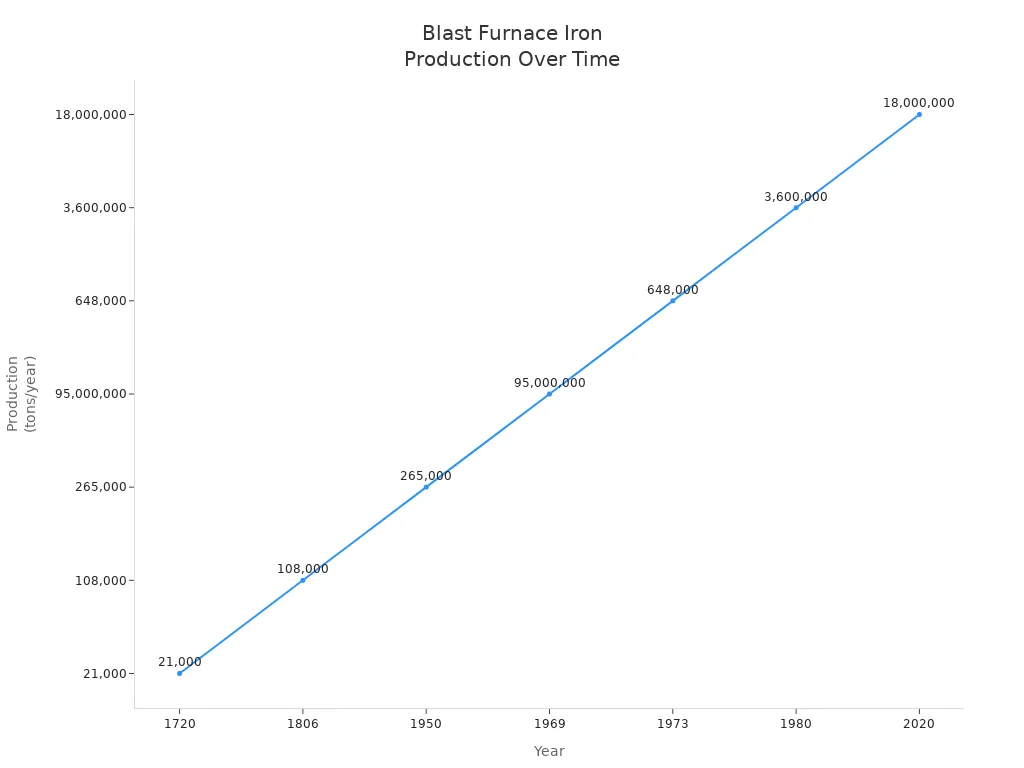
Note: Steel production through blast furnaces contributes about 11% of global CO2 emissions. Each ton of steel made this way results in 2.33 tons of CO2.
You still find large blast furnaces in countries like China and South Korea. The largest blast furnace in the world produces over 5.6 million tons of iron per year. In the US, the industry is shifting toward smaller, more efficient electric arc-based minimills.
Crucible furnaces are small, versatile units that you use for melting metals in a container called a crucible. These furnaces are common in jewelry making, laboratories, and small foundries. You can melt precious metals like gold and silver, as well as aluminum and copper, in a controlled environment. Aluminum melting furnaces of this type are popular for small-scale casting and prototyping.
Application Area | Description |
|---|---|
Jewelry Making | Melting precious metals like gold, silver, and platinum for small-scale projects. |
Foundries | Melting metals and alloys for casting into molds, ideal for small batches with specific properties. |
Laboratories | Used for experiments involving metal, glass, and pigment production, allowing for controlled experiments. |
Glass Industry | Melting raw materials to create glass, essential for maintaining molten state during shaping. |
Ceramics Manufacturing | Melting and processing materials like clay and glazes for custom ceramic pieces. |
Dental Labs | Melting metals for dental prosthetics, ensuring uniform melting for high-quality products. |
Electronics | Melting low melting point alloys used in specialized manufacturing. |
Pigment Production | Producing pigments requiring precise temperature control. |
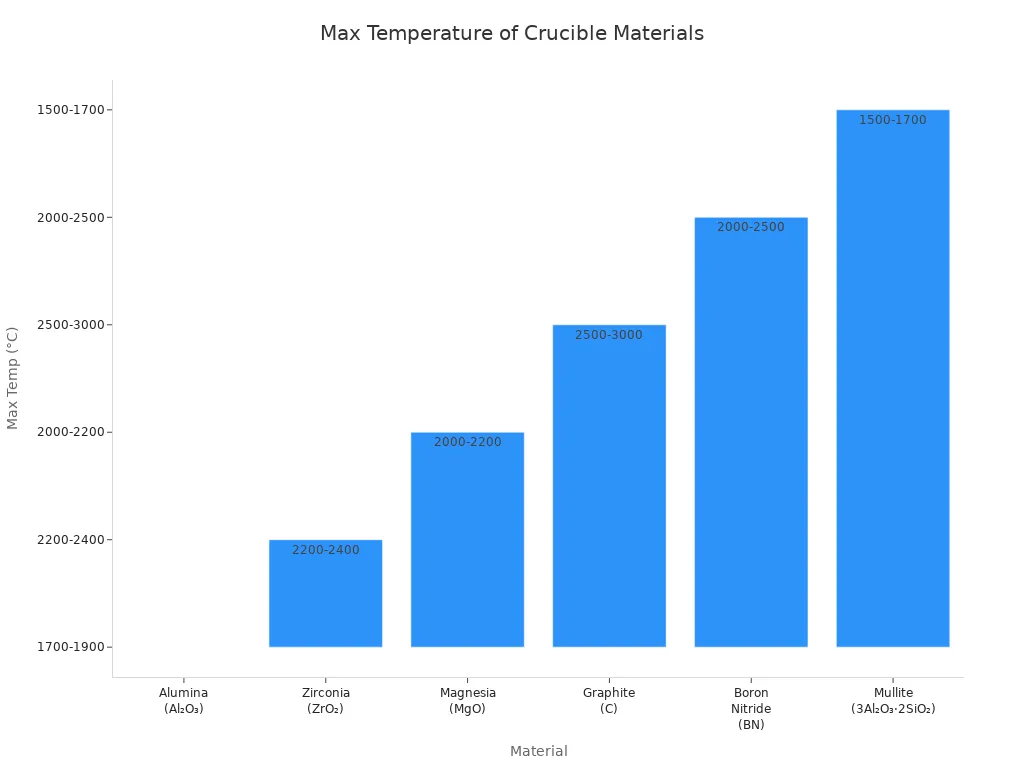
You choose the crucible material based on the metal and temperature needed. For example, graphite crucibles handle high temperatures and work well for non-oxide metals like copper and aluminum. Alumina and zirconia crucibles are best for high-purity or reactive metals.
Material | Max Temp (°C) | Thermal Shock Resistance | Chemical Resistance | Typical Applications |
|---|---|---|---|---|
Alumina | 1700-1900 | Moderate | Excellent | High-purity metal melting, glass processing |
Zirconia | 2200-2400 | Low | Excellent | Superalloy melting, reactive metals |
Magnesia | 2000-2200 | Low | Poor | Steel/iron alloy processing |
Graphite | 2500-3000 | High (inert atm) | Good | Non-oxide metal casting, vacuum furnaces |
Boron Nitride | 2000-2500 | Very High | Excellent | Semiconductor crucibles, aerospace |
Mullite | 1500-1700 | High | Good | General-purpose lab crucibles |
Cupola furnaces are vertical, cylindrical units mainly used for melting cast iron. You load layers of coke, metal, and flux into the furnace. Air blown through the bottom increases combustion, raising the temperature and melting the metal. Cupola furnaces play a key role in foundries, especially for producing large volumes of cast iron.
Cupola furnaces are vertical, cylindrical structures primarily used for melting cast iron.
They operate by layering coke, metal, and flux, igniting the fuel at the bottom, and blowing air through tuyeres to create a hot blast.
The intense heat generated (often exceeding 1,000°C) melts the metal, which then collects at the bottom of the furnace.
You benefit from their low operating costs and high efficiency. Some cupola plants produce iron with 15% less energy than traditional methods. Waste heat reclamation systems can make cupolas 40–60% more energy effective than electric melting. Regular maintenance is important to keep the furnace lining in good condition and ensure safety during the melting process.
Note: Waupaca Foundry melts over 2.5 million tons of iron each year using high-volume cupola furnace technology.
Understanding the working principle of a metal melting furnace helps you achieve efficient results in every melting process. You will see that each furnace uses a unique method to reach high temperatures and produce molten aluminum or other metals. Let’s explore how these systems operate.
Combustion heating is a classic method used in aluminum melting furnaces and other metal melting units. You burn fuels like natural gas, oil, or coal to generate heat. The furnace design includes chambers built from ceramic or refractory bricks, which withstand high temperatures and help distribute heat evenly.
Heating Method | Mechanism | Advantages |
|---|---|---|
Fuel-Powered Heating | Burns fuels to create heat for melting metals | Cost-effective for large-scale operations |
Control Systems | Regulate fuel flow for precise temperature control | Improves efficiency and reduces costs |
Modern combustion systems use advanced temperature control mechanisms to maintain the required melting point. You benefit from high-efficiency ratings, with newer systems reaching up to 98%. Efficient chamber insulation minimizes heat loss, making the process more energy effective.
Tip: Regular maintenance of combustion heating systems ensures safety and consistent performance.
Induction heating innovations have transformed aluminum melting furnaces and other metal melting units. The principle relies on electromagnetic induction, where a coil creates a changing magnetic field. This field generates eddy currents inside the metal, heating it directly.
Induction furnaces use electromagnetic induction to heat metals quickly.
Eddy currents and hysteresis losses contribute to rapid and uniform heating.
You achieve precise temperature control, which is vital for producing high-purity molten aluminum.
Induction heating minimizes energy wastage because heat is generated inside the metal itself. You also reduce emissions and improve safety since there are no open flames.
Heat transfer is essential in every metal melting furnace. You see three main mechanisms at work:
Conduction transfers heat from the furnace walls to the metal.
Radiation moves energy from the heat source to the metal surface.
Convection circulates hot gases and molten metal, ensuring even temperature distribution.
Heat Transfer Mechanism | Description |
|---|---|
Conduction | Moves heat through solid materials, like furnace walls and metal workpieces. |
Radiation | Transfers energy via electromagnetic waves, especially at high temperatures. |
Convection | Circulates hot gases and molten metal for uniform heating. |
Choosing the right materials for furnace construction and heating elements improves thermal efficiency. You maintain consistent quality in the melting process and protect the integrity of aluminum melting furnaces.
You use aluminum melting furnaces in many industries that require molten aluminum for casting and die casting. These furnaces help you melt aluminum ingots and keep the metal hot during the process. You often see them in the automotive and aerospace industries, as well as in foundries and recycling plants.
Melting aluminum ingots
Heat preservation of aluminum
Automotive industry
Aerospace industry
Foundries
Recycling
Aluminum melting furnaces play a key role in manufacturing. You rely on them to provide a steady supply of molten aluminum for pouring molten aluminum into molds. The table below compares different furnace types for aluminum melting, showing their energy use and the quality of the output:
Furnace Type | Energy Consumption (kWh/ton) | Output Quality |
|---|---|---|
Induction | 500 – 600 | High-purity melts, low hydrogen content |
Gas-fired | 1,000 – 1,200 | Risk of contamination |
Reverberatory | Up to 1,400 | Potential contamination issues |
Tip: Induction furnaces give you high efficiency and cleaner melts, which is important for quality products.
Foundries depend on specialized furnace technology to melt and refine metals. You see metallurgists selecting materials, developing alloys, and controlling quality. This work improves the performance of every metal melting unit in the foundry. The process includes melting the charge, refining the melt, and adjusting the chemistry. Refining removes harmful gases and elements, which helps prevent casting defects.
Furnace Type | Description | Common Uses |
|---|---|---|
Induction Furnace | Uses electromagnetic induction for efficient melting | Iron, brass, aluminum |
Crucible Furnace | Made from refractory materials for small-scale melting | Jewelry, craftwork |
Cupola Furnace | Vertical furnace using coke to melt cast iron | Cast iron |
Electric Arc Furnace | Generates heat with an electric arc, mainly for steel | Steel scrap |
You find that foundries use these furnaces to reach the high temperatures needed for different metals. Each furnace type supports specific tasks, from small jewelry projects to large-scale iron casting.
You use melting furnaces to recycle metals and reduce waste. Electric arc furnaces melt steel and iron scrap with high efficiency. Induction furnaces let you melt high-quality steel and non-ferrous metals, giving you precise temperature control. Reverberatory furnaces heat metals with reflected flames, which works well for aluminum. Rotary furnaces handle mixed or contaminated scrap, rotating to mix the melt and remove impurities.
Electric arc furnaces: Efficient for large scrap batches
Induction furnaces: Precise control for quality metals
Reverberatory furnaces: Uniform heating for aluminum
Rotary furnaces: Versatile for mixed scrap
You improve recycling rates and save energy by choosing the right furnace for each job.
You rely on the melting process to create new alloys for many industries. Induction furnaces help you melt and mix metals with high accuracy. You can control the temperature and composition, which is important for producing alloys with specific properties. Foundries and manufacturers use these furnaces to develop materials for automotive, aerospace, and electronics applications. Pouring molten aluminum and other metals into molds lets you shape new alloys for any need.
You must always focus on safety when working with aluminum melting furnaces or any metal melting unit. Modern equipment includes many features to protect you and your team during the melting process. You will find that manufacturers design these systems with your well-being in mind.
Comprehensive training sessions help you understand how to operate each furnace safely.
Flame-resistant clothing and heat-resistant gloves protect you from burns and splashes of molten aluminum.
Regular maintenance inspections keep all safety mechanisms in top condition.
Emergency response plans and drills prepare you for unexpected situations.
Most aluminum melting furnaces also include advanced safety technology:
Temperature control systems prevent overheating and ensure precise temperature control.
Ventilation and fume extraction remove harmful gases from the workspace.
Safety interlocks stop the furnace if a door opens or a fault occurs.
Emergency shutdown systems let you stop the process quickly if needed.
User-friendly controls make it easier for you to manage the melting process safely.
Tip: Always follow operational protocols and wear protective gear to reduce risks during the melting process.
You can improve energy efficiency in aluminum melting furnaces by making smart choices in design and operation. The melting process uses a lot of energy, so every improvement helps you save costs and protect the environment.
Optimize furnace design and insulation to keep heat inside.
Preheat charging materials before they enter the furnace.
Use clean scrap and proper sizing to improve melting efficiency.
Manage dross effectively to boost heat transfer.
Apply fluxes only when needed to enhance the process.
Adopt new technologies like induction heating or electromagnetic stirring.
Maintain equipment regularly and monitor performance.
Recover waste heat with energy recovery systems.
Train your team in best practices for energy efficiency.
You can also maintain the rope seal on furnace doors and use closed metal transfer systems to reduce heat loss. Adjusting the air-fuel ratio in combustion furnaces increases efficiency. Induction furnaces stand out for their high efficiency and precise temperature control, making them a top choice for many foundries.
Note: Improving energy efficiency in your metal melting unit not only lowers costs but also supports a cleaner, safer workplace.
You have many options when choosing a metal melting unit. Each furnace type offers unique benefits. Induction works well for energy efficiency and precise control. Cupola and blast furnaces handle large volumes. Crucible furnaces suit small batches and specialty metals. Always match your choice to your application, safety needs, and efficiency goals. Want to learn more or upgrade your equipment? Reach out to a trusted supplier for expert advice.
You should always wear protective gear and follow the manufacturer’s instructions. Keep the area clean and check all safety systems before starting. Never leave the furnace unattended while it is running.
You need to consider the type of metal, the amount you want to melt, and your budget. Some furnaces work better for small batches, while others handle large volumes.
You can melt different metals, but you must clean the furnace between uses. This prevents contamination and keeps your results pure. Always check if your furnace can reach the temperature needed for each metal.
You should inspect your equipment regularly. Clean the interior and replace worn parts as needed. Follow the maintenance schedule in the manual to keep your furnace working safely and efficiently.
You may notice uneven heating, strange noises, or slower melting times. If you see cracks or damage, stop using the furnace and call a technician. Regular checks help you catch problems early.
