
EMAIL:
lh@longhuamachine.com
TELL/whatsapp:
+8619305527239  English English


You need to reach a very high temperature to melt steel. Most steel melts in the range of 1370°C to 1530°C (about 2500°F to 2800°F). The exact temperature depends on the steel’s composition. Higher carbon content often lowers the temperature needed. Elements like chromium or nickel can change the temperature too. You use a Metal Melting Unit to control and reach the right temperature for melting. Knowing this temperature helps you avoid defects when welding, casting, or forging steel.
Steel melts at high temperatures, typically between 1370°C and 1530°C. Knowing this range is crucial for safe and effective processing.
Different types of steel have varying melting points. Always check the specific grade to ensure accurate temperature control.
Impurities in steel can lower its melting point and affect its quality. Always inspect for impurities before melting to avoid defects.
Using the right metal melting unit is essential. Induction and electric arc furnaces are popular for their efficiency and high-temperature capabilities.
Steel's high melting point allows for recycling without losing strength. This makes steel a durable and versatile material for many industries.

You need to know the exact temperature range to work with steel safely and effectively. Steel does not have a single melting point. The temperature depends on the type of steel you use. Most steels melt between 1370°C and 1530°C (about 2500°F to 2800°F). Different types of steel have slightly different ranges. You can see the differences in the table below:
Type of Steel | Melting Point (°C) |
|---|---|
Stainless Steel | 1375–1530 |
Carbon Steel | 1410–1530 |
Tool Steel | ~1420 |
Stainless steel usually melts at a lower temperature than carbon steel. Tool steel has a melting point close to the others, but you may notice small differences based on the exact alloy. If you use a specific grade, always check the manufacturer's data for the most accurate number.
Tip: Always use a reliable thermometer or temperature sensor when working with steel. This helps you avoid overheating or underheating the metal during processing.
Several factors can change the melting point of steel. You need to understand these if you want to control the process and get the best results.
Alloying Elements: When you add elements like chromium or nickel, you change the melting temperature. For example, stainless steel contains chromium, which can lower or raise the melting point depending on the amount.
Impurities: Impurities such as sulfur and phosphorus can form low-melting compounds. These compounds, like sulfides and phosphides, can lower the overall melting point of the steel. They also affect the microstructure, which can make processing more difficult.
Pressure: If you change the pressure during heating, you can alter the melting temperature. Most industrial processes use normal atmospheric pressure, but special applications may use higher or lower pressures.
Processing Conditions: If you do not reach the correct temperature, you may see defects or imperfections in the steel. Overheating can cause the material to lose its mechanical properties or even become unsafe to use.
Here are some ways impurities affect steel:
Impurities can create low-melting compounds that change how the metal behaves.
These compounds may melt at much lower temperatures, sometimes as low as 985°C.
When these compounds melt, the steel can become brittle and crack during processing.
If you do not control the temperature carefully, you risk damaging the steel. Overheating can reduce fatigue resistance and cause the metal to degrade. Not reaching the right temperature can leave you with a product that does not meet your needs.
Note: Always check for impurities in your steel before you start any melting process. This helps you avoid problems during refining and solidification.
A metal melting unit is the heart of any steel foundry or manufacturing plant. You use this specialized equipment to heat steel and other metals until they reach their melting point. The metal melting unit plays a vital role in refining, casting, and recycling metals. You rely on it to produce high-quality steel products and control the melting process for consistent results.
You will find several types of metal melting furnace in industry. Each type has unique features and operates at different temperature ranges. The choice depends on your production scale, energy needs, and the kind of steel you want to melt.
Type of Furnace | Typical Operating Temperature Range |
|---|---|
Blast Furnace | Above 1,500°C |
Reverberatory Furnace | Up to 1,600°C |
Cupola Furnace | 1,400°C to 1,600°C |
Converter Furnace | Around 1,500°C |
Resistance Furnace | Up to 1,200°C |
Induced Melting Furnace | 1,400°C to 1,800°C or higher |
Arc Furnace | Can exceed 3,000°C |
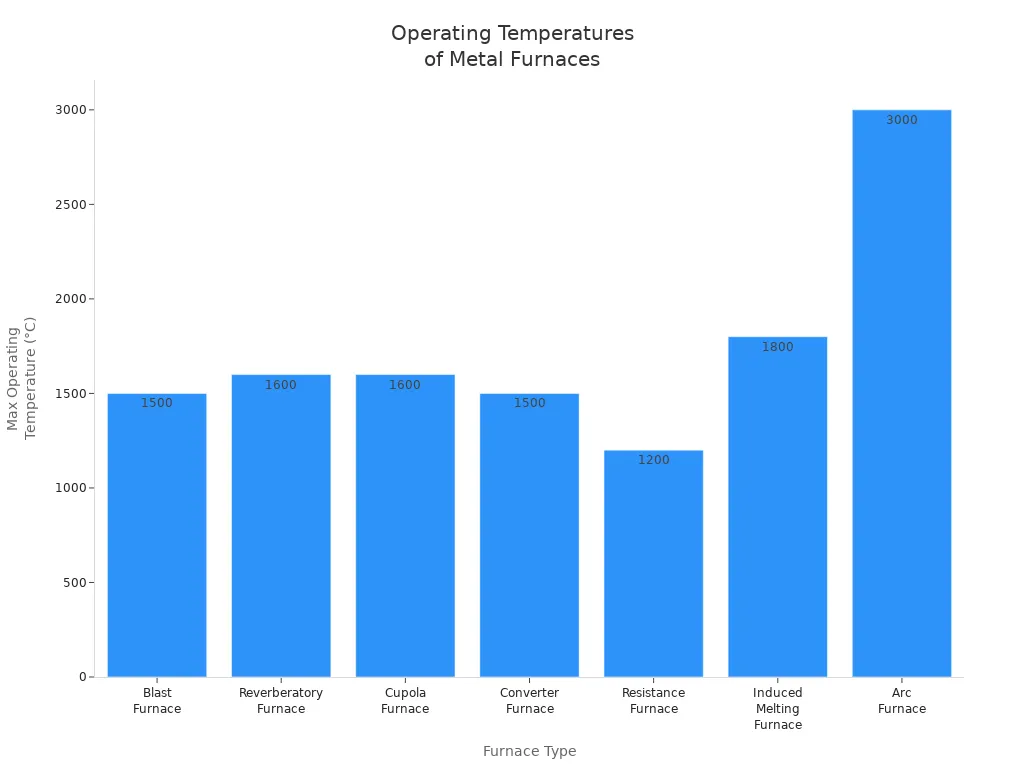
You often use induction furnaces for melting steel in foundries. Induction furnaces heat metal quickly and efficiently. You can also use electric arc furnaces when you need extremely high temperatures for melting steel. Blast furnaces are best for large-scale iron production, but you may choose cupola furnaces for melting cast iron in bulk.
Tip: Induction furnaces are more energy-efficient and produce fewer emissions than traditional blast furnaces. You can use renewable energy sources with induction furnaces to reduce your carbon footprint.
Crucible furnaces are another option for melting smaller batches of steel or specialty alloys. You place the metal in a crucible, which sits inside the furnace chamber. Crucible furnaces give you precise control over the melting process and are common in research labs and small foundries.
You need to understand how a metal melting unit operates to achieve the right melting conditions. The construction and operation of each furnace type affect the efficiency and quality of the steel you produce.
Induction furnaces use alternating electric currents to heat steel. You place the metal and additives in a crucible surrounded by an induction coil. The coil generates electromagnetic fields, causing the metal to heat rapidly and evenly.
Electric arc furnaces create intense heat by passing an electric arc between electrodes and the metal. You can melt scrap steel and alloys quickly, making this furnace ideal for recycling and specialty steel production.
Blast furnaces burn coke and other fuels to reach high temperatures. You feed raw materials continuously, which makes blast furnaces efficient for mass production but less flexible for small batches.
Crucible furnaces use high-temperature resistant materials for the inner vessel. You rely on these materials to contain and heat the steel safely. You also use temperature control systems to keep the melting process stable and prevent overheating.
Furnace Type | Efficiency | Suitability for Melting Steel |
|---|---|---|
Induction Furnace | High thermal efficiency, quick heating | Ideal for non-ferrous metals, less suitable for steel |
Electric Arc Furnace | Extremely high temperatures | Best for melting ferrous metals like steel |
Blast Furnace | Resource-intensive, large scale | Primarily for large-scale iron production |
You monitor the temperature using infrared pyrometers, thermocouples, or fiber-optic sensors. These tools help you maintain the correct melting temperature and avoid defects in the final product.
Crucible furnaces are popular in foundries for their flexibility. You can melt small quantities of steel or alloys and control the melting process closely. Induction furnaces are also common in foundries because they offer fast heating and high efficiency.
Note: Safety is crucial when operating a metal melting unit. You should use engineering controls, ergonomic workstations, and proper training to protect workers. Lockout/tagout procedures help prevent accidents during maintenance.
Recent advancements in furnace technology have improved the efficiency of the melting process. Automation reduces human error and optimizes furnace operations. Energy-efficient designs lower energy consumption and costs. Data analytics help you predict maintenance needs and improve decision-making.
Advancement Type | Description |
|---|---|
Automation | Enhances operational efficiency by reducing human error and optimizing furnace operations. |
Energy-efficient designs | Incorporates advanced insulation and regenerative heating technologies to lower energy consumption. |
Data analytics | Provides insights for predictive maintenance and improved decision-making processes. |
Crucible furnaces, induction furnaces, and electric arc furnaces all play important roles in steel manufacturing. You select the right metal melting unit based on your production needs, energy goals, and environmental requirements. The melting unit helps you achieve high-quality steel and supports efficient, safe, and sustainable manufacturing.
You might wonder how steel compares to other common metals when it comes to melting. Steel has a much higher melting temperature than metals like aluminum or copper. This difference affects how you work with each metal in manufacturing and recycling.
Metal | Melting Temperature (°C) |
|---|---|
Aluminum | 660 |
Copper | 1084 |
Iron, Wrought | 1482 – 1593 |
Steel, Carbon | 1425 – 1540 |
Steel, Stainless | 1510 |
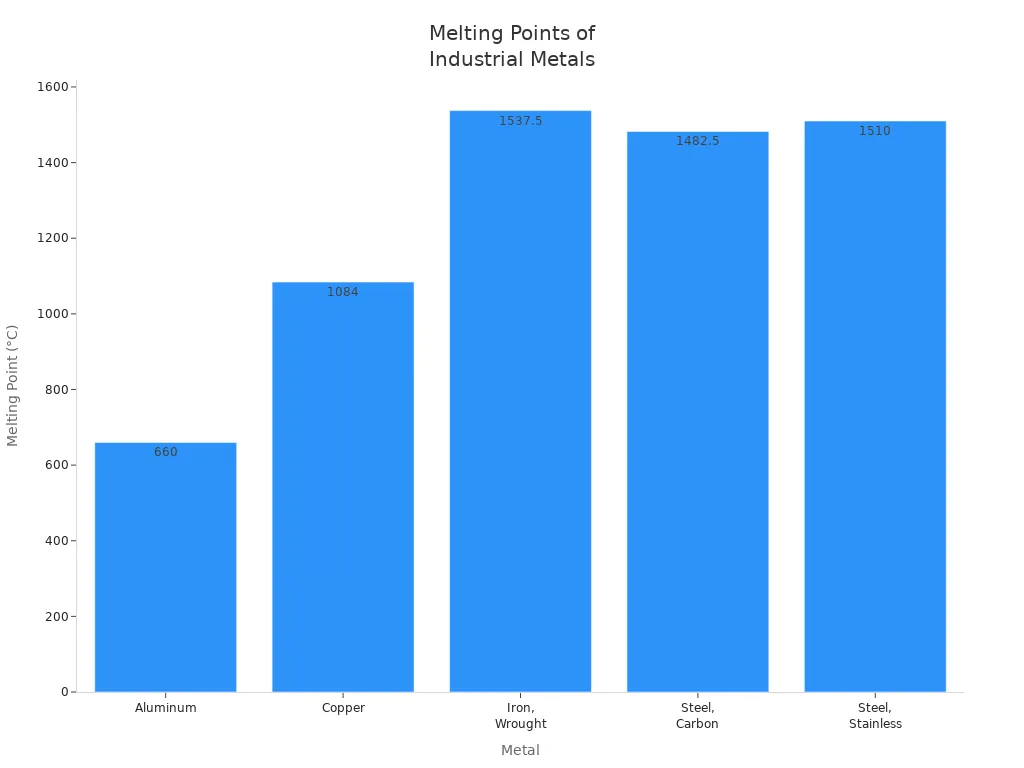
You can see that aluminum melts at a much lower temperature than steel. Copper also melts at a lower temperature. Wrought iron and steel have similar melting points, but steel’s range depends on its type. Stainless steel usually melts at the highest temperature in this group.
Note: Steel’s high melting point means you need special equipment and higher temperatures to process it compared to other metals.
When you work with steel, its high melting point brings both advantages and challenges. You need to use powerful furnaces and advanced temperature controls to melt and shape steel safely. This often means higher energy costs and more complex safety measures.
Implication | Steel (Higher Melting Point) | Metals with Lower Melting Points |
|---|---|---|
Safety | Requires higher temperature controls to prevent accidents | Easier to handle at lower temperatures |
Cost | May require more energy for melting and shaping | Generally lower energy costs |
Application Versatility | Suitable for high-temperature applications | Limited to lower temperature applications |
Knowing the melting point helps you choose the right temperature for molding, shaping, or welding steel.
You must select equipment that can reach and maintain these high temperatures.
Steel’s high melting point allows you to recycle it many times without losing strength or quality. This makes steel one of the most recyclable materials in the world.
You can use steel in places where high heat or strength is needed, such as in construction, automotive, and aerospace industries.
⚠️ Tip: Always consider the energy and safety requirements when working with steel. High temperatures mean you need to plan for extra safety and cost.
Manufacturers face challenges like maintaining furnace efficiency, controlling costs, and ensuring workplace safety. You also need to pay attention to the cooling process, as it affects the final properties of the steel. Despite these challenges, steel’s high melting point gives you a strong, durable, and versatile material for many uses.
You need to reach temperatures between 1370°C and 1530°C to melt steel. This high melting point makes steel ideal for demanding industries like construction, automotive, and energy. Metal melting units and advanced furnaces help you achieve these temperatures efficiently, ensuring quality and consistency in every batch.
Always wear safety gear, work in ventilated spaces, and control temperature carefully when melting steel. These steps protect you and help you produce strong, reliable metal parts for any project.
A foundry is a facility where you melt and cast metals like steel. You use high-temperature furnaces to heat metal until it melts. Workers pour the liquid metal into molds to create parts for construction, automotive, or machinery industries.
You need a foundry melting furnace because steel melts at very high temperatures. These furnaces reach the heat required for steel to become liquid. You control the process to ensure quality and safety in every batch produced in the foundry.
You should wear protective gear, use temperature sensors, and follow strict safety rules. Foundry workers must stay alert around hot metal and heavy equipment. Regular training helps you prevent accidents and keep the foundry environment safe.
Foundry melting lets you control temperature and remove impurities from steel. You improve the strength and durability of the final product. Careful melting in the foundry ensures you get reliable steel parts for demanding applications.
You can recycle steel in a foundry by melting scrap metal and casting it into new shapes. Foundry melting helps you reduce waste and save resources. Recycled steel from the foundry keeps its strength and can be used in many industries.
