
EMAIL:
lh@longhuamachine.com
TELL/whatsapp:
+8619305527239  English English

Views: 0 Author: Site Editor Publish Time: 2026-10-19 Origin: Site


How are complex metal parts made with speed and precision? A die casting machine injects molten metal into reusable molds, creating consistent shapes for mass production. This guide explains machine types, materials, applications, and key benefits. You’ll also learn how to choose suitable equipment for your manufacturing needs.
A die casting machine is industrial equipment used to produce metal components by forcing molten metal into a reusable steel die. The machine closes and holds the die under sufficient clamping force, injects metal into its cavity, and maintains the required process conditions until the casting can be removed. This makes it suitable for producing repeated parts with detailed features and consistent dimensions.
The machine and the die perform different functions. The machine provides the force, injection action, and control needed for production. The die contains the cavity that defines the component's shape. Together, they form a casting system designed around a particular alloy, part geometry, and production target.
A typical die casting machine includes a clamping unit, injection system, die assembly, drive system, and control system. The clamping unit keeps the two die halves closed during injection. The injection system transfers molten metal into the cavity, while the die controls the component's shape and supports heat removal during solidification.
Hydraulic or electric systems power different machine movements, depending on the design. The control system coordinates machine sequences and operating parameters. Other equipment may include a furnace, temperature controls, lubrication systems, and automated part extraction. Their configuration depends on the machine type and production requirements.
The process begins with preparing the die and bringing it to a suitable operating condition. The machine closes the die, then injects molten metal into the cavity at a controlled speed and pressure. The metal fills the available space and begins to solidify as heat transfers into the die.
After sufficient solidification, the machine opens the die and ejects the casting. The part may then undergo trimming, inspection, machining, or other finishing operations. Automated systems can coordinate these steps to maintain repeatable cycles. Stable temperatures, suitable injection settings, and proper die maintenance all help improve casting quality.
The die contains a cavity shaped to match the intended component. When molten metal enters under pressure, it flows through the runner and gate system into the cavity. This allows the process to reproduce features such as ribs, bosses, openings, and other details, subject to the limits of the alloy and die design.
Metal flow must be controlled carefully. Poor venting, unsuitable gate locations, or incorrect injection settings can lead to incomplete filling and trapped gas. Die temperature and cooling conditions also affect how the metal fills and solidifies. Proper tooling design and process validation are therefore essential for producing consistent parts.
Injection pressure and speed influence how molten metal enters the die and fills narrow or complex sections. If filling is too slow, the metal may cool before reaching the end of the cavity. If the process is poorly controlled, turbulence or trapped gas may contribute to porosity and other defects.
The correct settings depend on alloy properties, part thickness, cavity design, and machine capability. Higher pressure is not automatically better. Manufacturers must balance filling performance, die protection, cycle time, and final quality to establish a stable process.
Once the cavity is filled, the metal must solidify enough for safe removal. Cooling channels help control die temperature and heat transfer. After the casting reaches the required condition, ejector pins or another release mechanism push it out of the die.
Poor cooling balance may contribute to shrinkage, deformation, or inconsistent cycle times. Ejection can also damage a part if the casting has not solidified sufficiently or the release system is unsuitable. Manufacturers should verify cooling performance and ejection timing during process setup.
Tip: Ask suppliers to evaluate your actual part drawings and alloy before recommending machine capacity. This provides a more reliable starting point than selecting equipment by tonnage alone.
A hot chamber die casting machine keeps its injection mechanism connected to the molten metal supply. During operation, the injection system transfers metal into the die through an integrated gooseneck or similar arrangement. This design can support fast production cycles because the metal does not need to be transferred into a separate chamber for every shot.
Hot chamber machines are commonly used for zinc alloys and other compatible low-melting-point metals. They are often suitable for small or medium-sized components requiring detailed features and repeatable dimensions. For example, a hot chamber die casting machine for zinc products may suit applications involving zinc hardware and precision castings. Actual suitability depends on alloy compatibility, part size, and machine specifications.
A cold chamber die casting machine uses a separate injection chamber. Molten metal is transferred from a furnace into this chamber, then forced into the closed die under pressure. This arrangement is suitable for alloys that require higher melting temperatures or would cause excessive wear in typical hot chamber systems.
Cold chamber machines are widely used for aluminum alloys and selected copper-based alloys. Their cycle may include additional metal-transfer steps, but they provide the temperature and material compatibility needed for these applications. The right configuration depends on the alloy, component geometry, production volume, and required casting quality.
The main difference is how molten metal enters the injection system. Hot chamber machines keep the injection mechanism connected to the metal supply, while cold chamber machines receive a separate charge of molten metal for each cycle. This affects compatible alloys, machine design, and production cycle characteristics.
Feature | Hot chamber machine | Cold chamber machine |
|---|---|---|
Injection system | Connected to molten metal supply | Separate injection chamber |
Common alloys | Zinc and other compatible low-melting-point alloys | Aluminum and selected higher-temperature alloys |
Typical strength | Fast, repeatable cycles for suitable alloys | Supports alloys requiring separate metal transfer |
Selection priority | Alloy compatibility and part requirements | Alloy temperature, shot size, and process requirements |
Neither type is universally better. Manufacturers should select a machine based on the metal being cast, component dimensions, required output, and tooling design.
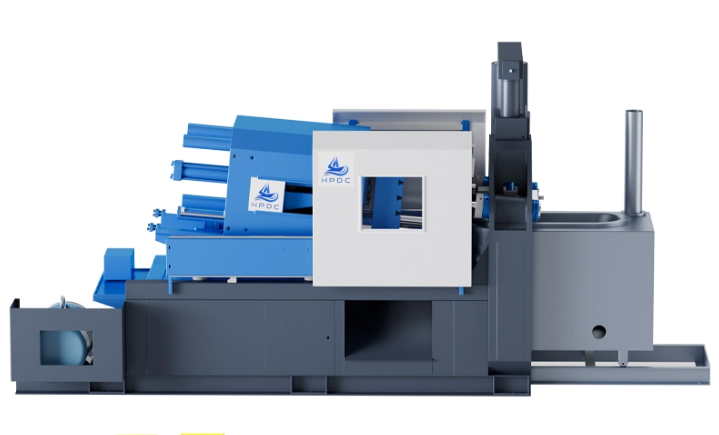
Zinc alloys are commonly used for components requiring fine details, repeatable dimensions, and suitable surface finishes. Their casting characteristics make them useful for hardware, decorative fittings, connectors, small housings, and other precision parts. Hot chamber machines are often selected for compatible zinc alloy applications.
For example, a multi-tool hot chamber die casting machine for zinc alloy products may be considered when production involves multiple tools or repeated zinc component runs. Tooling arrangements and achievable output must be confirmed for the intended products.
Aluminum alloys are widely used when manufacturers need lightweight components and useful mechanical or thermal properties. Applications include automotive housings, electronic enclosures, industrial equipment, and selected appliance parts. Cold chamber die casting is common because aluminum requires higher processing temperatures than typical hot chamber systems are designed to handle.
The final result depends on alloy selection, die design, filling conditions, and cooling control. Manufacturers should also consider whether the component requires machining, heat treatment, or other finishing operations after casting.
Copper-based alloys may be used where electrical, thermal, or mechanical properties are important. However, their processing requirements differ from those of zinc and aluminum. Alloy melting temperature, chemical compatibility, and the injection system's materials all influence machine suitability.
Not every copper-based alloy is appropriate for a hot chamber machine. Manufacturers should confirm the exact alloy and operating conditions with the equipment supplier before selecting a machine. This helps prevent premature equipment wear and unsuitable process conditions.
Die casting supports the production of housings, brackets, structural components, and selected powertrain parts. Reusable dies allow manufacturers to reproduce complex geometries across large production runs. This can help reduce the need for assembling multiple separate pieces when a suitable one-piece casting is possible.
Electronic devices and electrical equipment often use metal enclosures, heat-dissipation components, connectors, and mounting parts. Die casting can produce detailed shapes and repeatable dimensions that support assembly requirements. Surface finish and dimensional consistency remain important, particularly when components must fit closely with other parts.
Manufacturers also use die casting for fittings, handles, locks, medals, and mechanical components. Zinc alloy machines can be useful for products requiring small details and repeated production. For example, a hot chamber machine for zinc alloy medals illustrates a product-specific application.
The required machine depends on the casting's dimensions, cavity count, alloy, and expected production volume. The die and process settings must be designed around the actual part.
A die casting machine uses reusable tooling to produce repeated components through controlled cycles. Once the die and process are properly set up, automation can reduce manual handling and support predictable production schedules. This makes die casting attractive for manufacturers producing large quantities of similar parts.
However, setup time, die maintenance, and part complexity affect actual output. Manufacturers should evaluate the full production cycle rather than relying only on the machine's advertised speed.
Die casting can produce detailed features and repeatable geometries. This may reduce the need for extensive machining on suitable components. However, achievable tolerances depend on alloy properties, die design, cooling behavior, and process control.
Die casting requires an initial investment in dies and supporting equipment. Tooling costs can be significant, particularly for complex components or low-volume production. Common defects include porosity, incomplete filling, flash, and dimensional variation. Proper venting, process validation, and preventive maintenance help reduce these risks.
Note: Die casting is most economical when production volume justifies the tooling investment. Compare expected demand against tooling and operating costs before committing.
Clamping force must resist the pressure acting across the projected area of the casting and its runner system. If the force is insufficient, the die may open slightly and produce flash. Shot capacity must also accommodate the metal required for the complete shot, including runners and other feed passages where applicable.
Manufacturers should provide part drawings, alloy information, projected area, cavity count, and expected production volume. Suppliers can then evaluate the required clamping force and injection capacity.
Choose hot chamber or cold chamber equipment according to alloy compatibility and process requirements. Then consider whether manual, semi-automatic, or fully automatic production best fits the factory's needs. Automated extraction, trimming, and inspection may improve workflow when production volumes justify the additional investment.
Compare control capabilities, repeatability, energy consumption, maintenance access, and spare-parts support. Include tooling, labor, consumables, and expected downtime in the financial assessment. Request technical specifications and, where possible, validate performance using sample parts or production trials.
For additional equipment options, visit the die casting machine product range and compare configurations against your actual production requirements.
Routine inspections help identify die wear, damaged injection components, leaking seals, and blocked cooling channels. These problems can affect casting quality and increase unplanned downtime. Maintenance intervals should follow the equipment manufacturer's guidance and reflect actual operating conditions.
Track injection speed, pressure, temperatures, cycle time, and defect rates. Consistent records help operators identify process changes and investigate recurring problems. If porosity or incomplete filling increases, teams should examine material conditions, die venting, injection settings, and cooling performance.
Preventive maintenance may include lubrication, hydraulic system checks, safety inspections, and control-system testing. Operators should understand normal machine behavior and follow documented procedures for setup and fault recovery. Trained staff and reliable maintenance routines help protect equipment availability and product consistency.
A die casting machine produces precise metal parts through controlled injection and reusable dies. Hot and cold chamber systems serve different alloys and production needs. Longhua offers specialized equipment for zinc alloy casting, helping manufacturers improve production efficiency, consistency, and product quality.
A: It injects molten metal into reusable dies to form precise components.
A: It fills a closed die, cools the metal, then ejects the casting.
A: Hot chamber machines suit zinc alloys; cold chamber machines commonly process aluminum.
A: Alloy, clamping force, shot capacity, production volume, and operating costs.
A: Yes, automated cycles support efficient, repeatable high-volume manufacturing.
