
EMAIL:
lh@longhuamachine.com
TELL/whatsapp:
+8619305527239  English English
Views: 0 Author: Site Editor Publish Time: 2025-10-16 Origin: Site


You use a zinc alloy die casting machine to create precise metal parts quickly and in large quantities. Many industries rely on zinc die casting machines for their products.
Automotive
Consumer electronics
Aerospace
Defense
Medical devices
Year | Market Size (USD) |
|---|---|
2023 | 65.68 billion |
2032 | 103.65 billion |
Zinc alloy die casting machines produce precise and durable parts for various industries, including automotive, electronics, and consumer goods.
The die casting process is efficient, allowing for high-volume production with minimal waste, making it cost-effective and environmentally friendly.
Zinc alloys offer excellent strength, corrosion resistance, and design flexibility, enabling the creation of complex shapes and intricate designs.
Zinc alloy die casting machines play a vital role in many industries. You can use these machines to create a wide range of products, from car parts to electronics and everyday household goods. The versatility and high-volume production capability of zinc die casting machines make them essential for modern manufacturing.
You will find zinc alloy die casting machines at the heart of automotive manufacturing. These machines help you produce both functional and decorative parts with high precision. Zinc alloys offer excellent strength, corrosion resistance, and design flexibility, making them ideal for complex automotive components.
Some of the most common automotive parts made with zinc alloys include:
Interior aesthetic parts
Sunroof components
Mechanical parts such as oil pump covers and transmission parts
Engine and under-the-hood components
Power steering and brake system parts
Air-conditioning and climate control components
Chassis hardware
Seat belt system parts like buckles
Fuel system components
Exterior parts such as door handles and mirror brackets
Digital and sensor housings for electronic systems
Many leading automotive suppliers, like Grupo Antolin, have switched to zinc die casting for weight reduction and cost savings. You can achieve intricate designs and reliable performance with this technology.
If you work in electronics, zinc die casting machines allow you to create precise and durable components. Zinc alloys provide superior strength and toughness, which ensures your products last longer. They also offer outstanding electromagnetic shielding, protecting sensitive electronics from interference.
You can benefit from these features when producing:
Connectors and housings for robust connections
Enclosures that protect internal parts
Heat sinks for efficient cooling
Chassis and frames for structural support
Bases and mounting plates for secure device placement
Handles and knobs for user-friendly designs
Zinc alloys let you design thin walls and complex shapes, which is crucial for modern electronics. The die casting process delivers high accuracy, dimensional stability, and a smooth surface finish. You can manufacture parts for computers, consumer electronics, and other devices quickly and cost-effectively.
Zinc alloy die casting machines help you create a variety of consumer goods. You can use zinc alloys to make kitchen appliances, hardware, and decorative items. These materials provide high impact strength and corrosion resistance, so your products last longer even with frequent use.
Common consumer goods made with zinc alloys include:
Kitchen appliances such as blenders, stand mixers, hand mixers, toasters, food processors, and food slicers
Structural and decorative parts for household appliances
Door handles, faucets, and locks
Property | Description |
|---|---|
High Impact Strength | Ensures components withstand repeated use without degradation. |
Corrosion Resistance | Provides a natural barrier against corrosion, extending lifespan in harsh environments. |
Design Flexibility | Enables the creation of complex shapes with tight tolerances. |
You can take advantage of the design flexibility of zinc alloys to create products with unique shapes and fine details. The injection process ensures each part meets strict quality standards.
You can rely on zinc alloy die casting machines to produce industrial components that require tight tolerances and high strength. Zinc alloys allow you to achieve high precision and dimensional accuracy, which is essential for parts that must fit perfectly.
Some typical industrial components include:
Electric motors
Seat belt mechanisms
Computers and electronic hardware
Hand tools
Electrical connectors
Faucets
Zinc die casting offers several advantages for industrial applications:
Tighter tolerances and lower costs compared to other methods
Excellent surface finish and intricate detail
High-speed production for large quantities
High mechanical strength and impact resistance
The die-casting machine supports the production of complex geometries that are difficult to achieve with other methods. You can reduce the need for secondary machining and increase overall efficiency.
Zinc alloys, combined with the injection process, help you create reliable, high-quality parts for a wide range of industries. Whether you need automotive, electronic, consumer, or industrial components, zinc die casting machines deliver consistent results.
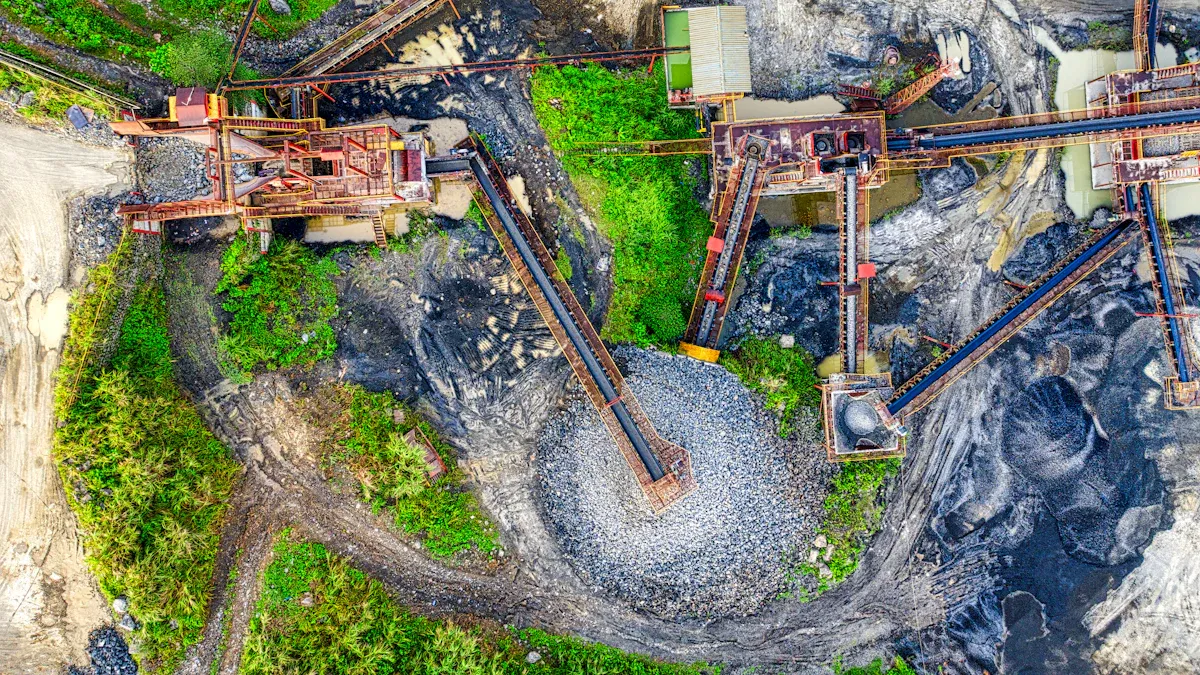
You use a zinc alloy die casting machine to transform raw zinc alloys into precise, durable parts. The process begins with material preparation. You melt zinc alloys in a furnace at temperatures between 400°C and 600°C. This step ensures the metal reaches the right fluidity for casting.
Next, you prepare the mold. The mold, made from high-grade alloy steel, must be clean and lubricated. This preparation helps the finished part release smoothly and prevents defects. Once the mold is ready, you inject molten zinc alloys into the mold cavity using high pressure die casting. The injection fills every detail of the mold, even the most complex shapes.
After injection, the metal cools and solidifies quickly. Cooling channels in the mold help speed up this process and prevent defects. Once the part solidifies, you open the mold and eject the casting. You then trim away any excess material. The final step involves post-processing, such as grinding, polishing, or painting, to improve the part’s surface and durability.
The die casting process for zinc alloys uses less energy than aluminum or magnesium. Zinc melts at a lower temperature, which saves energy and reduces costs. Zinc is also stronger than aluminum, so your parts last longer.
Step-by-step process:
Melt zinc alloys in a furnace.
Clean and lubricate the mold.
Inject molten metal into the mold at high pressure.
Cool and solidify the casting.
Eject and trim the finished part.
Post-process for surface quality.
You achieve high precision with zinc die casting machines because of advanced mold design and process control. The molds, made from hardened tool steel, withstand high heat and pressure. This durability allows you to create complex parts with tight tolerances and minimal defects.
Several factors contribute to the accuracy of your parts:
Careful mold design and material selection.
Stable process conditions.
Integration of skilled operators, advanced machines, and quality materials.
Use of simulations to predict how the metal will fill and solidify in the mold.
Real-time monitoring and control systems.
You benefit from high efficiency in mass production. Modern zinc die casting machines use advanced die design, high-speed injection systems, and rapid cooling methods. Automation and robotics increase throughput and reduce manual labor. Multi-cavity dies let you produce several parts at once, boosting productivity.
Die Configuration | Castings per Minute | Castings per Hour | Castings per 8-Hour Day |
|---|---|---|---|
Single Cavity Die | 15 | 900 | 7,200 |
4 Cavity Die | 60 | 3,600 | 28,800 |
Automation and process monitoring help you catch and correct problems quickly, keeping production smooth and efficient.
You gain many advantages when you use zinc die casting. The low melting temperature of zinc alloys allows for hot chamber die casting, which is faster than cold chamber methods. This speed increases productivity and reduces wear on molds, saving you money over time.
Zinc alloys offer excellent castability. You can create intricate designs and complex shapes with tight tolerances. This design freedom lets you meet specific requirements for each part. The long tool life of zinc molds—up to a million shots—means you spend less time and money on replacements.
You also reduce waste with zinc die casting. The process produces minimal scrap, and you can recycle leftover material. Advanced casting techniques and quality control further lower waste and energy use.
Mechanism | Description |
|---|---|
High Recyclability | Zamak alloys are recyclable, reducing ecological footprint. |
Minimal Waste in Casting Process | The process minimizes waste and energy consumption. |
Reduced Scrap Production | Precision casting leads to minimal trimming and finishing. |
Effective Recycling Strategies | Scrap and defective castings are reused, promoting sustainability. |
Improved Casting Techniques | Quality control helps manage and reduce waste. |
You also help the environment. Zinc die casting uses less energy and produces fewer greenhouse gases than other metal forming processes. Life Cycle Assessments show that zinc die-cast products have a lower carbon footprint.
You can rely on zinc die casting machines for fast production, cost savings, and consistent quality. The process supports high-volume manufacturing and gives you the flexibility to create detailed, reliable parts for many industries.
You can rely on a zinc alloy die casting machine for precise, high-strength parts across many industries.
Industry | Applications |
|---|---|
Automotive | Handles, trims, internal mechanisms |
Electronics | Casings, connectors, hardware |
Medical Devices | Housings, surgical tools, precision parts |
Choose this process for accuracy, durability, and cost-effective mass production.
You use a zinc alloy die casting machine for lower melting points and finer details. An aluminum die cast machine works better for larger, lightweight parts.
You usually use a hot chamber machine for zinc alloys. Cold chamber die casting machines work best with metals like aluminum that melt at higher temperatures.
You should check the supplier’s experience, machine quality, and customer support. Ask for references and review their service options before making your decision.
Tip: A good supplier helps you maintain your high pressure die casting machine for long-term performance.
