
EMAIL:
lh@longhuamachine.com
TELL/whatsapp:
+8619305527239  English English
Views: 0 Author: Site Editor Publish Time: 2026-08-10 Origin: Site


Cycle speed drives cost-per-part and overall equipment effectiveness in zinc die casting operations. Every fraction of a second shaved off your cycle boosts production directly. However, equipment manufacturers often market theoretical dry cycle speeds. These laboratory numbers rarely translate to real-world production rates. Once you introduce complex dies, molten metal, and automated peripherals, those ideal figures drop significantly. You need actual output, not just paper specifications.
We will provide a vendor-neutral framework to evaluate the variables dictating actual operational speed. You will learn how mechanical components, thermal management systems, and peripheral setups influence true machine performance. By understanding these limits, operators avoid unrealistic production estimates. This guide enables more accurate ROI modeling and smarter procurement decisions for your next equipment investment.
Evaluating a baseline begins with mechanical architecture. Operators choose a hot chamber zinc die casting machine primarily for its inherent speed advantages. The design features a submerged gooseneck assembly inside the holding furnace. Molten zinc fills the injection chamber automatically after every shot. This system completely eliminates the ladle transfer phase required by cold chamber alternatives. By skipping external metal ladling, the machine saves crucial seconds on every single cycle.
Beyond the gooseneck, hydraulic accumulator performance dictates filling speed. Zinc solidifies rapidly. You must inject the molten metal into the cavity before it cools and creates flow marks. Evaluating vendor specifications requires looking closely at injection force and valve response times. Standard valves might open in thirty milliseconds. High-performance proportional valves open in under ten milliseconds. Milliseconds matter immensely for rapid filling. Faster valve responses prevent premature freezing at the gates and allow you to maintain aggressive cycle speeds.
Buyers must approach OEM spec sheets skeptically. Manufacturers prominently display "dry cycle speeds" in their brochures. A dry cycle measures the time it takes the machine to lock, inject empty air, and open. It ignores the reality of metal injection, cooling time, and part ejection. Mechanical locking and opening speeds only account for a fraction of the actual production cycle. A fast dry cycle does not guarantee a fast wet cycle. True performance relies on how the machine handles thermodynamic stress under full load.
Thermal extraction governs the true waiting period in die casting. The machine cannot open until the zinc becomes structurally sound. The molten metal enters the die at roughly 420 degrees Celsius. It must cool down enough to eject without warping. This solidification phase sets a hard limit on cycle speed. No matter how fast your hydraulics operate, you must wait for the metal to freeze.
Die cooling systems manage this critical phase. Buyers must evaluate the machine’s integration with external chillers and internal die cooling channels. Advanced facilities use conformal cooling. This technique places cooling channels perfectly contoured around the part geometry. It extracts heat much faster than traditional straight-line drilled water lines. High-speed casting relies heavily on rapid, uniform heat extraction.
Melt temperature consistency also impacts solidification time directly. The holding furnace requires precise controls. Overheating the melt artificially inflates cooling time. If the zinc sits ten degrees hotter than necessary, the die must extract that excess heat during every cycle. This pushes opening times back by precious seconds. Tight thermal regulation ensures you only remove the minimum required heat for safe ejection.
Die Cooling Method Comparison Table
| Cooling Method | Setup Complexity | Heat Extraction Efficiency | Impact on Cycle Speed |
|---|---|---|---|
| Straight-Line Drilling | Low | Moderate | Standard baseline |
| Conformal Cooling Channels | High (Requires 3D printing) | Excellent | Reduces cooling time by up to 30% |
| High-Flow Chillers | Medium | High | Maintains consistent fast cycles |
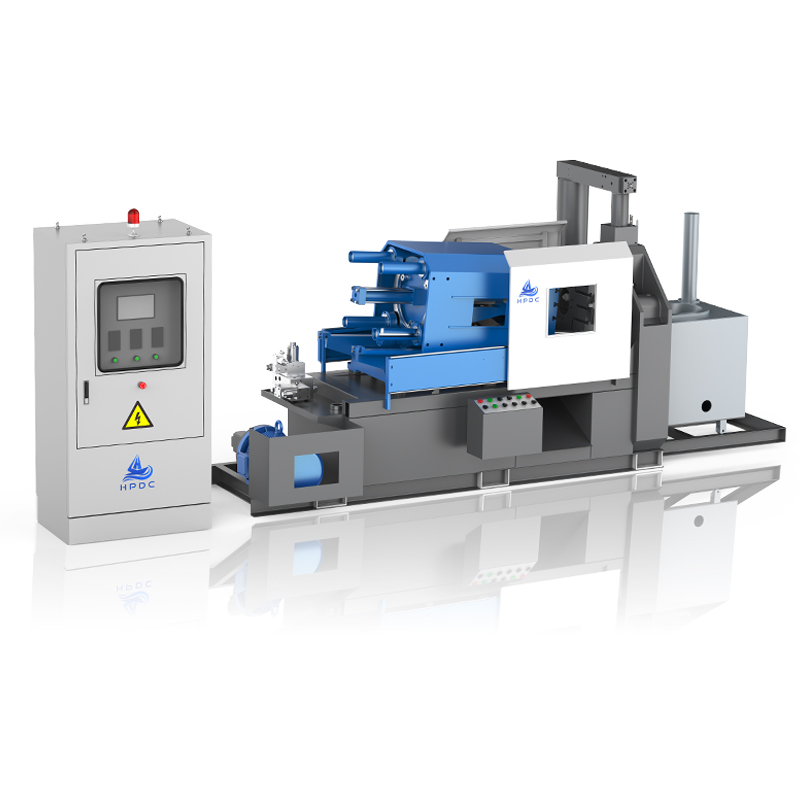
The synchronization challenge often limits facility output. A high-performance Zinc Die Casting Machine operates only as fast as its slowest peripheral component. Upgrading mechanical clamping speeds achieves nothing if the extraction robot takes ten seconds to remove the part. Production speed is an ecosystem, not an isolated machine specification.
Die lubrication speeds vary drastically based on technology. Traditional single-axis sprayers apply excessive lubricant slowly. They cool the die but waste time. Multi-axis robots offer better precision but still require lengthy spray paths. Micro-spraying technology presents the fastest solution. It uses minimal lubricant applied precisely where needed. This approach drastically cuts spray time and reduces the thermal shock on the die surface.
Part extraction methodologies also require careful assessment. Robotic arm extraction protects fragile parts but moves slowly. Simple drop-through systems utilize a water bath positioned below the machine. The part simply falls out of the die and into the conveyor. Drop-through extraction shaves seconds off the cycle.
Implementation risk looms large for buyers. Investing heavily in a high-speed casting unit while utilizing legacy automation creates a severe bottleneck. The fast machine simply waits for old robotics to finish their tasks. Facilities must upgrade peripherals alongside the primary casting unit.
Part geometry acts as an overriding speed variable. Wall thickness and part volume directly dictate thermal loads. Thick walls hold massive amounts of latent heat. They force the machine to remain closed longer. You cannot trick physics. Massive parts require longer cooling times regardless of the machine's capabilities.
High-volume, low-complexity applications achieve astonishing speeds. We often see this when utilizing a zinc medal die casting machine. Medals feature thin profiles and centralized gating. Their geometry allows for rapid, uniform cooling. Operators typically employ drop-through extraction for these items. Because they require minimal thermal extraction and utilize gravity ejection, medals allow for maximum machine utilization. They routinely achieve ultra-fast cycles.
Conversely, high-complexity constraints slow everything down. Consider an automotive housing with intricate internal cores and tight dimensional tolerances. These heavy cross-sections hold heat unevenly. If you eject them too quickly, the part distorts. Furthermore, high injection speeds on complex geometries often cause flashing or internal porosity. Operators must dial back the machine speed. This slower pace ensures quality and prevents defect-driven scrap.
Complexity Variables Chart
| Application Type | Wall Thickness | Tolerance Requirements | Expected Cycle Speed |
|---|---|---|---|
| Zinc Medals & Tokens | Under 2mm | Low to Medium | Extremely Fast (2-5s) |
| Hardware & Fasteners | 2mm - 4mm | Medium | Fast (5-10s) |
| Automotive Housings | Varies (Heavy sections) | High / Critical | Slower (12-20s+) |
Operating a machine at absolute maximum velocity presents serious risks. Pushing equipment beyond its optimal thermal limits creates a cascade of issues. Rapid cycling without adequate cooling leads to die soldering. Molten zinc literally bonds to the overheated steel tool. This accelerates tool wear and demands frequent maintenance stops. These unplanned stops destroy daily production numbers. Operating too fast also generates high scrap rates due to warping and blistering.
Evaluating true operational success requires a shift in metrics. You must measure Yield versus Throughput. Calculate your Total Good Parts per Hour instead of Total Cycles per Hour. A machine cycling at six seconds might produce twenty percent scrap. Slowing the cycle to eight seconds might yield zero scrap. The slower cycle produces a better ROI. You save material, reduce inspection labor, and extend the lifespan of your tooling.
Buyers must establish strict vendor evaluation criteria before purchasing equipment. Never rely on theoretical speed tests. Demand a rigorous equipment run-off at the manufacturer's facility. Require a minimum of four hours of continuous running at your target cycle speeds. Evaluate the parts produced for acceptable Cpk values (process capability index). If the machine cannot hold dimensional tolerances over a sustained, heated run, its theoretical speed holds no value.
Machine cycle speed stands as a complex, composite metric. It requires robust hydraulic capability to fill cavities instantly. It demands superior thermal efficiency to solidify metal quickly. It also relies heavily on seamless peripheral integration to extract parts without delay. Ignoring any one of these pillars guarantees operational bottlenecks.
Before finalizing your procurement process, mandate application-specific guarantees from the OEM. Avoid relying on generalized dry-cycle specifications. Standardize your baseline evaluation around your most critical or highest-volume tool. Conduct physical runoff tests to prove the machine handles continuous thermal stress. Taking these actionable steps ensures your new equipment meets financial expectations and delivers a reliable return on investment.
A: Ranges typically from 2 seconds (for miniature, automated drop-parts) to 15+ seconds for larger, complex housings. It is highly dependent on part volume and die cooling.
A: Yes. Larger tonnage machines carry heavier platens, meaning mechanical opening and closing phases inherently take longer due to mass and safety limits.
A: It can account for 10% to 25% of the total cycle. Upgrading to advanced micro-spray manifolds can significantly reduce this phase compared to traditional robotic sprayers.
A: Mechanical limits (pump sizes, hydraulic manifolds) are largely fixed, but cycle times can often be improved by upgrading die cooling channels, implementing faster extraction automation, or optimizing process parameters.
