
EMAIL:
lh@longhuamachine.com
TELL/whatsapp:
+8619305527239  English English
Views: 0 Author: Site Editor Publish Time: 2025-09-12 Origin: Site


Die casting is an essential and efficient metal manufacturing process used for producing high-precision metal parts. Understanding the different die casting processes can significantly impact production outcomes, particularly when selecting the correct method for your project. The two most commonly used die casting techniques are hot chamber die casting and cold chamber die casting. In this article, we will explore the fundamental differences between these two processes, their advantages, disadvantages, and when to choose one over the other.
Die casting is a manufacturing process that involves forcing molten metal into a mold under high pressure. This process results in the production of precision-engineered metal parts used across various industries, including automotive, aerospace, and electronics. The die casting process is highly efficient, capable of producing parts with intricate shapes and complex features, all while maintaining high dimensional accuracy.
There are two primary types of die casting methods: hot chamber die casting and cold chamber die casting. While both processes involve injecting molten metal into a mold, the key difference lies in how the molten metal is delivered to the machine, and the type of alloys used in each process. In this article, we will focus on understanding the difference between these two methods, their pros and cons, and their ideal applications.
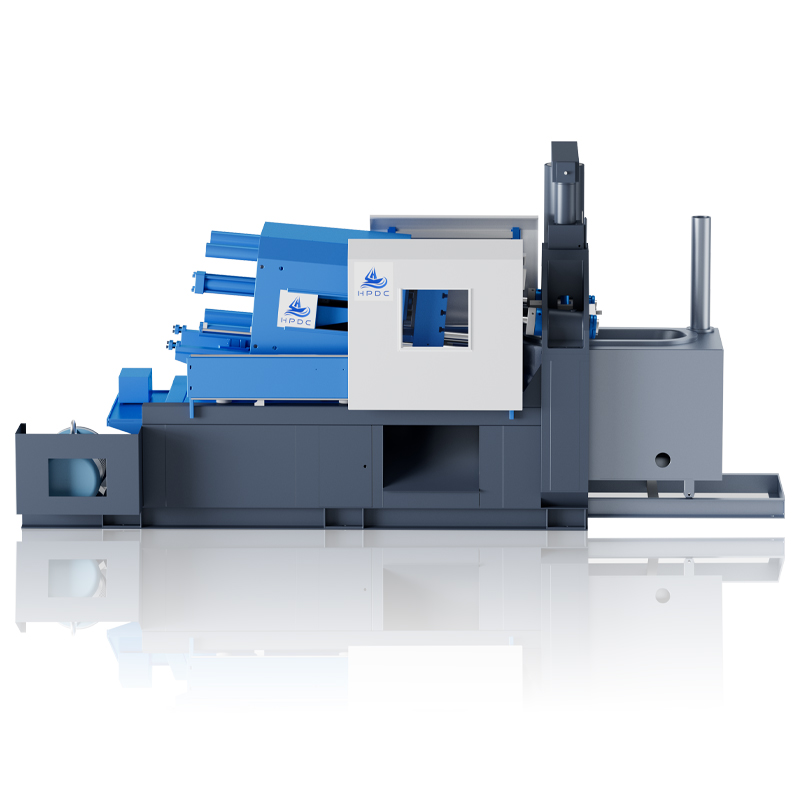
A hot chamber die casting machine is a type of die casting machine designed to handle metals with relatively low melting points, such as zinc, magnesium, and tin alloys. The most significant feature of this method is that the metal is melted inside the machine itself, specifically in a furnace that is directly integrated into the machine. This integrated furnace eliminates the need for transferring molten metal into the die casting chamber, making the process faster and more efficient.
The process begins by placing the metal in the machine's furnace, where it is heated to its molten state. The molten metal is then drawn into the shot chamber via a gooseneck and injected into the mold under high pressure through a nozzle. The high-pressure injection system is powered by a hydraulic piston, which forces the molten metal into the die cavity, ensuring that it fills every part of the mold.
After the injection is complete, the metal is allowed to cool and solidify. The plunger is then retracted, and the cast part is ejected from the mold. This method offers fast production speeds, making it ideal for high-volume production of small to medium-sized parts.
Hot chamber die casting machines are best suited for materials that have low melting points. Common metals used in this process include:
Zinc: Zinc alloys are the most frequently used materials for hot chamber die casting, thanks to their low melting point and excellent casting properties.
Magnesium: Magnesium alloys are also suitable for hot chamber die casting, offering a good balance of strength, weight, and cost-efficiency.
Tin: Tin alloys are another viable option for hot chamber die casting due to their low melting points and ease of use.
Hot chamber die casting is ideal for producing parts that are small to medium in size, often used in industries such as:
Consumer Electronics: Components like housings, buttons, and casings.
Automotive: Small parts like carburetors, gearbox components, and trim parts.
Household Appliances: Parts such as locks, handles, and hinges.
Faster Cycle Times: Hot chamber die casting has quicker cycle times due to the integrated furnace, reducing production time and increasing efficiency.
Lower Tool Wear: Since the process uses low-melting-point metals, there is less wear on the dies, which improves the longevity of the tooling.
High Precision: The process offers excellent dimensional accuracy, making it ideal for intricate and small parts.
Limited Material Use: Hot chamber die casting is limited to metals with low melting points, making it unsuitable for materials like aluminum or copper.
Cycle Time Variability: While cycle times are generally fast, they can vary depending on the complexity of the part.
Cold chamber die casting machines are designed for use with metals that have higher melting points, such as aluminum, copper, and some magnesium alloys. Unlike hot chamber machines, the molten metal in cold chamber die casting is not stored inside the machine but is ladled from an external furnace into the shot chamber. This method requires a plunger to force the molten metal into the mold at high pressures.
The cold chamber die casting process begins by ladling molten metal from an external furnace into the shot chamber. The plunger then forces the molten metal through the shot chamber and into the mold at pressures ranging from 2,000 to 20,000 psi. Once the metal fills the die cavity, it is allowed to cool and solidify before the plunger retracts and the part is ejected.
Unlike hot chamber die casting, cold chamber machines are typically designed without a gooseneck or integrated furnace, which results in a more complex setup and longer cycle times. However, cold chamber die casting is better suited for metals with high melting points.
Cold chamber die casting is used primarily for metals with high melting points. The most common materials for this process include:
Aluminum: Aluminum alloys are widely used in cold chamber die casting due to their high strength-to-weight ratio and excellent casting properties.
Magnesium: Magnesium alloys are another suitable material for cold chamber die casting, offering lightweight and high-strength parts.
Copper: Copper alloys, including brass and bronze, are also compatible with cold chamber die casting, especially in applications requiring corrosion resistance.
Cold chamber die casting is often used for larger, more complex parts. Common applications include:
Aerospace: Structural components, housings, and engine parts.
Automotive: Engine blocks, transmission parts, and heavy-duty components.
Industrial Equipment: Components used in machinery, pumps, and valves.
Higher Material Flexibility: Cold chamber die casting can handle a wide range of metals, including those with higher melting points, such as aluminum and copper.
Stronger Castings: The process is well-suited for producing stronger, more durable parts, making it ideal for heavy-duty applications.
Versatile: It can be used for a variety of industries, including aerospace and automotive.
Slower Cycle Time: The process is typically slower than hot chamber die casting due to the need for external ladling of molten metal.
Higher Setup Complexity: Cold chamber machines require a more complex setup, including external furnaces and additional handling equipment.
Hot Chamber Die Casting: Best for alloys with low melting points, such as zinc, tin, and magnesium.
Cold Chamber Die Casting: Best for alloys with high melting points, such as aluminum, copper, and high-strength magnesium alloys.
Hot Chamber Die Casting: Faster cycle times due to the integrated furnace.
Cold Chamber Die Casting: Slower production cycle, but more versatile in handling different alloys.
Hot Chamber Die Casting: Ideal for smaller, high-volume parts.
Cold Chamber Die Casting: Suited for larger and more complex components.
Hot Chamber Die Casting: Lower maintenance costs, faster production, and high-volume efficiency.
Cold Chamber Die Casting: Requires more complex machinery and higher maintenance but is cost-effective for larger, more intricate parts.
Material Requirements: What type of metal will be used?
Component Size and Complexity: Are you producing small, high-volume parts, or larger, more complex components?
Cycle Time: Do you need faster production or can you tolerate longer cycle times?
Budget and Maintenance: Consider the costs of setup and ongoing maintenance.
Small to medium-sized parts, such as electronic components and household appliances.
Larger, more complex parts used in industries like aerospace, automotive, and heavy machinery.
Choosing between a hot chamber die casting machine and a cold chamber die casting machine depends on your specific project needs. Consider factors like the material you are using, the size and complexity of the part, production volume, and your budget. Both methods offer distinct advantages and can be optimal in different situations.
Metals like zinc, tin, and magnesium are ideal for hot chamber die casting.
Aluminum, magnesium, and copper are commonly used in cold chamber die casting.
Hot chamber die casting typically offers faster production cycles, with up to 15 cycles per minute.
No, hot chamber die casting is not suitable for metals with high melting points, such as aluminum or copper.
Cold chamber die casting can handle a wider variety of metals, including those with high melting points, and it produces stronger castings.
While cold chamber die casting has higher setup and maintenance costs, it is more cost-effective for producing larger and more complex parts.
If you're unsure which die casting method is right for your project, consider consulting with experienced hot chamber die casting machine manufacturers or reaching out for quotes on hot chamber die casting machines for sale.
