
EMAIL:
lh@longhuamachine.com
TELL/whatsapp:
+8619305527239  English English
Views: 0 Author: Site Editor Publish Time: 2025-10-20 Origin: Site


A die casting machine hot chamber uses a special process to shape metals quickly and accurately. You will find that a hot chamber die casting machine melts metal inside the machine, then injects it into a mold to form parts. This method matters when you want mass production and high efficiency. For example, hot chamber machines can achieve 400 to 900 cycles per hour, while cold chamber machines only reach 50 to 90 cycles. Knowing the strengths and weaknesses of this method helps you choose the right process for your project.
Hot chamber die casting machines melt metal inside the machine, allowing for rapid production of small to medium-sized parts with high accuracy.
This method achieves impressive production rates, reaching up to 900 cycles per hour, making it ideal for mass production in industries like automotive and electronics.
Key components include the crucible for molten metal, molds for shaping, and ejector pins for removing finished parts, all working together for efficient manufacturing.
While hot chamber die casting offers many advantages, such as speed and precision, it is limited to low melting point metals and may face issues like porosity.
Consider factors like material compatibility, production volume, and part complexity when choosing a hot chamber die casting machine for your project.
A die casting machine hot chamber is a type of equipment you use to create metal parts quickly and with high accuracy. This machine melts metal inside its own chamber and then injects the molten metal into a mold. You often see this process in industries that need to make many parts in a short time. The main function of a hot chamber die casting machine is to inject molten metal into a mold cavity at high speed and pressure. This method works best for metals with low melting points, such as zinc, magnesium, and some lead alloys.
When you use a die casting machine hot chamber, you benefit from its built-in furnace. This feature keeps the metal at the right temperature and helps you achieve fast production cycles. The machine operates at high temperatures, which is essential for shaping the metal correctly.
You will find this machine especially useful in mass production. It allows you to make hundreds or even thousands of identical parts every hour. Many industries, such as automotive, electronics, and consumer goods, rely on this process to produce small, detailed components.
A hot chamber die casting machine has several important parts that work together to create finished products:
Crucible: This part holds the molten metal and connects directly to the die cavity. It lets you move metal quickly and efficiently into the mold.
Mold: The mold shapes the final product. Manufacturers use hardened steel or alloy to make molds strong enough to handle high pressure and temperature.
Ejector Pins: These pins push the finished part out of the mold after it cools and hardens.
Each component plays a key role. The crucible keeps the metal ready for casting. The mold gives the part its shape and fine details. The ejector pins make sure you can remove the part without damage. When you use a hot chamber die casting machine, these parts help you produce complex shapes with tight tolerances and smooth surfaces.

You can understand the hot chamber die casting machine process by looking at each step in the manufacturing process. This method helps you create die casting parts quickly and with high accuracy. Here is how the process works:
You close the die, and the piston moves up. This action opens a port so liquid metal can fill the cylinder.
The plunger moves down to seal the port. It then forces the molten metal through a nozzle into the mold cavity.
You apply pressure to keep the die shut. The metal cools and hardens inside the mold.
You open the die, and any cores retract.
The plunger returns to its starting position. Leftover metal flows back into the crucible.
Ejector pins push the finished die casting parts out of the die. You can now repeat the manufacturing process.
This sequence allows you to achieve high production rates. The die casting machine hot chamber design keeps the metal at the right temperature, so you can maintain a steady manufacturing process. You get consistent results and can produce large numbers of die casting parts in a short time.
Tip: The hot chamber die casting machine process works best for small to medium-sized parts that need precise shapes and smooth surfaces.
You need to choose the right metals for the hot chamber die casting machine. The manufacturing process works best with metals that have low melting points. Here is a table showing common metals and why they fit this process:
Metal | Properties | Suitability for Hot Chamber Die Casting |
|---|---|---|
Zinc | Low melting point, good fluidity, corrosion resistance | Ideal for intricate and thin-walled die casting parts. |
Lead | High density, malleability, corrosion resistance | Good for plumbing and radiation shield components. |
Tin Alloys | Low melting point, good fluidity | Effective for detailed castings. |
When you use these metals, you benefit from high production efficiency and a reliable manufacturing process. You can also produce thin-walled die casting parts with excellent detail. The hot chamber die casting machine gives you a high degree of automation, making the manufacturing process even faster and more cost-effective.
When you consider die casting advantages, the hot chamber process stands out for several reasons. You can achieve high efficiency, excellent precision, and fast cycle rates. These advantages make the hot chamber die casting machine a top choice for mass production.
You will notice that the die casting machine hot chamber offers outstanding efficiency in large-scale manufacturing. This process is especially useful when you need to produce thousands of parts quickly. Here are some key points:
You can reach production rates of up to 500 parts per hour.
The hot chamber die casting machine allows rapid injection of molten metal, which reduces downtime and increases output.
The process saves time by minimizing the number of steps compared to other casting methods.
Shorter cooling times help you maintain a steady flow of finished parts.
Note: The entire production cycle is shorter with this method, which is essential for mass production environments.
These die casting advantages help you lower costs and meet tight deadlines. You can rely on this process for high-volume orders in industries like automotive, electronics, and consumer goods.
Another important advantage is the high level of precision you can achieve. The hot chamber die casting machine produces parts with tight tolerances and consistent shapes. Take a look at how it compares to other casting methods:
Casting Method | Dimensional Accuracy Level | Surface Finish Level | Strength Comparison |
|---|---|---|---|
Hot Chamber Die Casting | 4 to 7 | 5 to 8 | 25-30% higher than sand casting |
Sand Casting | Lower than 6 | Not specified | Baseline |
You get better dimensional accuracy and higher strength than with sand casting. The surface finish is good, but you may need some extra machining for parts that require a very smooth surface. Even so, the die casting advantages in precision and repeatability make this process ideal for small, detailed components.
Fast cycle rates are a major reason why you might choose a hot chamber die casting machine. You can complete each cycle in as little as 15 to 60 seconds. This speed boosts your overall production and lowers the cost per part. Here is a summary of how fast cycles benefit your operation:
Aspect | Details |
|---|---|
Cycle Time | Ranges from 15 to 60 seconds |
Throughput | Increased due to shorter cycle times |
Cost per Part | Lowered due to rapid cycles and reusable dies |
Material Use | Reduced due to ability to create thin walls |
Handling Efficiency | Improved as no transfer of molten metal needed |
You can see that these die casting advantages lead to higher throughput and better use of materials. The process also improves handling efficiency because you do not need to transfer molten metal between machines.
Tip: If you want to maximize output and minimize costs, fast cycle rates make the hot chamber die casting machine a smart choice.
When you use a hot chamber die casting machine, you gain many benefits, but you also face some important disadvantages. Understanding these drawbacks helps you decide if this process fits your project needs. Let’s look at the main limitations you might encounter.
You will notice that hot chamber die casting works best for small to medium-sized parts. The process uses metals like zinc, tin, and magnesium alloys, which have low melting points. This limitation means you cannot use metals with higher melting points, such as aluminum or copper alloys. If your product requires a larger size or more complex shapes, you may find this process restrictive. The high-pressure requirements and the limited fluidity of some alloys also make it hard to create parts with intricate designs or thick walls. You should consider these factors when planning your manufacturing project.
Note: If you need to produce large or highly complex parts, you may want to explore other casting methods.
Porosity is a common problem in hot chamber die casting. This defect creates small holes or voids inside the finished part. Several factors can cause porosity:
Mold and part design choices
Purity or composition of the metal alloy
Machine pressure and shot speed settings
Shrinkage in the material’s wall thickness
Excess lubricant in the die
Sharp corners in the mold
Low metal temperatures
Air trapped in the metal
Porosity affects the strength and durability of your parts. You may see reduced mechanical properties, such as lower strength, ductility, and fatigue resistance. The table below shows how porosity impacts the finished product:
Evidence Type | Description |
|---|---|
Porosity Impact | Gas and shrinkage porosities form due to turbulence and alloy shrinkage. |
Mechanical Properties | Porosity lowers material integrity, reducing strength and ductility. |
Micro-Porosity | High-pressure die-cast parts often contain micro-porosity. |
Process Parameters | Using higher pressure can reduce porosity and improve toughness. |
If your application requires high strength or airtight parts, you should carefully evaluate this disadvantage.
You will face higher initial costs when you choose hot chamber die casting. The tooling and setup expenses can be significant, especially for custom molds. While the cycle time is short—often between 30 and 60 seconds—the cost of making the dies and setting up the machine adds up quickly. The table below compares costs with another common method:
Aspect | Hot Chamber Die Casting | Cold Chamber Die Casting |
|---|---|---|
Cycle Time | Short (30–60 seconds) | Longer (up to several minutes) |
Tooling Cost | Lower initial cost | Higher initial cost, longer lifespan |
You may save money on each part when you produce large quantities, but the upfront investment can be a barrier for smaller projects.
Hot chamber die casting is not the best choice for low-volume production. The high cost of tooling means you need to make hundreds or thousands of parts to make the process cost-effective. If you only need a small batch, the cost per part becomes very high. You should consider other methods if your project does not require mass production.
Tip: For small production runs, look for casting methods with lower setup and tooling costs.
When you weigh these disadvantages, you can make a better decision about whether hot chamber die casting matches your needs. Always consider the size, complexity, and volume of your project before choosing this process.
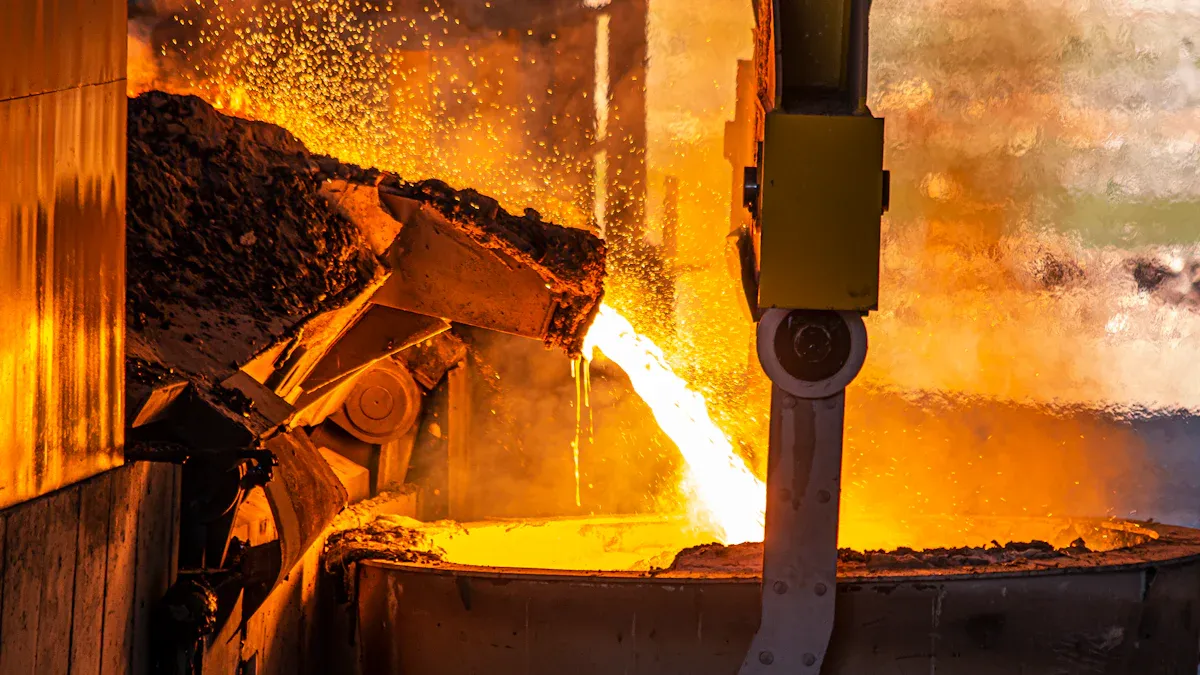
You need to understand how hot chamber and cold chamber die casting machines work before choosing the right process. Hot chamber die casting melts the metal in a furnace attached to the die assembly. You inject the molten metal directly into the mold, which gives you high production efficiency and high productivity. Cold chamber die casting uses a separate furnace to melt the metal. You then pour the molten metal into the machine before injection. This difference affects speed and efficiency.
Here is a table that highlights the main process differences:
Aspect | Hot Chamber | Cold Chamber |
|---|---|---|
Material Compatibility | Lower melting point alloys | Higher melting point alloys |
Furnace Location | Furnace attached to die assembly | Separate furnace |
Speed | 400 to 900 casts per hour | 50 to 90 casts per hour |
Pressure Requirement | Lower pressure | Higher pressure |
Applications | Smaller, high-volume components | Larger, structurally complex parts |
Tip: If you want fast cycles and an economic process, hot chamber die casting is cost-effective for mass production.
You must select the right material for each process. Hot chamber die casting works best with low-melting-point alloys such as zinc, magnesium, tin, and lead. These metals flow easily and do not damage the machine’s components. Cold chamber die casting handles higher melting point alloys like aluminum, brass, and copper. You use cold chamber die casting when you need to cast metals that would damage the furnace in a hot chamber system.
Here is a quick list of suitable materials:
Hot chamber die casting: zinc alloys, magnesium alloys, tin alloys, lead alloys
Cold chamber die casting: aluminum, brass, copper
You should match the process to your application needs. Hot chamber die casting is ideal for small consumer electronics casings, toys, connector housings, and automotive interior trim parts. You get high production efficiency and economic benefits for these products. Cold chamber die casting is better for automotive engine blocks, transmission housings, industrial pumps, and power tool housings. These parts are larger and need metals with higher melting points.
Type of Die Casting | Suitable Materials | Applications |
|---|---|---|
Hot Chamber Die Casting | Zinc, Lead Alloys | Electrical components, consumer products |
Cold Chamber Die Casting | Aluminum, Magnesium, Copper Alloys | Automotive components, industrial equipment |
Note: Choose hot chamber die casting when you want high productivity and small, detailed parts. Use cold chamber die casting for larger, complex components.
You should choose a hot chamber die casting machine when you need to produce a large number of small or medium-sized parts quickly. This method works best for metals with low melting points, such as zinc, tin, and lead alloys. You will see the most value in industries like automotive, aerospace, and consumer electronics, where high-speed production and consistent quality matter.
Hot chamber die casting is ideal for mass production runs of 10,000 parts or more.
The process delivers fast cycle times, often 3–4 times quicker than cold chamber methods.
You benefit from keeping the molten metal ready between castings, which boosts efficiency.
Tip: If your project requires thousands of identical parts with fine details, hot chamber die casting offers clear economic benefits.
Before you select a hot chamber die casting machine for your production line, you need to evaluate several important factors:
Material Compatibility: Make sure your chosen machine can handle the metals you plan to use. For example, zinc alloys and magnesium alloys both work well and enhance casting speed.
Production Volume: Estimate your required output. Hot chamber die casting becomes cost-effective at high volumes.
Part Complexity: Check if the machine can produce the shapes and details your parts need.
Cycle Time and Efficiency: Look for machines that maintain high speed without sacrificing quality.
Cost and Maintenance: Consider both the upfront investment and ongoing maintenance costs.
Material Type | Compatible? | Benefits |
|---|---|---|
Magnesium Alloy | Yes | Increases casting speed |
Zinc Alloy | Yes | Supports fast production cycles |
Lead Alloy | Yes | Good for low-melting applications |
You should also think about the fluidity of your chosen metal. Metals that flow easily fill complex molds better, which ensures high-quality results. Choosing the right material and machine setup helps you achieve durable, precise parts and maximize the benefits of mass production.
You gain faster cycle times and less metal waste with a die casting machine hot chamber. This process works best for zinc die casting machine operations and small parts. However, you face limits with part size, complexity, and material choice.
Advantages | Disadvantages |
|---|---|
Fast cycles, less waste, long die life | Porosity, size limits, only low-melting metals |
Before you choose a hot chamber die casting machine, review your production needs and materials. Always check industry guidelines and consider further research for specialized applications.
You use a die casting machine hot chamber for metals like zinc and magnesium. The hot chamber process melts metal inside the machine. A cold chamber die casting aluminum machine melts metal separately, then injects it into the mold.
You cannot use a die casting machine hot chamber for aluminum. Aluminum melts at a higher temperature, which damages the machine. For aluminum parts, you need a die casting aluminum machine with a cold chamber process.
You choose a zinc die casting machine because it creates small, detailed parts quickly. Zinc flows easily in the hot chamber die casting machine, giving you high precision and smooth surfaces. This method works well for electronics and consumer products.
You rarely use a die casting machine hot chamber for aerospace components. Aerospace parts often need aluminum or other high-melting-point metals. Die casting machines for aerospace components usually use the cold chamber process for better material compatibility.
You benefit from fast cycle times, high efficiency, and excellent surface quality. The hot chamber die casting machine lets you produce many identical parts quickly. This process works best for mass production of small to medium-sized components.
