
EMAIL:
lh@longhuamachine.com
TELL/whatsapp:
+8619305527239  English English
Views: 0 Author: Site Editor Publish Time: 2025-09-19 Origin: Site


Aluminum die casting machines help you create strong, lightweight parts with high precision for many industries. You use a die casting machine to shape aluminum quickly and reliably. Companies in automotive, aerospace, construction, and power sectors rely on these machines for durable components that resist corrosion and conduct heat well. The table below shows the main industries using aluminum die casting machines:
Industrial Sector | Description |
|---|---|
Automotive | Makes lightweight, fuel-efficient vehicle parts. |
Aerospace and Defense | Produces critical components for aircraft and defense systems. |
Industrial | Manufactures machinery and complex parts. |
Construction | Builds structural components and materials. |
Power and Energy | Creates housings for electrical and renewable energy systems. |
Aluminum die casting machines create strong, lightweight parts for industries like automotive, aerospace, and electronics, improving efficiency and performance.
These machines produce high-precision components, reducing the need for extra machining and minimizing waste, which saves time and costs.
Aluminum's natural corrosion resistance makes it ideal for harsh environments, ensuring long-lasting durability in products like medical devices and automotive parts.
The die casting process allows for complex designs and features, giving manufacturers flexibility to meet diverse product needs quickly.
Using aluminum die casting supports sustainability, as up to 95% of parts can be made from recycled aluminum, reducing environmental impact.
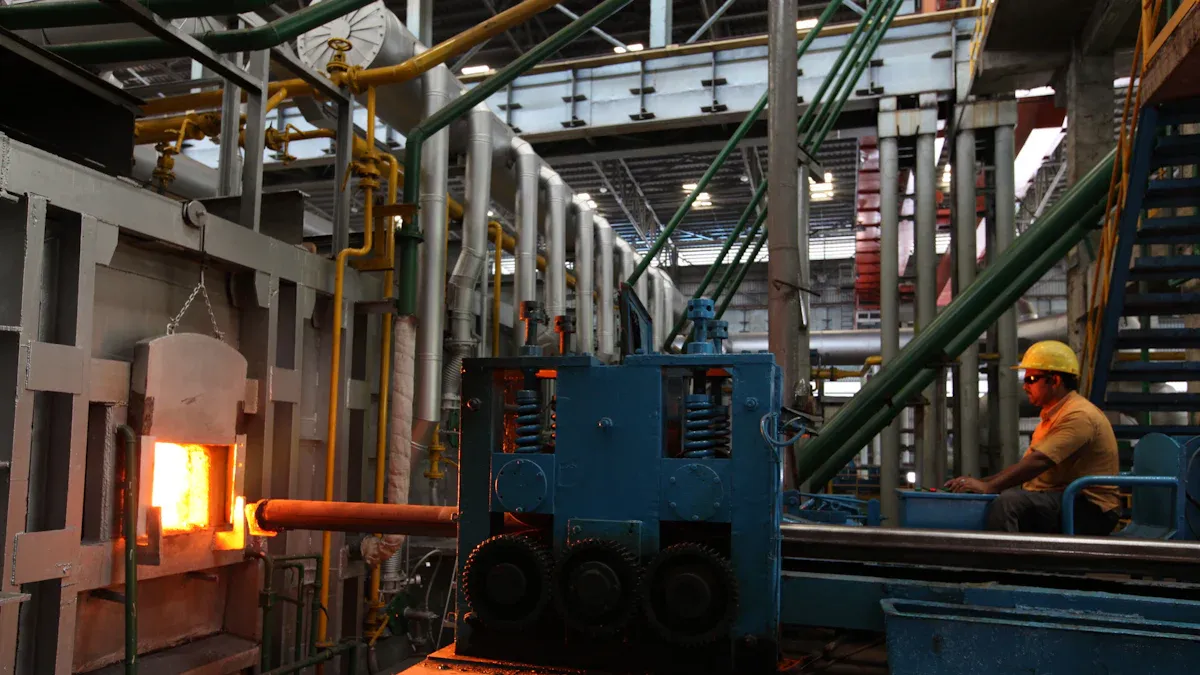
Aluminum die casting machines play a vital role in modern manufacturing. You can use these machines to produce complex, high-precision parts for many industries. The main applications of aluminum die casting include automotive, aerospace, electronics, medical, and consumer products. Each sector benefits from the unique properties of aluminum, such as lightweight, durability, corrosion resistance, and excellent thermal conductivity.
You see aluminum die casting machines everywhere in the automotive industry. These machines help you create lightweight, strong, and precise automotive parts. When you use aluminum die casting, you can produce engine blocks, transmission housings, brake components, chassis parts, and electric vehicle housings. These parts weigh less than traditional steel parts, which helps reduce fuel consumption and improve vehicle performance.
Automotive Part | Benefits in Weight Reduction and Durability |
|---|---|
Engine Blocks | Weigh less while being firm enough to handle heat, vibration, and pressure, conserving overall engine weight and fuel consumption. |
Transmission Housings | Achieve precision and durability, ensuring smooth-running gears with minimal machining required. |
Brake Components | Strong yet lightweight, increasing braking force while reducing vehicle weight. |
Chassis Parts | Provide safety and stability without bulk, enhancing management and productivity. |
EV Electric Housing’s motor and battery | Protect delicate systems while maintaining a lightweight frame, improving driving distance. |
You can rely on die casting machines to deliver high-quality automotive components with tight tolerances. These machines allow you to create net-shape parts, which means you need less machining and finishing. This process saves time and reduces waste. The automotive industry values aluminum die casting for its ability to produce durable, corrosion-resistant parts that perform well under harsh conditions.
In aerospace, you need parts that are both lightweight and extremely strong. Aluminum die casting machines help you meet these demands. You can use them to manufacture engine components, turbine housings, actuators, control systems, aircraft enclosures, landing gear parts, and even space vehicle components. Each part must meet strict standards for strength, precision, and reliability.
Engine components such as engine blocks, turbine housings, and brackets
Actuators and control systems including actuators, valves, and pumps
Aircraft enclosures and housings for electrical and electronic systems
Landing gear parts that must withstand significant loads and stresses
Space vehicle components including structural parts, engine pieces, and equipment components
Aluminum die casting machines let you produce aerospace components with tight tolerances and smooth surfaces. You can choose from high-pressure, gravity, or vacuum die casting processes to match your needs. High-pressure die casting gives you parts with excellent dimensional accuracy, while vacuum die casting reduces gas porosity for greater strength. These methods ensure your aerospace parts meet industry standards for safety and performance.
You depend on aluminum die casting machines to make electronic parts that manage heat and protect sensitive components. Aluminum’s high thermal conductivity (205 W/m•K) makes it ideal for heat sinks, enclosures, and cooling components. You can use die casting to create parts for LED drivers, transformers, and power supply units. These parts help dissipate heat away from internal electronics, preventing overheating and extending product life.
Aluminum die-cast heat sinks cool LED drivers.
Transformers and power supply units use aluminum die casting for effective heat management.
Aluminum acts as a natural heat sink, moving heat away from sensitive parts.
This process reduces the need for bulky cooling systems in electronic devices.
You also benefit from the dimensional accuracy of die casting, which ensures that connectors and enclosures fit perfectly. The electronics industry values aluminum die casting for its ability to produce durable, lightweight, and corrosion-resistant parts that keep devices running smoothly.
You use aluminum die casting machines to create medical device parts that must meet strict quality and safety standards. Aluminum’s corrosion resistance ensures that parts last in harsh environments, such as hospitals and laboratories. You can produce housings, brackets, and structural components for medical equipment with high precision.
Requirement | Description |
|---|---|
Corrosion Resistance | Aluminum die-cast parts must have excellent corrosion resistance to withstand harsh environments, ensuring long-term reliability and safety of medical devices. |
Compliance with Regulations | Parts must comply with international standards, including FDA regulations, to ensure safety and effectiveness in medical applications. |
Quality Control and Traceability | A rigorous quality control process is essential, including monitoring every manufacturing step and maintaining traceability for recalls or quality issues. |
You must follow regulations like ISO 13485, ISO 9001, RoHS, REACH, and FDA registration. These standards guarantee that your die casting parts are safe, reliable, and traceable. Aluminum die casting machines help you achieve the high level of quality control needed for medical applications.
You find aluminum die casting machines in the production of many consumer goods. These machines help you create appliance housings, power tool bodies, sporting equipment, and other durable products. Aluminum die casting gives you strong, lightweight parts that look good and last long.
Automotive parts
Aerospace components
Electronics
Consumer goods
Industrial equipment
Surface treatments like anodizing, powder coating, and electrophoresis enhance the durability and appearance of die casting parts. Anodizing creates a barrier against corrosion and allows for different color finishes. Powder coating adds a thick, protective layer that resists chipping and fading. Electrophoresis ensures a uniform coating, even on complex shapes, keeping products attractive and long-lasting.
Surface Treatment | Durability Enhancement | Appearance Enhancement |
|---|---|---|
Anodizing | Acts as a barrier against corrosion, extending lifespan | Allows for various color finishes, integrated into the oxide layer for longevity |
Powder Coating | Provides a thick, protective layer resistant to chipping and fading | Offers a wide range of colors and textures for design flexibility |
Electrophoresis | Creates a robust protective layer enhancing corrosion resistance | Ensures uniform coating on complex shapes, maintaining aesthetic appeal |
You can trust aluminum die casting machines to deliver high-quality, net-shape parts for a wide range of consumer products. These machines help you meet customer expectations for strength, durability, and design flexibility.
Tip: When you choose aluminum die casting for your manufacturing needs, you gain access to a process that delivers precision, efficiency, and superior product performance across many industries.
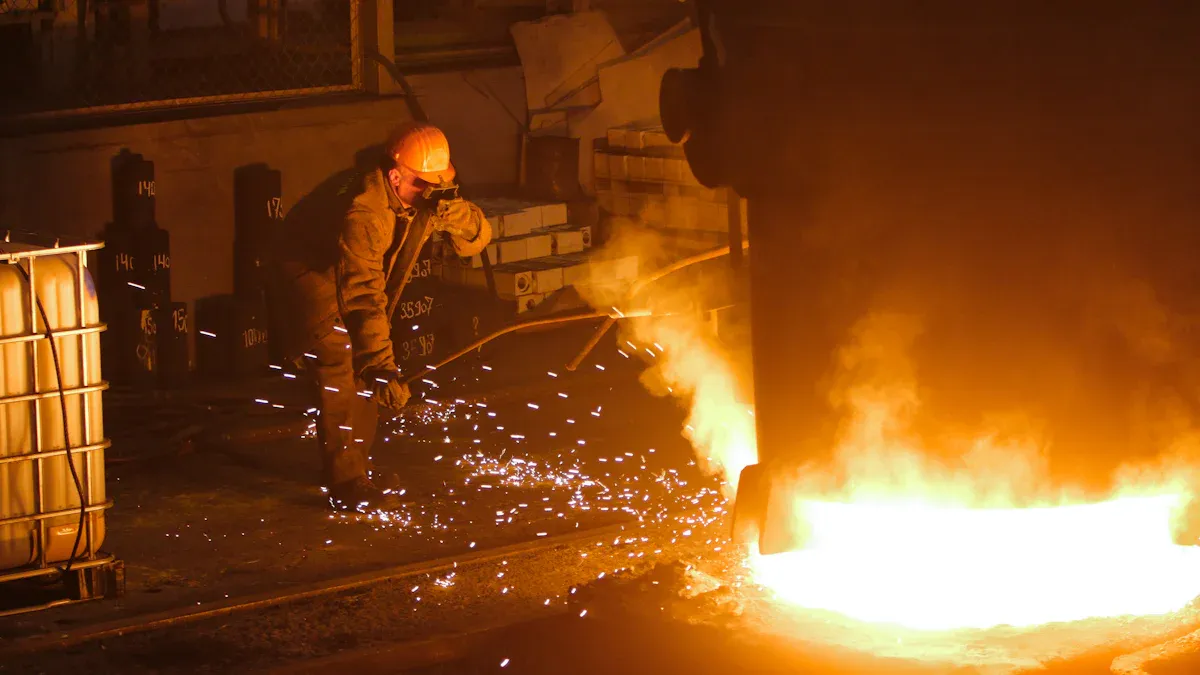
Aluminum die casting machines give you a powerful way to create high-quality parts for many industries. You gain several advantages when you use the aluminum die casting process. These advantages include precision, lightweight strength, cost-effectiveness, design flexibility, corrosion resistance, and sustainability. You can rely on die casting machines to deliver consistent results, especially for high volume production.
You achieve outstanding precision with aluminum die casting machines. The die casting process injects molten aluminum into a steel die casting mold under high pressure. This method lets you create complex shapes and tight tolerances that are hard to match with other manufacturing techniques. You can produce die casting parts with intricate details, thin walls, and smooth surfaces.
You make complex shapes that extrusion or machining cannot achieve.
You benefit from high-pressure die casting, which ensures repeatable accuracy for every part.
You use durable die casting molds that support high volume production with minimal wear.
Aluminum die casting machines help you reduce the need for extra machining. You save time and lower costs by producing net-shape parts. The high-pressure die casting process also minimizes material waste, making your manufacturing more efficient.
Aluminum die casting machines allow you to create parts that are both lightweight and strong. You see a weight reduction of 30-50% compared to traditional steel components. Aluminum weighs about one-third of steel, which improves the strength to weight ratio in your products.
You use aluminum die casting machines to make aerospace parts with superior strength to weight ratio.
You design automotive components that are lighter, which boosts fuel efficiency and performance.
You rely on the aluminum die casting process to maintain strength without adding bulk.
The lower density of aluminum lets you reduce weight while keeping the necessary strength for demanding applications. You improve efficiency in transportation, electronics, and consumer products by choosing aluminum die casting machines.
You benefit from cost-effective manufacturing when you use aluminum die casting machines. The die casting process supports high volume production, which lowers the cost per part. You reuse die casting molds many times, which spreads tooling costs over thousands of parts.
You minimize material waste because the aluminum die casting process uses less material and energy.
You reduce the need for secondary machining, saving labor and time.
You achieve high-pressure die casting results that meet strict industry standards without expensive finishing steps.
Aluminum die casting machines help you deliver quality parts at a lower cost, making your business more competitive.
You gain unmatched design flexibility with aluminum die casting machines. The die casting process lets you create parts with undercuts, complex geometries, and integrated features. You can add holes, windows, and intricate shapes that are difficult to achieve with other methods.
Design Feature | Description |
|---|---|
Undercuts | You design the parting line around them or use multi-part dies for complex shapes. |
Complex Geometries | You create intricate shapes that other processes cannot match. |
Holes and Windows | You add these features easily, though you may adjust the design for optimal metal flow. |
Aluminum die casting machines support rapid prototyping and design changes. You receive prototypes in days, not months, which helps you respond quickly to market needs. You can test and evaluate designs before mass production, ensuring your die casting parts meet performance requirements.
You rely on aluminum die casting machines to produce die casting parts that resist corrosion in harsh environments. Aluminum does not rust like ferrous metals because it contains no iron. You use die casting parts in automotive, aerospace, and outdoor applications where durability matters.
You choose aluminum for its exceptional corrosion resistance.
You enhance protection with surface finishing options such as anodizing, chromate conversion coating, and electrophoretic painting.
You extend the lifespan of die casting parts by adding a protective layer that acts as a barrier against corrosion.
Surface finishing increases hardness and improves the appearance of your die casting parts. You keep your products looking new and performing well, even in tough conditions.
You support sustainability when you use aluminum die casting machines. The aluminum die casting process is more environmentally friendly than other metal forming methods. You use recycled aluminum for up to 95% of die casting parts produced in North America.
You conserve materials and energy by recycling aluminum indefinitely.
You generate less scrap compared to sand casting, which produces more waste.
You choose aluminum die casting machines for greener industrial applications.
Aluminum die casting machines help you meet environmental goals while maintaining high productivity. You deliver quality parts with minimal impact on the planet.
Tip: When you select aluminum die casting machines, you unlock the benefits of die casting aluminum—precision, strength, cost-effectiveness, design flexibility, corrosion resistance, and sustainability. These advantages make aluminum die casting machines the smart choice for modern manufacturing.
You often compare the die casting process with sand casting when choosing a method for making metal parts. Die casting uses high-pressure injection to fill steel molds with molten aluminum, while sand casting relies on sand molds shaped for each part. You notice several differences in speed, quality, and cost.
Die casting offers a fast production cycle, usually between 30 seconds and 1 minute.
Sand casting requires longer mold preparation and slower cycles, which can delay your project.
Die casting parts show higher dimensional accuracy and smoother surfaces.
Sand casting parts may need extra machining to reach the same quality.
You save time and reduce labor costs with die casting. You also produce more die casting parts in less time, which helps you meet high-volume demands.
You may consider injection molding for plastic parts, but die casting is the preferred choice for metal components. Both methods use molds and high pressure, but the materials and results differ.
Feature | Die Casting | Injection Molding |
|---|---|---|
Material | Aluminum, zinc, magnesium | Plastics |
Production Speed | High, similar to injection molding | High, depends on part complexity |
Surface Finish | Smooth, high-quality | Smooth, but less durable |
Strength | Strong, lightweight | Less strong, lightweight |
Cost | Lower for large volumes | Lower for simple plastics |
You achieve similar production speeds with die casting and injection molding. You choose die casting when you need metal parts with strength and durability. You rely on injection molding for plastic parts that do not require the same level of quality.
You gain unique advantages with the die casting process that other methods cannot match. Die casting allows you to create net-shape or near-net-shape die casting parts in a single stage. You produce complex, lightweight, and durable parts with high precision. This efficiency reduces material waste and boosts your productivity.
Aluminum die casting lets you minimize post-processing. You create die casting parts with intricate designs and tight tolerances, so you rarely need extra machining or finishing. You benefit from lower production costs and faster turnaround times. You also achieve complex geometries that sand casting and injection molding cannot deliver.
Tip: When you choose die casting, you unlock speed, quality, and cost savings. You produce die casting parts that meet strict standards and support your manufacturing goals.
Aluminum die casting machines help you create precise, strong, and lightweight parts for many industries. You use die cast machines in automotive, aerospace, electronics, medical, and consumer products. These machines offer cost savings, design flexibility, and corrosion resistance. If you want reliable results, choose an aluminum die casting machine or a die casting aluminum machine. You can trust die casting machines to improve your manufacturing process and deliver high-quality products.
An aluminum die casting machine helps you shape molten aluminum into precise parts. You use this machine for high-volume production in industries like automotive, aerospace, and electronics.
Tip: Choose an aluminum die casting machine for strong, lightweight components.
You use a die cast machine for metals like aluminum and zinc. An aluminum die casting machine works best for lightweight, corrosion-resistant parts. A zinc die casting machine creates smaller, more detailed components.
Machine Type | Best For |
|---|---|
Aluminum | Lightweight, strong |
Zinc | Small, intricate |
You get faster production, better surface finish, and higher accuracy with die casting machines. You save time and reduce waste compared to sand casting or machining.
Die casting aluminum machine produces net-shape parts.
Aluminium die casting machine offers cost savings.
You find aluminum die casting machines in automotive, aerospace, electronics, medical, and consumer products. These machines help you create durable, lightweight, and corrosion-resistant parts for many applications.
Note: Die casting machines support high-volume manufacturing in every major industry.
