
EMAIL:
lh@longhuamachine.com
TELL/whatsapp:
+8619305527239  English English
Views: 0 Author: Site Editor Publish Time: 2025-10-15 Origin: Site


When you look for an aluminum die casting machine in 2025, you will see leading names like Bühler, Toshiba, Frech, Idra, LK Machinery, Yizumi, Kurtz Ersa, and UBE. The global aluminum die casting market shows strong growth, with a projected CAGR of 8.2% from 2025 and an expected rise from USD 85.92 billion to USD 149.93 billion by 2032. Choosing the right die casting equipment shapes your manufacturing success. You need to match machine features with your production goals and investment plans.
Identify your production needs before selecting a die casting machine. Consider factors like part type, specifications, and volume to ensure a good match.
Evaluate the production capacity of machines. Choose a model that aligns with your output goals to avoid bottlenecks in your manufacturing process.
Look for energy-efficient machines. They can lower operating costs and help meet environmental standards, making your production more sustainable.
Consider the total cost of ownership. Factor in initial costs, maintenance, and energy use to make a smart financial decision.
Choose reputable suppliers. Reliable support and quality assurance are crucial for maintaining machine performance and longevity.
When you choose an aluminum die casting machine, you need to focus on several key factors. These factors help you achieve the best results in precision manufacturing and maintain high quality in your production process. The table below summarizes the most important considerations for 2025:
Factor | Description |
|---|---|
Types of Machines | High-pressure, low-pressure, and gravity machines suit different applications and efficiency needs. |
Production Capacity | The right capacity prevents bottlenecks and matches your production goals. |
Cost-Effectiveness | Consider both upfront and long-term operational costs for smart financial planning. |
Supplier Reputation | Reliable suppliers offer better quality and long-term support. |
Innovative Technologies | New technology improves efficiency, casting precision, and product quality. |
Production capacity varies widely among die casting machines. Large capacities benefit automotive OEMs and high-volume manufacturing. Smaller capacities work well for niche projects or specialized aluminum parts. You should match the machine’s output to your production needs. This step ensures you avoid bottlenecks and maintain a smooth manufacturing process. The global aluminum die casting market continues to grow, especially in the automotive industry, so selecting the right capacity supports your business goals.
Modern die casting machines use advanced automation and smart technology. In 2025, you will see features like 3D-printed tools, automated cleaning, and remote diagnostics. Machines now include AI-driven process control and IoT connectivity for real-time data and predictive maintenance. These advancements improve casting precision and reduce downtime. Digital twin technology lets you simulate the process and spot defects before production starts. Automation boosts efficiency and helps you deliver consistent quality.
Energy-efficient models lower your operating costs and support sustainable manufacturing. Many new aluminum die casting machines use lightweight alloys and optimized heating systems. These features reduce energy use and speed up the process. Choosing an energy-efficient machine helps you meet environmental standards and save money over time.
You need to look at both the initial price and the long-term maintenance costs. Automated maintenance systems and remote monitoring can reduce downtime and repair expenses. A reputable supplier offers strong after-sales support, which keeps your machine running smoothly. Smart financial planning includes evaluating total cost of ownership, not just the purchase price.
Tip: Always ask suppliers about maintenance schedules, spare parts availability, and support services before making a decision.
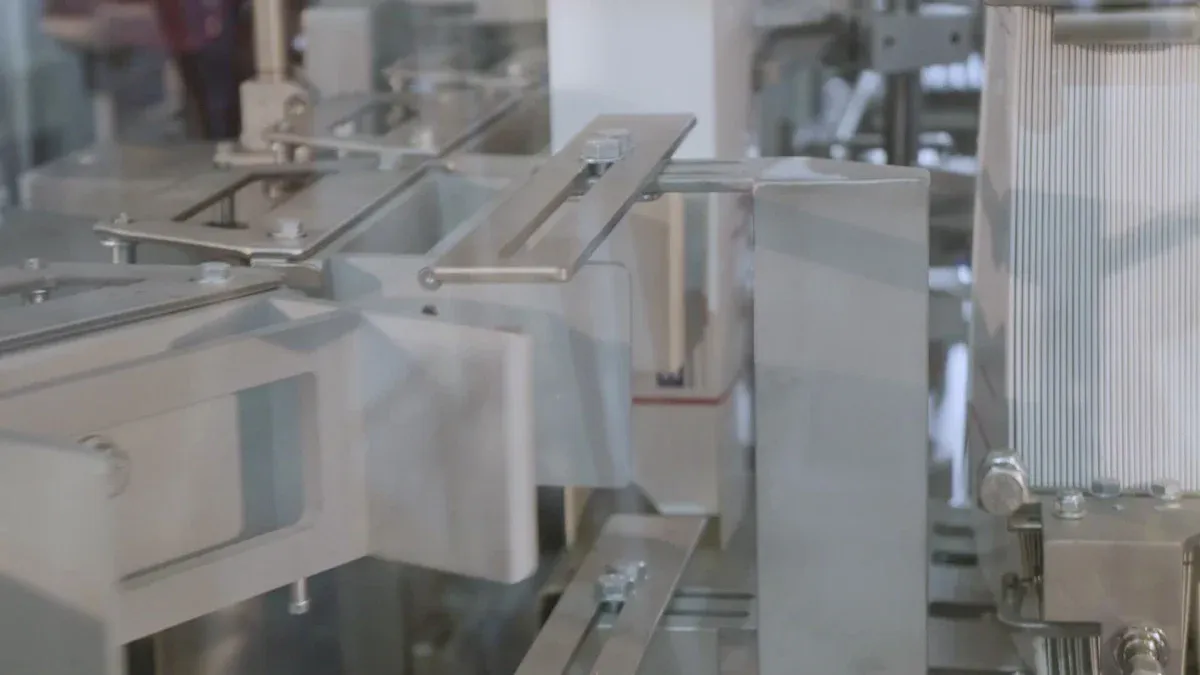
Bühler stands out as a leader in the aluminum die casting machine market for 2025. You will find their machines in many high-volume manufacturing plants. Bühler’s 2025 lineup includes the Ecoline S, Evolution, and Fusion models. Each model offers a range of locking forces and productivity improvements.
Model | Locking Force (kN) | Productivity Increase | Key Features |
|---|---|---|---|
Ecoline S | 3400 to 8400 | Up to 30% | Easy operation, reduced programming time, reliability |
Evolution | 2600 to 9000 | Up to 30% | Unique shot control, fast setup, reliability |
Fusion | 5500 to 14000 | N/A | Focus on quality, energy efficiency, easy operation |
You will benefit from high dimensional accuracy and smooth surface finishes. Bühler machines deliver excellent repeatability and high production efficiency. These machines support automation, which helps you lower labor needs and boost productivity. However, you should consider the high mold and tooling costs. Bühler machines work best for large production runs and may not suit very large or thick parts.
Tip: Choose Bühler for automotive, aerospace, and electronics applications where you need speed, precision, and consistent quality.
Pros:
High precision and repeatability
Fast cycle times
Supports automation and digital integration
Cons:
High initial investment
Best for large-scale production
Toshiba’s 2025 die casting machines focus on precision and automation. You will see advanced control systems and digital technologies that improve operational efficiency. Toshiba machines use eco-friendly practices and smart features to help you meet modern manufacturing standards.
Key Features:
Automated process control for consistent results
Eco-friendly operation with reduced emissions
Digital interfaces for real-time monitoring
Ideal Applications:
Automotive components such as gearboxes and brackets
Consumer electronics housings for smartphones and tablets
Medical device components that require tight tolerances
Pros:
High-speed production for small, complex aluminum parts
Reliable for intricate designs and clean manufacturing environments
Cons:
May not suit very large castings
Requires skilled operators for advanced features
Note: Toshiba machines excel in high-pressure die casting for industries that demand both speed and precision.
Frech brings advanced technology to the aluminum die casting machine market in 2025. You will find features like real-time data monitoring and AI-driven process optimization. Frech machines use advanced control software for temperature, injection timing, and pressure. Automation features, such as robotic arms, help you remove parts and handle dies efficiently.
Standout Features:
Real-time data monitoring for quality control
Robotic automation for part removal and die handling
IoT integration for predictive maintenance
Compliance with ISO and ASTM standards
Pros:
High level of process control and precision
Reduced downtime with predictive maintenance
Flexible integration with other smart factory systems
Cons:
Higher upfront cost due to advanced features
May require additional training for operators
Ideal Applications:
Automotive and industrial parts that need tight tolerances
High-volume production lines with a focus on quality
Frech machines help you achieve consistent quality and efficiency in demanding manufacturing environments.
Idra’s 2025 aluminum die casting machines focus on cleaner, more energy-efficient production. You will notice reduced emissions and optimized resource use. Idra machines help you minimize environmental impact, which is important for automotive and industrial manufacturers.
Key Features:
Energy-efficient operation
Reduced emissions for sustainable manufacturing
Non-polluting equipment design
Pros:
Supports green manufacturing goals
Lowers operating costs through energy savings
Reliable for automotive aluminum parts
Cons:
May have higher initial costs for eco-friendly features
Best suited for companies with sustainability targets
Ideal Applications:
Automotive production with strict environmental standards
Manufacturers seeking to reduce their carbon footprint
Idra machines help you balance production efficiency with environmental responsibility.
Yizumi’s 2025 aluminum die casting machines stand out for their cost-effectiveness and versatility. The LEAP530U model benchmarks world-class performance and functionality. Yizumi machines use energy-efficient drive groups that cut energy use by up to 40%. Smart integration capabilities allow you to adapt quickly to changing production needs.
Feature | Description |
|---|---|
Advanced Technology | LEAP530U benchmarks world-class performance |
Energy Efficiency | Reduces energy use by up to 40% |
Smart Integration | Flexible interfaces for easy cell integration |
High Precision | Excels in efficiency, intelligence, safety, and compatibility |
Real-time Control | Yi-Cast closed-loop control for higher OEE |
Rigid Clamping System | Reduces flash build-up, maintains tie bar spacing |
Yizumi machines also support advanced technologies like Thixomolding, which helps you produce complex aluminum parts. The MGⅡ•Plus and HⅡ series offer higher injection pressure and improved performance for diverse manufacturing needs.
Pros:
High precision and efficiency
Cost-effective for a wide range of applications
Flexible and easy to integrate into smart factories
Cons:
May require investment in training for advanced features
Some models best suited for high-precision auto components
Ideal Applications:
Automotive, electronics, and consumer goods manufacturing
Production lines that need both flexibility and high quality
Yizumi machines give you reliable performance and adaptability for many aluminum die casting projects.
When you compare die casting machines, you need to look at the main specifications. These numbers help you decide which machine fits your production needs. The table below shows the clamping force and shot weight for some of the top aluminum die casting machines in 2025.
Machine Model | Clamping Force (KN) | Shot Weight (KG) |
|---|---|---|
MT1600 | 16,000 | 17.2–32 |
MT2000 | 20,000 | 22–38 |
MT2500 | 25,000 | 31–59 |
MT3000 | 30,000 | 37–60 |
MT3500 | 35,000 | 52–83 |
DC 350T | 3,500 | 2.7/3.6/4.8 |
You should match the clamping force and shot weight to your aluminum part size and production volume. Larger machines handle bigger parts and higher output.
Each die casting machine offers unique features. You will find automation, energy-saving systems, and smart controls in most 2025 models. Here are some highlights:
Bühler: Fast cycle times, digital integration, and high repeatability.
Toshiba: Automated process control, eco-friendly operation, and real-time monitoring.
Frech: Real-time data, robotic automation, and predictive maintenance.
Idra: Energy-efficient design and reduced emissions.
Yizumi: Flexible integration, high precision, and energy savings up to 40%.
Tip: Choose a machine with features that support your production goals and help you save on long-term costs.
Prices for aluminum die casting machines vary by size, features, and brand. In 2025, you can expect:
Entry-level machines: $150,000–$300,000
Mid-range machines: $300,000–$600,000
High-end machines: $600,000–$1,200,000+
You should consider not only the purchase price but also the cost of maintenance, energy use, and automation upgrades. Investing in the right die casting machine helps you achieve better quality and higher efficiency in your aluminum production.
Choosing the right aluminum die casting machine starts with a clear understanding of your own manufacturing process and goals. You need to match machine features to your production needs, facility setup, and future growth plans. This approach helps you get the best results for a wide range of applications, from automotive to the aerospace industry.
To select the most suitable aluminum die casting machine, follow these steps:
Define your production requirements. List the type, specifications, and volume of aluminum parts you plan to produce.
Evaluate key parameters such as locking force, injection speed, pressure, and shot weight.
Calculate the locking force using this formula: Locking Force (tons) = Projected Area (square inches) × Injection Pressure (psi).
Determine injection pressure: Injection Pressure (psi) = Casting Weight (ounces) / Injection Area (square inches).
Calculate shot weight: Shot Weight (grams) = Casting Weight (grams) + Gate Weight (grams) + Scrap Weight (grams).
Tip: Accurate calculations help you avoid machine overload and ensure consistent quality for lightweight components and high-performance vehicle parts.
Before installing an aluminum die casting machine, check your facility’s requirements:
Review the available installation space. Larger machines need more room and may limit the size of parts you can produce.
Confirm that your power supply matches the machine’s needs.
Consider the enclosure’s functions, budget, and area of application.
Take a holistic approach to design, manufacturing, and assembly to reduce costs.
Reliable after-sales support is essential. Choose suppliers who offer training, spare parts, and maintenance services to keep your manufacturing process running smoothly.
Scalability ensures your investment supports future production increases and technology upgrades. Leading die casting machines now feature:
Strategy | Description |
|---|---|
Advanced Automation | Industry 4.0 systems boost efficiency and consistency. |
Real-time Data Analytics | IoT sensors monitor the process and enable predictive maintenance. |
AI-driven Quality Control | AI optimizes cycles, reduces scrap, and adapts to new designs. |
Innovations in machine design and automation, such as SmartCMS, help you handle larger volumes and more complex lightweight structural parts. Machines like Bühler’s Carat series can process large amounts of aluminum quickly, supporting growth in automotive and aerospace industry applications.
In 2025, you will find that high-pressure aluminum die casting machines offer the best results for complex shapes and precise details, especially in automotive manufacturing. Cold chamber machines remain the top choice for the global aluminum die casting market due to their ability to handle high-melting-point metals. To make the right decision, match your aluminum die casting machine to your production goals and facility needs.
After shortlisting, you should consult with suppliers, request demonstrations, and review certifications and design support. Stay informed about new trends like AI and IoT integration, which continue to shape the future of aluminum die casting.
An aluminum die casting machine uses high pressure to inject molten aluminum into a mold. You get strong, precise parts quickly. Manufacturers use these machines for automotive, electronics, and industrial products.
Tip: Always check the machine’s specifications before starting production.
You should match the aluminum die casting machine’s capacity and features to your production needs. Look at locking force, shot weight, and automation options. Consider energy efficiency and after-sales support.
List your requirements.
Compare models.
Request demos.
You need to clean the die cast machine regularly. Check for wear on moving parts. Schedule inspections for hydraulic systems and electrical controls. Replace worn components quickly to avoid downtime.
Note: Reliable suppliers offer training and spare parts for die casting machines.
Yes, you can use aluminum die casting machines for various aluminum alloys. You must adjust temperature and pressure settings for each alloy. Always follow the manufacturer’s guidelines for best results.
Alloy Type | Recommended Settings |
|---|---|
ADC12 | 650°C, high pressure |
A380 | 620°C, medium pressure |
You get fast production, high precision, and strong parts. Aluminum die casting machines help you reduce waste and save energy. These machines support automation and smart controls for better quality.
Fast cycle times ��
Consistent results
Lower operating costs
