
EMAIL:
lh@longhuamachine.com
TELL/whatsapp:
+8619305527239  English English
Views: 0 Author: Site Editor Publish Time: 2025-10-16 Origin: Site


To keep your die cast machine running smoothly, follow these essential maintenance tips:
Inspect the die casting machine regularly for signs of wear.
Clean all surfaces and molds after each shift.
Lubricate moving parts to reduce heat and prevent damage.
Train all operators on proper die casting maintenance routines.
Regular maintenance helps you spot problems early, prevents breakdowns, and extends the life of your equipment. Use the right tools and set a daily, weekly, and monthly schedule for each die casting task.
Maintenance Practice | Impact on Lifespan |
|---|---|
Regular Inspections | Identify issues before they escalate |
Cleaning | Prevents buildup that can lead to wear |
Adjustments | Ensures optimal operation throughout service life |
Proper Lubrication | Minimizes thermal stress and prevents heat damage |
Employee Training | Enhances maintenance efforts and reduces wear |
Regular inspections of your die cast machine help identify issues early, preventing costly breakdowns.
Daily cleaning of surfaces and molds is essential to avoid buildup that can damage equipment and affect part quality.
Proper lubrication of moving parts reduces heat and wear, extending the life of your die casting machine.
Training operators on maintenance routines enhances overall efficiency and reduces the risk of defects in production.
Following a strict maintenance schedule ensures consistent quality in die casting parts and minimizes unexpected downtime.
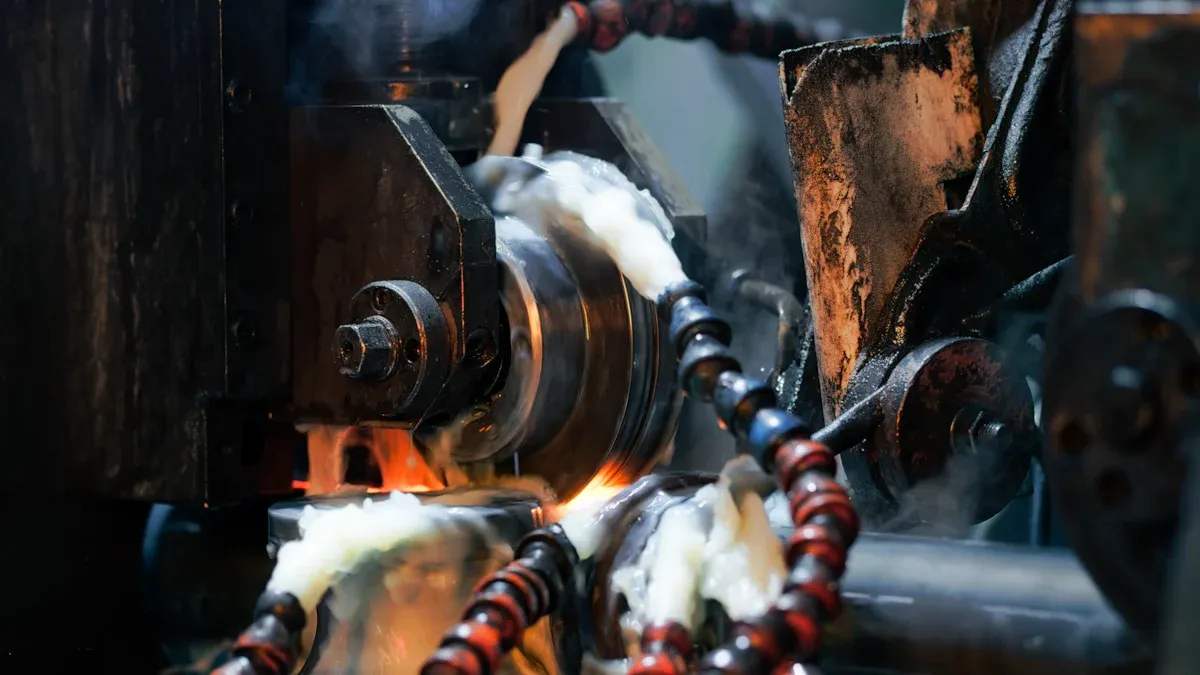
You need to maintain your die cast machine to keep your production line running smoothly. Regular care ensures that your die casting process delivers high-quality parts every time. When you clean, inspect, and lubricate your die casting machine, you prevent mold damage and avoid defects in your castings. You also extend the life of your die mold and improve process reliability.
Proper maintenance helps you control key parameters like injection speed and pressure. These factors directly affect the quality of your finished parts. If you monitor the pouring temperature of molten metal, you can save energy and make your die mold last longer. Daily checks for excess material and dimensional accuracy help you catch problems early.
Well-maintained die casting equipment leads to better part quality and higher efficiency. You can achieve intricate designs, faster cycle times, and a superior surface finish with consistent care.
Benefit | Description |
|---|---|
Faster cycle times | Parts solidify quickly, allowing rapid production. |
Thinner walls & complex geometries | Achieve intricate designs without secondary machining. |
High repeatability | Minimal variation between parts, reducing waste. |
Superior surface finish | Less post-processing needed. |
20% higher productivity | Clients in various industries reported increased efficiency. |
Neglecting die casting maintenance can lead to serious problems. If you skip routine checks, you risk downtime, safety hazards, and higher repair costs. Poor maintenance can also damage your brand reputation by lowering product quality.
Mold damage causes defects in metal die casting parts.
Skipping cleaning and stress relief reduces die mold life.
Uncontrolled injection speed or pressure affects casting quality.
High pouring temperatures shorten die mold service life.
Poor trimming leads to excess material and dimensional errors.
Risk Type | Description |
|---|---|
Productivity | Ignoring maintenance leads to inefficiencies and downtime. |
Safety | Neglected tools pose safety hazards for operators. |
Financial Consequences | Ignoring maintenance can lead to escalated repair costs and significant revenue loss. |
Product Quality | Skipping maintenance directly affects product quality and can damage brand reputation. |
Workplace Injuries | The potential for workplace injuries increases without proper maintenance and safety routines. |
You can avoid these risks by following a strict maintenance schedule for your high-pressure die casting, low-pressure die casting, and metal die casting equipment.
Maintaining your die cast machine is essential for producing high-quality die casting parts and keeping your operation efficient. You need to follow a clear routine for cleaning, lubrication, inspection, and scheduled service. These steps help you avoid breakdowns and ensure your die casting process runs smoothly.
You should clean your die casting machine every day. This step removes debris and prevents buildup that can damage your equipment or affect the quality of your die casting parts. Follow this daily cleaning checklist:
Remove alloy chips and oil stains from the machine.
Pay special attention to cleaning the elbow or machine hinge.
Clean the Colin column.
Wipe down the template.
Clean the injection chamber or feeding barrel.
Tip: Consistent daily cleaning improves system efficiency, extends component life, and reduces the risk of unexpected breakdowns. Clean fluids and surfaces also help you produce better die casting parts by preventing contamination.
Improved system efficiency keeps your die casting process reliable.
Extended component life means you spend less on repairs.
Fewer breakdowns help you avoid costly production stops.
Clean fluids and surfaces lead to higher-quality die casting parts.
Lubrication is a key part of die casting machine maintenance. You need to reduce friction and prevent overheating in your equipment. Use the right lubricants for each part of your die casting machine:
Water-based lubricants provide both lubrication and cooling, making them ideal for high-pressure die casting and aluminum die casting.
Oil-based lubricants give a high-quality finish but do not cool as efficiently.
Some lubricants act as release agents, while others insulate the die.
Water-soluble non-graphite lubricants reduce die wear and prevent sticking without causing corrosion.
Solid punch lubricants improve lubrication during the die casting process.
You should lubricate your die casting machine regularly. Follow the manufacturer's guidelines for each part. Use lubrication charts to identify the correct lubricant and frequency. Proper lubrication extends the life of your die casting mold and die mold, ensuring smooth operation and reducing downtime.
Regular inspection of your die casting machine components helps you catch problems early. You should check the mold for wear, cracks, or other signs of damage. Schedule these checks at set intervals to avoid unexpected failures during the die casting process. Inspect the cooling channels and ejector system to make sure they work correctly. Any issues in these areas can affect the quality of your die casting parts.
Common issues you might find during inspections include:
Defect Type | Visual Inspection Description | Causes |
|---|---|---|
Die Marks | Traces or step-like marks on the surface of die casting parts. | Wear on ejector pin, inconsistent pin lengths, misalignment |
Soldering Marks | Small patches where metal fused with the die. | Residual material, impurities |
Lamination Defects | Metallic layers in certain areas of the part. | Insufficient mold rigidity, plunger issues, gating design |
Metal Erosion | Rough texture on the surface. | Gating issues, inadequate cooling |
Cracking | Dark gray cracks visible in alkaline solution. | Alloy issues, process problems, force imbalance |
Cold Shuts | Irregular, linear indentations. | Incomplete fusion, low temperature, improper gate location |
Note: Regular maintenance, including cleaning, lubrication, and inspection, keeps your die casting machine in top condition and minimizes downtime.
You need to follow a scheduled service plan for your die casting machine. This plan helps you keep your equipment running smoothly and ensures you produce high-quality die casting parts. Here is a recommended schedule for high-volume production environments:
Frequency | Maintenance Tasks |
|---|---|
Daily | Check alignment, lubricate moving parts, observe for unusual noises or vibrations |
Weekly | Evaluate metering system and hydraulic components |
Monthly | Assess electronic control systems and safety backup features |
Sticking to a service schedule brings many benefits:
Benefit | Description |
|---|---|
Less downtime | Regular maintenance reduces the chance of breakdowns |
Higher quality | Continuous service ensures accuracy and repeatability in die casting parts |
Lower operating costs | Preventive care lowers the risk of expensive repairs |
Replacement of wear parts | You replace parts before they fail, keeping your die casting process reliable |
Early detection | Technicians spot issues before they become major problems |
By following a strict maintenance schedule, you support the quality and efficiency of your die casting, whether you use high-pressure die casting, low-pressure die casting, or metal die casting methods. This approach helps you get the most out of your die cast machine and ensures your die casting parts meet industry standards.
You need to keep the hydraulic system in your die cast machine in top condition to avoid costly downtime and ensure consistent die casting parts. Follow these steps for effective maintenance:
Use only qualified hydraulic oil and never mix old and new oils.
Check the filter vacuum gauge every month and clean it if needed.
Inspect and repair the oil pump for wear twice a year.
Replace hydraulic oil after every 2000 operating hours.
Clean the oil tank thoroughly during oil changes.
Examine valves for wear and leaks every six months.
Check oil pipe joints and screws for looseness twice a year.
Inspect cylinders and seals for wear every six months.
Do not adjust overflow or pressure reducing valves without authorization.
Monitor the nitrogen pressure in the accumulator.
After one hour of operation, check the oil temperature.
Hydraulic system failures can stop your die casting machine, lower production rates, and increase scrap rates. Contaminated hydraulic fluid can cause erratic performance and affect the quality of your die casting parts.
Electrical issues can disrupt the die casting process and reduce the quality of die casting parts. Common problems include machine shutdowns, erratic operation, and inaccurate control settings. See the table below for details:
Symptoms | Causes | Solutions |
|---|---|---|
Machine shutdowns | Loose Connections | Inspect and tighten connections regularly |
Erratic operation | Faulty Components | Replace faulty components promptly |
Inaccurate control | Overloading | Monitor and avoid electrical overloads |
To prevent failures, conduct regular maintenance, clean or replace damaged contacts, check the emergency stop button, and inspect power supply and fuses. Use a multimeter to diagnose motor faults and analyze PLC alarm codes for quick fixes.
Proper mold care extends the life of your die casting mold and improves the quality of die casting parts. Handle molds with cushioned lifting tools to prevent damage. Store molds in a dry area and cover them with anti-rust film or oil. Apply anti-rust oil and wrap idle molds with VCI film. Clean and inspect molds regularly, use the right high-temperature release agent, and remove residues to prevent buildup. Preheat molds and stabilize injection parameters to avoid defects in die casting parts. Good mold maintenance ensures consistent quality in metal die casting, high-pressure die casting, and low-pressure die casting.
Safety checks protect you and your team during the casting process. Inspect the hydraulic system weekly for leaks and check oil pressure. Examine electrical systems daily, weekly, and monthly to ensure all wires, switches, and indicator lights work. Check mechanical structures like hinges and templates for cleanliness and function. Test safety doors, emergency stop buttons, and limit switches every day. Prepare for emergencies by knowing shutdown and evacuation procedures. Regular safety checks reduce workplace accidents, such as burns from molten metal or cuts from die casting parts, and help maintain a safe environment for everyone.
You can prevent major problems in your die cast machine by watching for early warning signs. Recognizing these signs helps you protect your die casting process and avoid costly downtime. Here are some common warning signals you should never ignore:
No signal output—Check if the mold opening indicator lights up and if the main computer receives input and output.
No shot action—Test the manual operation of the punch and inspect the mold-locking termination sensor switch.
No second-speed shot movement—Look for a two-speed injection signal on the computer.
Shot weakness—Review the first and second speed adjustments.
Shot out pressure—Inspect for leaks in the injection cylinder and pressure reducing valve.
Furnace temperature cannot be controlled—Make sure the thermometer works correctly.
Alarm signals—Watch for abnormal signal impedance or thermocouple failures.
You may also notice defects in your die casting parts, such as shrinkage porosity, cold insulation, or surface sticking. High temperatures can cause molten metal to stick to the die mold, while thermocouple failures may lead to premature solidification. Early cracking or nitride layer spalling can reduce the life of your die mold.
You can address many minor issues before they become serious. Start with regular inspections of all die casting machine components. Clean away debris, contaminants, and excess lubricants. Lubricate moving parts to reduce friction and extend their lifespan. Monitor hydraulic fluid quality, level, and temperature to keep your system efficient. Maintain the cooling system and temperature controls to prevent overheating. Update the control panel’s software and hardware for accurate monitoring. These steps help you keep your die casting process stable and your die casting parts consistent in quality.
Tip: Quick action on small issues can prevent major breakdowns and keep your high-pressure die casting, low-pressure die casting, and metal die casting operations running smoothly.
Sometimes, you need to call in professional help for your die cast machine. Seek expert support if you face machine failure or production downtime. Timely intervention can prevent further damage and restore your die casting process quickly. Professionals can also address tooling stress points before they cause quality control issues or production shutdowns. When you notice persistent problems with your die casting parts or see repeated defects, do not hesitate to contact a qualified technician. This approach protects your equipment and ensures the long-term reliability of your die casting machine.
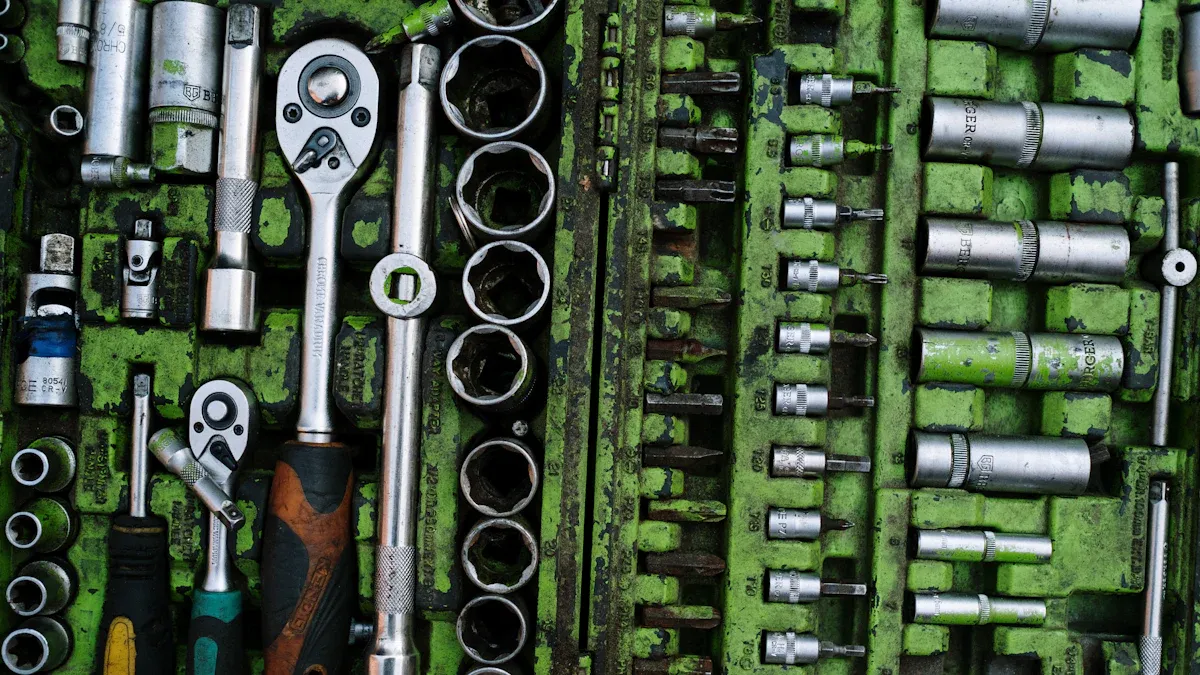
You need the right tools to keep your die casting equipment in top shape. Basic hand tools like wrenches, screwdrivers, and pliers help you adjust and repair parts quickly. Torque wrenches let you tighten bolts to the correct level, which protects your die casting mold and prevents leaks. Use calipers and micrometers to check the dimensions of your die mold and finished parts. Inspection mirrors and flashlights help you see inside tight spaces. You also need a multimeter to test electrical systems and a pressure gauge for the hydraulic system. These tools help you spot problems early and keep your die casting process running smoothly.
You should always have the right supplies on hand for die casting maintenance. These items help you clean, lubricate, and protect your equipment:
Oils for hydraulic systems and moving parts
Greases for lubrication points
Cleaning supplies for removing debris and residue
Lubrication materials for the die casting mold and machine joints
Approved lubricants for high pressure injection systems
Cleaning tools such as brushes and cloths
Maintenance equipment for regular checks
Keep these supplies ready so you can respond quickly to any issue. Using the correct materials helps you avoid damage from molten metal and keeps your metal die casting process efficient.
Tip: Always use lubricants and cleaning agents approved for your die casting machine. This protects your equipment and ensures the best results.
Organizing your maintenance tools and supplies improves your efficiency. When you store tools in labeled drawers or toolboxes, you find what you need faster. A clean workspace helps you avoid mistakes and keeps your die casting process safe. You can also use digital systems to track tool use and schedule maintenance tasks.
Here is how proper organization benefits your operation:
Benefit | Description |
|---|---|
Substantially Reduced Unplanned Production Downtime | Organized tools allow technicians to efficiently manage their time, reducing downtime and improving productivity. |
Improved Operation | The user-friendly TOSCAST system enables even less experienced technicians to operate the machine effectively. |
Dependable Repeatability | Real-time monitoring ensures consistent quality in production, allowing for uninterrupted operation. |
When you keep your tools and supplies organized, you support the quality of your die casting parts and extend the life of your die casting mold. Good organization also helps you handle emergencies and routine tasks with confidence.
You keep your die cast machine in top condition by following daily cleaning, regular inspections, and scheduled service. Pay attention to every detail to protect your die casting machine and improve part quality. Use this quick checklist:
Inspect your die cast machine every shift
Lubricate all moving parts
Clean molds and surfaces
Check safety systems
Consistent care helps you extend the life of your aluminum die casting machine and maximize production efficiency.
You should service your die cast machine every month. Daily checks and weekly inspections help you catch problems early. Regular service keeps your die casting machine running smoothly and extends its lifespan.
You need wrenches, screwdrivers, calipers, and a multimeter. Use cleaning brushes and approved lubricants for your aluminum die casting machine. Organized tools help you work faster and safer.
Daily cleaning removes debris and oil from your die cast machine. Clean surfaces prevent damage and improve the quality of die casting parts. You protect your aluminium die casting machine from breakdowns.
Watch for leaks, strange noises, or warning lights on your die cast machine. Inspect molds and hydraulic systems often. Early detection helps you avoid costly repairs and keeps your die casting machines reliable.
No, you must use lubricants approved for your die cast machine. Water-based lubricants work well for aluminum die casting machines. The right lubricant reduces wear and improves part quality.
