
EMAIL:
lh@longhuamachine.com
TELL/whatsapp:
+8619305527239  English English
Views: 0 Author: Site Editor Publish Time: 2025-09-23 Origin: Site


When you look at die casting machines from a die casting machine supplier, you see two main types. These are hot-chamber and cold-chamber models. Many suppliers also have machines for gravity, low pressure, and high pressure casting. Knowing about these choices helps you pick the best machine for your work. Suppliers often sell machines that use different dies. These can be single-cavity, multiple-cavity, or combination dies, as shown below:
Type of Die Casting Machine | Description |
|---|---|
Single-Cavity Die | A die that makes one part each cycle. |
Multiple-Cavity Die | A die that makes many parts in one cycle. |
Combination Die | A die that mixes features of both single and multiple cavities. |
There are two main types of die casting machines. They are hot chamber and cold chamber. Pick one based on the metal you want to use.
Hot chamber machines work well for metals that melt easily, like zinc. They make small parts quickly and with good accuracy.
Cold chamber machines are better for metals that need more heat, like aluminum. They can make bigger parts and use stronger materials.
You can also look at gravity and low pressure die casting. These are good for parts that need to be strong and have fine details. These methods are simple and work well for certain jobs.
Always look at what the supplier offers and their support services. A good supplier helps you pick the right machine. They also give you training you need.
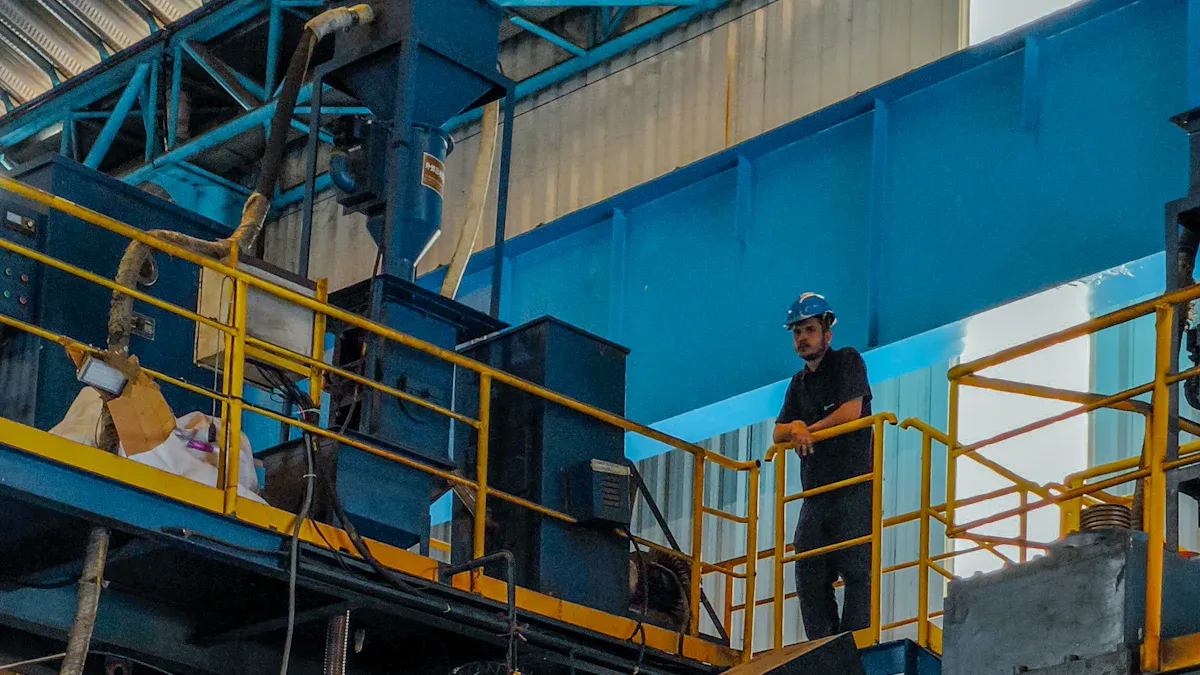
When you look at die casting machines, you find two main groups. These are hot chamber die casting machines and cold chamber die casting machines. These machines are very important for die casting. There are also other types, like gravity die casting machines, low pressure die casting machines, and high pressure die casting machines. Each type uses different materials and works in its own way. Knowing these differences helps you pick the right machine for your job.
Hot chamber die casting machines work with metals that melt at low temperatures, like zinc, magnesium, and lead alloys. The machine has a furnace that melts the metal. It pushes the melted metal into the die casting molds very fast. This makes the process quick and the parts very accurate. You can make many parts every minute, so it is good for making lots of parts.
Here is a table that shows the main things about hot chamber die casting:
Feature/Principle | Description |
|---|---|
Production Efficiency | Very high, can finish many cycles each minute (about 15, sometimes over 100). |
Applicable Materials | Made for metals that melt at low temperatures, like zinc, magnesium, and lead alloys. |
Working Principle | The furnace melts the metal, then it is pushed into the mold quickly. |
Dimensional Accuracy and Surface Quality | High because the melted metal touches the mold directly, so you can have thin walls and fewer mistakes. |
Automation | Has smart controls for easy and automatic use. |
Heat Loss | Not much heat is lost because the melted metal stays in a closed space, which saves energy. |
Structure | Simple and easy to use and fix, with a furnace, injection system, mold, and part remover. |
Application Fields | Used a lot in cars, airplanes, electronics, and medical tools for small, tricky parts. |
Tip: Pick a hot chamber die casting machine if you need to make small, detailed parts from zinc alloys. This machine is fast and does not waste much material.
But there are some things to think about. Hot chamber die casting does not work for metals that melt at high temperatures, like aluminum. The machines can cost more and might have problems with rust. The parts made may not be as strong as parts from other die casting machines.
Cold chamber die casting machines are used for metals that melt at higher temperatures, like aluminum and copper alloys. You melt the metal in a different furnace. Then you pour the melted metal into the cold chamber, and the machine pushes it into the die casting molds. This lets you make bigger parts and use more kinds of metals.
Cold chamber die casting machines are often used for aluminum die cast machine jobs. You see them in car, airplane, and factory work. They can make lots of strong parts. The design of the cold chamber die casting machine helps control heat and keeps the machine from wearing out too fast.
Note: If you want to make parts from aluminum or copper alloys, use a cold chamber die casting machine. This machine is good for bigger parts and stronger metals.
Cold chamber die casting machines are slower than hot chamber ones. You have to pour the melted metal by hand, which takes more work and is less automatic. But you can use more types of metals and make bigger parts.
Gravity die casting uses gravity to fill the die casting molds with melted metal. You do not use high pressure. You just pour the melted metal into the mold, and gravity moves it everywhere it needs to go. This works well for aluminum, magnesium, and other metals that do not have iron.
Gravity die casting machines are simple and easy to use. You use them when you do not need to make a huge number of parts. The parts are good quality and can have thick walls and tricky shapes. Gravity die casting is used for things like fluid and gas parts, airplane parts, and things people use at home.
Industry | Applications |
|---|---|
Fluid and Gas | Valve and compressor parts |
Aerospace | Important parts that need to be strong and exact |
Consumer Goods | Home items like stove grates and covers |
Tip: Gravity die casting is a smart pick for parts that must be strong and exact, like valve bodies and airplane parts.
Low pressure die casting uses air pressure to push melted metal into the die casting molds. You put the die on the machine and close it to a tube. Air pressure moves the melted metal up into the mold. This way, you get very accurate parts and smooth metal flow, which makes the parts better.
Here is a table that shows how the process works and how it helps make good parts:
Step | Description | Impact on Quality |
|---|---|---|
Die Setup | The die is put on the machine and closed to the tube. | Keeps the melted metal inside, which is important for good parts. |
Molten Metal Displacement | Air pressure moves the melted metal into the mold. | Filling the mold faster keeps the metal hot, which helps fill the mold well. |
Cooling Process | Cooling starts at the far ends of the die and goes to the feed head. | Cooling this way makes the part stronger and lowers mistakes. |
Solidification | When the metal hardens, air pressure stops, and the die opens to take out the part. | Hardening the right way is needed for strong and accurate parts. |
Cycle Repetition | The steps are done again and again to keep making parts. | Doing the same steps each time helps make parts that are all the same. |
Use of Expendable Cores | Lets you make parts with tricky shapes inside. | Makes it easier to design and make special parts. |
Alloy Choice | You can use more types of metals than with high pressure die casting. | Lets you use metals that can be heat treated, which makes the final part work better. |
Low pressure die casting is good when you need aluminum die cast machine solutions. This process helps stop holes and mistakes in the parts. You can use different metals, like magnesium and zinc alloys. You can also make parts with tricky shapes inside.
Tip: Pick low pressure die casting if you want very accurate aluminum parts with few mistakes.
High pressure die casting uses very strong pressure, from 1,500 to 30,000 psi, to push melted metal into the die casting molds. You use this way to make lots of parts with thin walls and tricky shapes. High pressure die casting machines work well with zinc, aluminum, and magnesium alloys.
You see high pressure die casting in cars, electronics, and home appliances. This process is fast and makes parts that are always the same. But you need to watch for problems like holes, cold shuts, and shrinking. You can stop these problems by changing how fast you inject the metal, letting air out, and keeping the right temperature.
Defect Type | Causes | Prevention & Solutions |
|---|---|---|
Porosity | Air gets trapped, not enough air vents, too much oil, wrong pressure | Change how fast you inject, add more vents, use clean metal, keep the right temperature |
Cold Shut | Metal is not hot enough, not filling fast enough, bad die design | Make the metal hotter, change the gate, inject faster |
Shrinkage Defects | Not enough metal, bad gate, cooling is not even | Change the gate, keep the die at the right temperature, use metals that do not shrink much |
Blisters | Air or water gets trapped, gas grows too much, too much oil | Add more vents, cool the die more, use less oil |
Misruns | Metal is not hot enough, injects too slow, bad gate | Keep the metal hot, inject faster, make the metal flow better |
Flash | Too much pressure, die is worn out, not enough force to close | Lower the pressure, fix the die, use more force to close |
Incomplete Casting | Not enough pressure, metal hardens too soon, gates are blocked | Use more pressure, keep the die hot, clean the gates |
Erosion Defects | Metal moves too fast, die is not strong, not enough oil | Use stronger dies, inject slower, use better oil |
Heat Checking | Too much heat stress, die is not strong, not enough cooling | Use heat-proof dies, cool the die better, add coatings |
Warpage | Cooling is not even, bad die design, too much stress | Cool the die evenly, change the die, treat the part to lower stress |
Turbulence Defects | Injecting too fast, bad runner, bad gate | Inject slower, change the gate, use vacuum casting |
Note: High pressure die casting is best for making lots of small, detailed parts. You need to check the process to stop mistakes and make sure the parts are good.
When you pick a die casting machine supplier, look at what types of die casting machines they have. You should match the machine to your metal, design, and how many parts you need. Suppliers usually have zinc alloy die casting machines, aluminum die cast machines, cold chamber die casting machines, and high pressure die casting machines. You can also find horizontal casting machines and vertical casting machines for different jobs.
Die casting machines can be sorted by how they hold the mold. The way the mold is clamped changes how the machine works. It also affects what kinds of parts you can make. Most machines use either vertical or inclined clamping. Each type is good for different jobs.
Vertical die casting machines move the piston up and down. This design is used for metals that melt at high temperatures, like copper alloys. The mold sits above the piston. The metal is pushed straight up into the mold. This helps control how the metal flows. It is easier to make parts with tricky shapes.
Here is a table that compares vertical and horizontal die casting machines:
Feature | Vertical Die Casting Machine | Horizontal Die Casting Machine |
|---|---|---|
Piston Movement Direction | Vertical | Horizontal |
Metal Injection Method | Metal is injected into the mold by a vertical piston | Metal is injected into the mold by a horizontal piston |
Common Applications | High melting point metals like copper alloy | Most modern machines are horizontal, used for various metals |
Vertical die casting machines are picked for strong copper alloy parts. These machines help you control the casting process better. They also save space because of their design.
Tip: Pick vertical die casting machines for copper alloy parts that need to be strong and exact.
Inclined die casting machines tilt the mold at an angle. Gravity helps fill the mold in this setup. The piston pushes the metal along the slanted mold. This helps lower air pockets and mistakes. Inclined machines are good for thin or tricky parts.
Factories use inclined die casting machines for special part designs. The angle helps the metal flow smoothly. It is easier to take out the finished part. These machines work for both small and big parts.
Inclined die casting machines help make parts with fewer mistakes.
You can use them for smooth surfaces and detailed shapes.
Note: Inclined die casting machines are a smart pick if you want better metal flow and fewer casting errors.
Machines with vertical or inclined clamping give you more choices for casting jobs. You can pick the best machine by looking at part size, shape, and metal type. Many suppliers offer both vertical and horizontal machines for your needs.
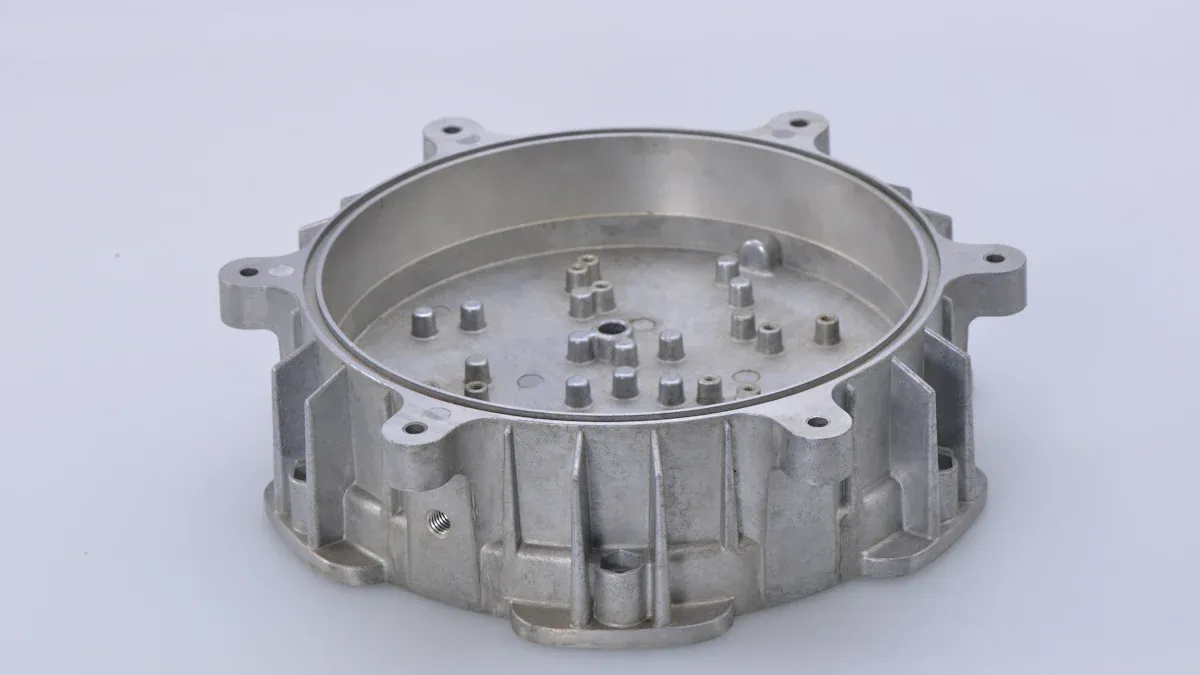
Die casting gives you many choices for special jobs. Some machines help you make parts that regular machines cannot. You can pick a machine that fits your needs and makes your work better.
You use four-slide die casting machines for small, tricky parts. These machines have four slides that move in different ways. This lets you make shapes that are hard to do with other machines. You can make parts with sharp corners, thin sides, and tiny details.
Four-slide die casting machines are best when you need exact parts. You see them used for electrical connectors, gears, and clips. These machines help you skip extra steps like cutting or shaping. You save time and make less waste.
Four-slide die casting machines help you make detailed shapes with fewer mistakes. You get better parts for jobs that need accuracy and detail.
You can use these machines for electronics, cars, and home products. You get parts that fit well and work every time.
Rotor cast die casting machines are important for electric motors. You use these machines to make rotors for motors. The process helps you make strong and good parts.
Here is a table that shows how die-cast copper rotors compare to aluminum rotors in electric motors:
Metric | Die-Cast Copper Rotors | Aluminum Rotors |
|---|---|---|
Total Losses Reduction | 15 - 23% | N/A |
Overall Electrical Efficiency | Up to 1.7 percentage points | N/A |
Operating Temperature Decrease | 5 - 32 degrees F | N/A |
Expected Increase in Operating Life | At least 50% | N/A |
Motors with die-cast copper rotors waste less energy.
You get motors that run cooler and last longer.
You can get better efficiency in the same size motor as aluminum ones.
Rotor cast die casting machines help you make better electric motors. You see these machines used in factories, cars, and home appliances. You get motors that save energy and work well.
If you want motors that last longer and use less energy, rotor cast die casting machines are a good pick.
When you look for a die casting machine supplier, you want them to have many machines. Check if they offer hot chamber, cold chamber, gravity, low pressure, and high pressure die casting machines. Each type works with different metals and part sizes. A good supplier will show you machines for zinc, aluminum, or magnesium parts. Ask the supplier about support and service. You need help with setup, training, and repairs. The supplier should tell you about machine yield, productivity, and safety. Pick a supplier who cares about quality and helps you keep your machines working well.
Tip: Always ask your die casting machine supplier about technical support and after-sales service. This helps you keep your machines working and your parts at high quality.
You need to pick a die casting machine supplier who fits your production needs. Use these steps to help you choose:
Check what types of die casting machines the supplier has. Make sure they work for your material and part size.
Look at the technical features. Ask about how well the machines work, how many parts they make, and if they are stable.
Ask about support and service. You want help with training, repairs, and upgrades.
Review the supplier’s record for quality. Look for high yield and a good rate of qualified parts.
Make sure the supplier follows industry standards. Trusted suppliers have certifications for safety and quality.
Here is a table of important standards you should look for:
Standard Type | Description |
|---|---|
NADCA Standards | Trusted source for technical standards in die casting |
Die Casting Pressure Standards | Guidelines for pressure-related die casting processes |
Safety Standards | Rules for safe die casting machine operation |
You should always pick a die casting machine supplier who meets these standards. This helps you get machines that work well and make high quality parts.
Note: Picking the right die casting machine supplier helps you get better machines, safer operations, and higher quality parts.
It is important to look at different die casting machines before you buy one. Each machine has things it does well. Some machines make parts quickly. Others are cheaper or work with special metals. The table below lets you see the main features next to each other.
Type of Die Casting Machine | Production Speed | Cost | Material Compatibility | Typical Use Cases |
|---|---|---|---|---|
Hot Chamber Die Casting Machine | Fast cycles, continuous flow of molten metal | Lower, simple design | Metals with low melting points (zinc, tin, lead) | Small parts, zinc alloy die casting |
Cold Chamber Die Casting Machine | Slower, needs manual ladling of molten metal | Higher, complex setup | Metals with high melting points (aluminum, copper) | Large parts, aluminum die cast machine jobs |
Gravity Die Casting Machine | Moderate speed, relies on gravity | Moderate | Aluminum, magnesium, non-ferrous metals | Valves, aerospace, home goods |
Low Pressure Die Casting Machine | Controlled speed, smooth metal flow | Moderate to high | Aluminum, magnesium, zinc alloys | Wheels, engine parts |
High Pressure Die Casting Machine | Very fast, high-volume production | Higher | Zinc, aluminum, magnesium alloys | Automotive, electronics, appliances |
Pick a hot chamber die casting machine if you want to make lots of zinc parts fast. If you need big aluminum parts, cold chamber machines are better. Gravity and low pressure machines help you make strong and detailed parts. High pressure die casting machines are great for making many small, exact pieces quickly.
A die casting machine supplier can help you choose the best machine for your job. Ask about how fast the machine works, how much it costs, and what metals it uses. This table helps you compare each die casting machine so you can make a good choice.
Knowing about die casting machines helps you pick the right one. Think about what you need to make. Talk to a die casting machine supplier for help. Look at the comparison table to see which machine works best for you. You can choose a zinc alloy die casting machine, aluminum die cast machine, cold chamber die casting machine, or high pressure die casting machine for your job.
Tip: A good die casting machine supplier helps you find the best machine for strong and fast parts.
Check if the supplier gives help and training. Make sure they have many kinds of machines. Ask about zinc alloy die casting machines and aluminum die cast machines. Also ask about high pressure die casting machines. Good suppliers help you choose the best machine for your job.
Use a cold chamber die casting machine for aluminum or copper parts. Pick a hot chamber machine for zinc alloy parts. Your supplier can help you pick based on your metal and part size.
Factories use high pressure die casting machines to make lots of small, detailed parts fast. These machines work well for zinc alloy and aluminum die cast machine jobs. You get strong and exact parts with less waste.
Most machines are made for one kind of metal. For zinc, use a zinc alloy die casting machine. For aluminum, use an aluminum die cast machine or a cold chamber die casting machine. Ask your supplier which machine is best for your metal.
