
EMAIL:
lh@longhuamachine.com
TELL/whatsapp:
+8619305527239  English English
Views: 0 Author: Site Editor Publish Time: 2025-09-29 Origin: Site


The melting point of metal is called the melting point. You can think of the melting point as the exact temperature where a solid metal changes into a liquid. To reach this temperature, you need a metal melting unit, which uses special furnaces. Common types include:
Cupola Furnace
Electric Arc Furnace
Induction Furnace
Crucible Furnace
Blast Furnace
Knowing the melting point of aluminum is essential. Aluminum melts at a much lower temperature than many other metals. You often see aluminum used in industry because its melting process is more efficient. When you work with aluminum, understanding its melting point helps you choose the right furnace and avoid overheating.
The melting point is the temperature where a solid metal turns into a liquid. Knowing this helps in selecting the right furnace for melting.
Different metals have different melting points. For example, aluminum melts at 660°C, making it easier to work with than metals like copper or iron.
Induction furnaces are efficient for melting metals like aluminum. They provide precise temperature control and reduce energy loss.
Proper sample preparation is crucial for accurate melting point measurement. Ensure samples are dry and uniform to avoid errors.
Understanding melting points helps prevent overheating and ensures safety during metal melting processes.
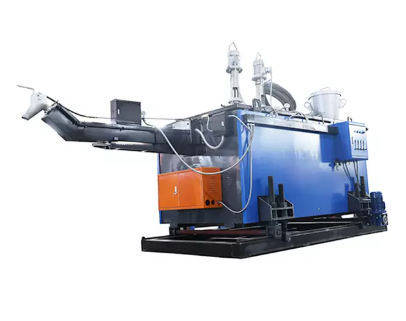
You can think of the melting point as the exact temperature where a solid turns into a liquid. This temperature marks the start of the melting process. When you heat a metal, its particles gain energy and begin to move faster. At the melting point, the solid and liquid forms of the metal exist together in balance. The temperature stays the same during this phase change, even though you keep adding heat.
Tip: The melting point depends on pressure, but most people use the value measured at standard pressure.
Here is how top sources define the melting point:
Source | Definition |
|---|---|
Wikipedia | The melting point of a substance is the temperature at which it changes state from solid to liquid, with solid and liquid phases existing in equilibrium. It depends on pressure and is usually specified at standard pressure. |
Britannica | The melting point is the temperature at which the solid and liquid forms of a pure substance can exist in equilibrium. Heat applied to a solid increases its temperature until the melting point is reached, after which the temperature remains constant during the phase change. |
MT.com | Melting point is a characteristic property of solid crystalline substances, defined as the temperature at which the solid phase changes to the liquid phase, with energy added consumed as heat of fusion, keeping the temperature constant during the transition. |
You will notice that metals, ceramics, and polymers all have different melting points. Ceramics usually have much higher melting points than metals, often above 1,000°C (1,832°F) and sometimes over 2,000°C (3,632°F). Most metals melt at lower temperatures, while polymers melt at around 200°C (392°F) or less. This difference affects which materials you can use in high-temperature applications and which metal melting unit or furnace you need for the process.
You can measure the melting point of metals in several ways. Accurate measurement helps you control the melting process and choose the right metal melting unit for your needs. In labs and industry, you will find these common methods:
Differential Scanning Calorimetry (DSC): This method gives very accurate results. It measures how much heat flows into a sample as it melts. You need special equipment for this process.
Pyrometry (Optical Methods): This technique measures temperature from a distance. It works well for metals with high melting points, but accuracy can change depending on the material.
Thermocouples: These sensors are common in industry. They are affordable and easy to use, but you must calibrate them for best results, especially at high temperatures.
To get the most accurate melting point, you should follow these steps:
Make sure your sample is dry and uniform. Moisture or uneven samples can lower the melting point.
Grind the sample into a fine powder. This helps heat spread evenly during the melting process.
Fill the capillary tube properly. Avoid air pockets that can cause errors.
Keep the sample height between 2-3 mm. This prevents temperature differences inside the sample.
Note: Careful sample preparation is the most important part of the process. Errors often come from poor preparation, not the instrument itself.
You may also face some challenges when measuring the melting point. Problems can come from the instrument, such as imbalances in the DSC, or from the sample, like impurities or different crystal sizes. Even the way heat moves through the equipment can affect your results. Always check your setup and sample before starting the melting process.
By understanding how to measure the melting point, you can control the melting process more effectively. This knowledge helps you select the right metal melting unit and avoid problems during production.
When you use an induction furnace as your metal melting unit, you rely on a unique working principle. Induction furnaces use electromagnetic induction to heat and melt metals. This process starts when you place a conductive material inside a coil that produces an alternating magnetic field. The changing field creates electric currents, called eddy currents, within the metal. These currents meet resistance, which generates heat through the Joule Effect. The heat melts the metal quickly and evenly.
Induction heating is a non-contact method. You do not need to touch the metal directly with a heating element.
The process allows for precise temperature control, so you can melt metals without overheating or wasting energy.
You benefit from high energy efficiency because the heat forms inside the metal, reducing heat loss.
Induction furnaces work well for aluminum and other metals that need accurate temperature control mechanisms.
Induction furnaces offer fast melting, uniform heating, and minimal energy loss. You can control the process closely, which makes these furnaces ideal for industrial applications.
You will find several other furnace types used as metal melting units. Each type uses a different heating method and has its own advantages and drawbacks.
Fuel-fired furnaces use gas, oil, or coal to generate heat. The heat transfers to the metal through conduction, convection, or radiation. These furnaces often heat more slowly and lose more energy to the environment.
Gas-fired aluminum melting furnaces rely on combustion. The process produces heat that radiates and convects through the chamber, but you may see more heat loss compared to induction furnaces.
Electric arc furnaces use electrical energy to create an arc between electrodes and the metal. You get fast heating and cleaner operation, with less carbon emissions than traditional blast furnaces.
Resistance furnaces use electric current passing through a resistor to generate heat. These furnaces can have greater environmental impacts than industrial gas furnaces.
Furnace Type | Carbon Emissions Reduction | Additional Notes |
|---|---|---|
Electric Arc Furnaces (EAF) | Up to 85% less | More environmentally friendly overall. |
Traditional Blast Furnaces | High | Easier to produce clean steel, but more CO2. |
When you choose a metal melting unit, consider the working principle, heating method, and environmental impact. Induction furnaces stand out for their efficiency and precise temperature control, while fuel-powered furnaces may suit different needs but often have higher energy use and emissions.
You often need to know the melting points of metals before you select a metal melting unit. The melting point tells you the temperature where a metal changes from solid to liquid. This information helps you choose the right equipment and avoid overheating. Here is a table showing the melting points of some of the most common metals used in manufacturing:
Metal | Melting Point (°C) | Melting Point (°F) | Melting Point (K) |
|---|---|---|---|
Aluminum | 660 | 1220 | 933 |
Yellow Brass | 905 – 932 | 1660 – 1710 | 1178 – 1205 |
Bronze | 913 | 1675 | 1186 |
Red Brass | 990 – 1025 | 1810 – 1880 | 1261 – 1300 |
Copper | 1084 | 1983 | 1357 |
Cast Iron | 1127 – 1204 | 2060 – 2200 | 1400 – 1478 |
Carbon Steel | 1371 – 1593 | 2500 – 2800 | 1644 – 1811 |
Nickel | 1453 | 2647 | 1726 |
Wrought Iron | 1482 – 1593 | 2700 – 2900 | 1755 – 1866 |
Stainless Steel | 1510 | 2750 | 1783 |
Titanium | 1670 | 3040 | 1944 |
You can see that aluminum has a much lower melting point than copper, iron, or stainless steel. This makes aluminum easier to melt in a metal melting unit, especially when you want to produce molten aluminum quickly.
Aluminum stands out because of its relatively low melting point. You will find that aluminum melts at about 660°C (1220°F), which is much lower than most other metals. This property allows you to use less energy and reach molten aluminum faster in your metal melting unit. If you compare aluminum to copper or iron, you notice that copper melts at 1084°C (1983°F) and iron melts between 1205°C and 1370°C (2200°F to 2500°F). Zinc melts even lower, at 420°C (787°F), but aluminum remains the most popular choice for lightweight and efficient casting.
The melting point of aluminum is about 933 K.
Recent materials science research estimates the melting point of aluminum at around 858 ± 2 K, based on advanced simulations.
You will see that the melting point can change slightly depending on the measurement method, but most sources agree on 660°C.
The purity of aluminum affects its melting point. Pure aluminum melts at 660°C, but commercial aluminum often contains impurities like iron or silicon. These impurities lower the melting point, so you may see molten aluminum form at a slightly lower temperature in industrial settings. This effect is called melting point depression. When you add alloying elements to aluminum, you also change its melting behavior. Alloys do not have a single melting point but a melting range. The solidus is where melting starts, and the liquidus is where you get fully molten aluminum.
Tip: If you want precise control over molten aluminum, always check the purity and alloy content before you start the melting process in your metal melting unit.
You use molten aluminum in many industries because it flows easily and fills molds well. The lower melting point means you can use smaller, more efficient metal melting units. You also save energy and reduce costs. When you work with aluminum, always monitor the temperature closely. Overheating can damage the metal and waste energy. By understanding the melting point and how it changes with purity and alloys, you can produce high-quality molten aluminum every time.
You need to understand why knowing the melting point matters in metalworking and manufacturing. The melting point guides you in choosing the right metal melting furnace and helps you set the correct temperature for each melting process. When you select metals for high-temperature applications, you look for those with high melting points to ensure durability and structural integrity.
Safety plays a key role in every melting process. You must monitor furnace temperatures closely to prevent overheating and accidents.
Metal melting furnaces serve many purposes in industry:
You use a metal melting furnace to heat raw materials until they reach the melting point for casting or pouring into molds.
You recycle scrap metal by melting it down and recasting it, which conserves resources and saves energy.
You produce alloys by mixing different metals in the furnace, creating materials like stainless steel or copper alloys.
You perform heat treatment, such as tempering and quenching, to change the physical properties of metals.
During recycling, you add scrap steel to the furnace, melt it, remove impurities with slagging materials, and pour out the molten metal. This process reduces emissions, saves energy, and supports environmental safety. Regulatory standards require you to minimize hazardous air pollutants by covering furnaces, buying scrap with low HAP content, and following written management plans.
Aluminum melting furnaces play a major role in automotive, aerospace, and construction industries. You use these furnaces to melt aluminum for casting engine blocks, wheels, and other parts. The most common types include reverberatory furnaces, resistance furnaces, and induction furnaces. Each furnace type offers unique benefits for the melting process:
Reverberatory furnaces use natural gas or oil and depend on air content for thermal efficiency.
Resistance furnaces heat aluminum using electric current, either directly or indirectly.
Induction furnaces use electromagnetic induction for fast heating and high production efficiency.
You rely on aluminum melting furnaces to produce recycled aluminum, which helps conserve resources and reduce costs. Efficient aluminum melting furnaces lower energy consumption and waste, improving overall productivity. You must maintain safety by monitoring furnace operation and controlling emissions. Advanced technologies, such as AI-powered controls and digital twins, help you optimize the melting process and achieve precise temperature control.
Technology Type | Efficiency Improvement | Description |
|---|---|---|
Thermodynamic Optimization | 40% | Modern kilns preheat air to 1100°C, boosting energy efficiency. |
Hybrid Heating | 15% | Adaptive frequency control saves energy in aluminum melting. |
AI-Powered Controls | ±2°C Precision | Enhances operational safety and efficiency. |
Digital Twins | 18% | Simulations improve furnace utilization and safety. |
Future Technologies | N/A | Electromagnetic kilns and hydrogen-powered furnaces are emerging. |
You face challenges in maintaining consistent melting points, especially with large batches of aluminum. Variations in composition or temperature can cause defects in aluminum casting. You must control alloy composition and monitor the melting process to ensure high-quality results. Pouring molten aluminum requires careful attention to safety and temperature control. By using efficient aluminum melting furnaces and following safety standards, you improve energy efficiency and reduce production costs in large-scale manufacturing.
You now know that the melting point is the temperature where a metal changes from solid to liquid. This property shapes how you select metals for casting, forging, and welding. Modern metal melting units and advanced furnaces help you reach and control these temperatures with precision. New sensors and automation systems let you monitor the melting process and improve safety. Always consider the melting point, especially for aluminum, to ensure you choose the right metal melting unit and avoid defects or hazards in your work.
Remember: Understanding melting points helps you produce quality parts, prevent overheating, and keep your metal melting unit running safely and efficiently.
A metal melting unit is a machine or furnace that heats metals until they reach their melting point. You use it to turn solid metals into liquid for casting, recycling, or alloy production.
You need to know the melting point to set the correct temperature. This helps you avoid overheating, save energy, and protect your metal melting unit from damage.
You can melt many metals, such as aluminum, copper, iron, steel, and brass. Each metal requires a different temperature. Always check the melting point before starting your metal melting unit.
You should select a metal melting unit that can reach at least 660°C (1220°F). Induction furnaces work well for aluminum because they offer precise temperature control and energy efficiency.
Always wear heat-resistant gloves, goggles, and protective clothing.
Keep your workspace clean and free of flammable materials.
Monitor the temperature closely to prevent overheating or accidents.
