
EMAIL:
lh@longhuamachine.com
TELL/whatsapp:
+8619305527239  English English
Views: 0 Author: Site Editor Publish Time: 2025-10-20 Origin: Site


When you select a die casting aluminum machine, you need to focus on what matters most for your operation. The global aluminum die casting market is growing fast, with some estimates projecting it to reach over $111 billion by 2030. You should match the machine’s capabilities to your production needs. Pay attention to your production volume, the size of your parts, and material compatibility. Automation options and the machine’s condition also play a big role. Balancing features, cost, support, and resale value helps you make a smart investment. Take a step-by-step approach for the best results.
Estimate your production volume to choose the right die casting machine. High volumes favor die casting, while low volumes may benefit from machining.
Match the machine's clamping force and shot size to your part specifications. This ensures quality and prevents defects during production.
Consider automation options to enhance safety and efficiency. Automated systems can reduce costs and improve product quality.
Review the machine's service history and availability of spare parts before purchase. This helps ensure reliability and reduces downtime.
Factor in total ownership costs, including energy use and maintenance, when selecting a machine. A higher initial investment may lead to long-term savings.
You need to start by estimating your production volume. The number of parts you plan to make will guide your choice of manufacturing method and machine.
High production volumes, such as tens of thousands of parts, make die casting more economical. The cost per part drops as you produce more.
If you only need a few dozen or a few thousand parts, machining may be a better option.
The required production volume drives your decision to invest in a die casting aluminum machine.
Tip: Always match your machine’s capacity to your expected output. Overestimating can lead to wasted resources, while underestimating can cause production delays.
The size of your part affects many aspects of the die casting process.
Part size influences tolerances, wall thickness, and draft angles.
Larger parts often need thicker walls for strength and cooling.
The projected area of the casting determines the tolerances you must meet.
Design wall thickness based on part size for strength and cooling.
Use thicker walls for larger parts to maintain integrity.
Adjust draft angles to help remove the part from the die.
You should consider the properties of aluminum alloys when selecting your die casting aluminum machine. Aluminum alloys offer a strong strength-to-weight ratio and resist corrosion, making them ideal for many uses. Different alloys can handle different temperatures, which is important for your process.
Property | Value | Significance |
|---|---|---|
Tensile Strength | 310 MPa (45 ksi) | Durability and resistance to mechanical stress |
Yield Strength | 160 MPa (23 ksi) | Structural integrity under load |
Hardness (Brinell) | 80 HB | Wear resistance and surface durability |
Elongation | 3.5% | Flexibility before fracture |
Density | 2.71 g/cm³ | Lightweight for efficiency |
Popular alloys include:
A380: Great fluidity and strength for high-precision parts.
A360: Excellent pressure tightness and corrosion resistance.
A413: Strong and corrosion-resistant for harsh environments.
A443: Superior ductility for consumer goods.
Automation can improve your die casting process in several ways:
It increases safety by handling high temperatures and pressures.
Automated lubrication systems keep the process consistent and reduce defects.
Automated visual inspection helps you catch defects early and improve quality.
Automation reduces waste and costs by increasing precision and repeatability.
Technology Type | Description |
|---|---|
Automation and Simulation | Software optimizes casting and reduces errors. |
Automated Die Casting Cells | Automates repetitive tasks for speed and safety. |
IoT and Data Analytics | Monitors real-time data to improve efficiency. |
Digital Twin Technology | Simulates processes to reduce waste and boost productivity. |
Note: When you choose a die casting aluminum machine, consider your current and future automation needs. Automation can help you scale production and maintain quality.

You need to choose a die casting aluminum machine with the right clamping force for your parts. Clamping force keeps the mold closed during injection. If you use too little force, you may see defects like flash or incomplete filling. Too much force can strain the machine and increase maintenance costs. Larger and more complex aluminum parts need higher clamping forces to prevent mold deformation and ensure quality.
Insufficient clamping force can cause defects and lower part quality.
Excessive clamping force increases wear and maintenance.
Larger, complex parts require higher clamping force for best results.
Shot size tells you how much molten aluminum the machine injects into the mold each cycle. You must match shot size to your part’s volume. If you choose a machine with too small a shot size, you cannot fill the mold completely. If the shot size is too large, you waste material and energy.
Model | Shot Weight (kg) |
|---|---|
DCC-900 Standard Aluminum Die Casting | 7.1, 9, 11.2, 13.5 |
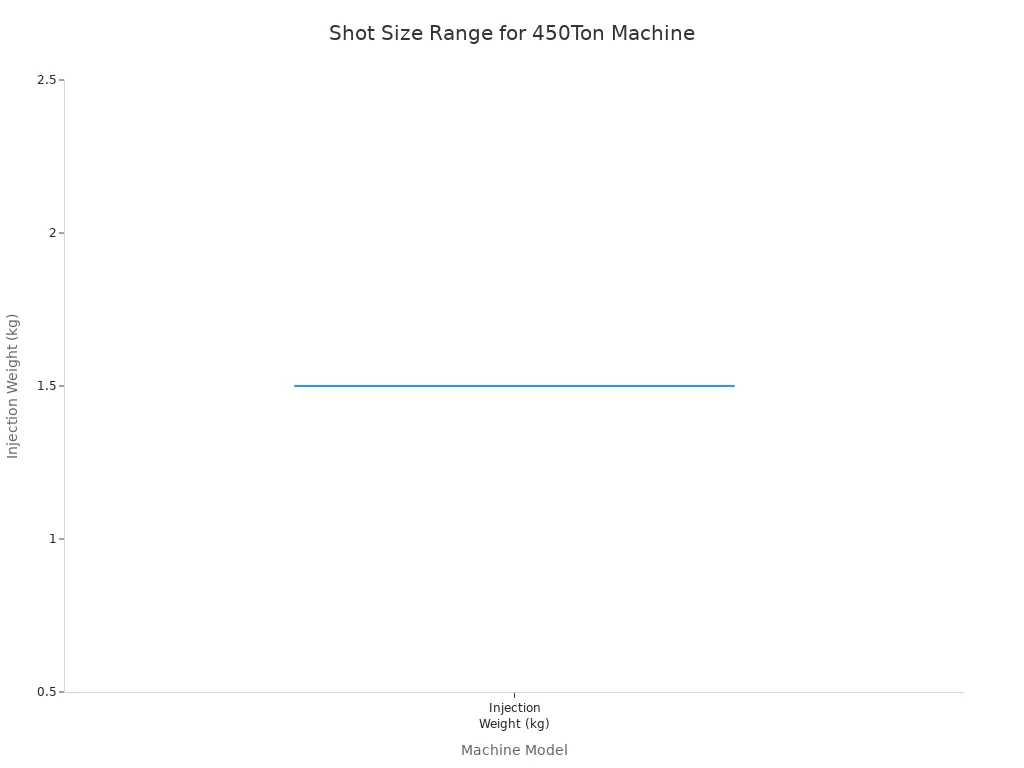
Model | Injection Weight (kg) |
|---|---|
Aluminum Die Casting Machine 450Ton | 1.5, 2.1, 2.9, 2.6, 3, 6, 4, 6, 2.6, 3, 6, 4.6, 2.8, 3.6, 4.7, 3.9, 5.1, 6.5 |
You must decide between hot chamber and cold chamber machines. Hot chamber machines work best with lower melting point alloys and offer faster cycles. Cold chamber machines handle higher melting point alloys like aluminum and produce larger, more complex parts.
Feature | Hot Chamber Die Casting | Cold Chamber Die Casting |
|---|---|---|
Material Compatibility | Suitable for lower melting point alloys | Handles higher melting point alloys |
Speed and Efficiency | Faster due to immediate molten metal | Slower, uses external molten metal source |
Typical Applications | Small, high-volume components | Large, complex parts |
Energy efficiency affects your costs and environmental impact. Larger machines use more energy. The hydraulic system, especially the oil pump motor, accounts for most energy use. The smelting stage can use up to 60% of total energy. For example, a 1200T machine uses 110-160kW, while a 2500T machine in energy-saving mode uses about 27.66 kWh per hour.
Energy consumption rises with machine size.
Hydraulic systems use over 80% of total energy.
Smelting can account for 40-60% of energy use.
Model | Key Features |
|---|---|
Lio 1 | Advanced automation and high precision for consistent quality in every batch. |
Buhler High Tonnage | Exceptional clamping force and stability for large or complex parts. |
Giga Press | Creates very large parts in a single shot, ideal for high-volume production. |
YIZUMI LEAP Series | Flexible clamping forces from 380 to 9000 tons, tailored for new energy vehicle industry. |
Regular maintenance keeps your die casting aluminum machine running smoothly. You should inspect and clean the PLC cabinet, check the power supply, and maintain sensors and actuators. Keep the environment within the machine’s operating range. Log errors and train operators for safe use.
Maintenance Task | Description |
|---|---|
Regular Inspection & Cleaning | Clean the PLC cabinet and surrounding area to prevent overheating and electrical faults. |
Power Supply Check | Verify that the input power supply matches the PLC’s requirements. |
I/O Module Maintenance | Inspect sensors and actuators to ensure they are functioning correctly. |
Environmental Protection | Maintain ambient conditions within the PLC’s operating range to prevent damage. |
Error Logging & Diagnostics | Regularly check for fault codes or warnings in the HMI to address issues promptly. |
Operator & Technician Training | Train staff on proper handling and emergency procedures to ensure safe operation of the machine. |
Maintenance Strategy | Impact on Lifespan and Performance |
|---|---|
Adhere to a preventative maintenance schedule | Prevents surprise downtime and extends equipment lifespan. |
Fix small problems quickly | Prevents minor issues from escalating into major problems. |
Work with your manufacturer | Ensures optimal operation and access to innovations. |
Tip: You can extend your machine’s lifespan and avoid costly downtime by following a regular maintenance schedule.

Before you buy or sell a die casting aluminum machine, you should complete a thorough inspection. A detailed checklist helps you spot issues early and avoid costly surprises. Here are key steps you should follow:
Maintain the desired pressure and temperature during solidification.
Extract the casting from the die after solidification.
Clean and prepare the die cavity for casting.
Ensure proper lubrication of the die surfaces.
Set up and calibrate the die casting machine.
Position and secure the ejector pins.
Close and lock the die halves.
Monitor the injection speed and pressure.
Control the cooling and solidification process.
Inspect the casting for defects and quality assurance.
Remove any excess material or flash from the casting.
Prepare the casting for further processing or finishing.
Tip: Use this checklist every time you inspect a machine. Consistent checks help you maintain quality and extend the life of your equipment.
You should always review the service history when evaluating a die casting aluminum machine. A complete record shows that the machine received regular maintenance. This history increases reliability and makes the machine more attractive to buyers. If you cannot find service records, you may face doubts about the machine’s condition. Missing records can lower the resale value and make future repairs harder to predict.
Easy access to spare parts keeps your production running smoothly. Major brands offer a wide range of parts for their machines. You can find parts with different surface treatments and certifications. Here is a quick overview:
Feature | Details |
|---|---|
FOB Price | US $0.1 - 1 Piece |
Min. Order Quantity | 1 Piece |
Supply Ability | 1,000,000 Pieces per Month |
Surface Treatment | Coating, Chrome Plating, etc. |
Material | Aluminium, Zinc, Copper, etc. |
Certificate | ISO 9001:2015 |
Note: Always check the availability of spare parts before you finalize your purchase. Reliable parts supply reduces downtime and helps you plan maintenance.
You have many options when you want to buy or sell a die casting aluminum machine. Major brands from North America, Europe, and Japan lead the market. These brands include Buhler, Frech, Italpresse, Toshiba, Ube, and Techmire. Machines from these companies often last for many years, so you can find both new and pre-owned models that still perform well.
Popular platforms for sourcing machines include:
Die Cast Machinery, LLC
Beta Die Casting
Fiss Machines
TradeWheel
Alibaba
Surplus Record
You can find both individual machines and complete plants for sale. The international market offers a wide range of choices, including high-pressure aluminum die casting machines and the popular 1000T cold chamber die casting machine. Many buyers also look for secondhand options, such as pre-owned Toyo, Buhler Prince, or Italpresse models.
When you negotiate, research the current market value of the machine you want. Compare prices for similar models and check the machine’s age, condition, and service history. Ask for detailed photos and inspection reports. If you buy a secondhand machine, request proof of recent maintenance or upgrades. Sellers often expect some negotiation, so start with a fair offer based on your research.
Tip: Always factor in shipping, installation, and possible refurbishment costs before you agree on a final price.
You need to review all legal documents before you complete a transaction. Make sure you receive a bill of sale, proof of ownership, and any warranty information. For international deals, check import and export regulations. Some countries require special certifications or inspections for used industrial equipment. Keep all documents organized for future reference or resale.
You need to weigh the cost against the benefits when you select a die casting aluminum machine. Start by listing your production goals and the features you require. Consider the initial purchase price, but also look at long-term costs. These include energy use, maintenance, and spare parts. Machines with higher energy efficiency may cost more upfront, but they save you money over time.
Think about the value of automation. Automated systems can reduce labor costs and improve consistency. If you plan to expand production, investing in automation now can help you scale up later.
Tip: Calculate the total cost of ownership, not just the sticker price. Include installation, training, and potential downtime in your analysis.
You should also consider the resale value. Well-known brands often hold their value better. Machines with a strong service history and available spare parts attract more buyers if you decide to upgrade in the future.
After-sales support plays a key role in your long-term success. Leading manufacturers offer a range of services to keep your die casting aluminum machine running smoothly. These services cover everything from tooling and maintenance to customer service and logistics.
Department | Role in After-Sales Support |
|---|---|
Tool Room | Provides tooling services for die casting parts |
Die Casting | Ensures quality production of aluminum and zinc |
Secondary Operations | Handles additional processing and finishing |
Quality Control | Maintains standards for quality assurance |
Maintenance | Offers ongoing maintenance support |
Customer Service | Facilitates communication and support for clients |
Logistics | Manages the delivery and supply chain |
You can expect support that covers the entire process, from design and tooling to machining, finishing, and assembly. Many companies commit to quality and efficiency at every stage. Wellste, for example, provides complete solutions and stays involved from your first inquiry to after-sales service. This approach ensures you get help when you need it and keeps your production on track.
Design and tooling integration
Machining and finishing services
Assembly support
Ongoing maintenance and troubleshooting
Note: Strong after-sales support reduces downtime and helps you solve problems quickly. Choose a supplier with a proven track record in customer service.
A clear warranty gives you peace of mind when you invest in a die casting aluminum machine. Most new machines come with coverage for dimensional issues, internal casting defects, and surface treatment failures. Suppliers usually replace or repair parts that do not meet standards, as long as you follow the terms.
Warranty Coverage | Description |
|---|---|
Dimensional issues | Remake or rework parts outside defined tolerances at no cost |
Internal casting defects | Provide replacements or refunds for defects like porosity or inclusions |
Surface treatment failures | Cover failures in anodizing or coating within 90 days under normal use |
Shipping damage | Replace damaged goods if supplier arranged packaging and freight |
Response time | Acknowledge claims within 24 hours, action plan within 7 days |
Exclusions | No coverage for missing drawings, unapproved changes, or expired claims |
You should check the warranty terms before you buy. Some warranties exclude problems caused by unapproved modifications or expired claims. Used machines may have limited or no warranty, so ask for details before you commit.
Tip: Keep all warranty documents and service records organized. Quick access to these files helps you resolve issues faster.
Selecting the right die casting aluminum machine requires a clear plan. You should focus on machine capabilities like shot control, fill speed, clamping force, and energy efficiency. Leading manufacturers use preventive maintenance and real-time monitoring. Robotic automation boosts stability and efficiency. Always check that your supplier meets standards such as ISO 9001 and uses in-house inspection systems.
Key steps include:
Use minimal casting material.
Ensure easy part removal.
Minimize solidification time.
Reduce secondary operations.
Confirm product performance.
Factor | Description |
|---|---|
Technical | Material compatibility, production volume, cycle time, maintenance needs |
Financial | Initial cost, long-term maintenance, production economics |
Interaction | Balancing both factors leads to quality and cost-effectiveness |
You can consult experts or reputable dealers for complex decisions. This approach helps you match your die casting aluminum machine to your production and business goals.
A die casting aluminum machine uses higher temperatures and cold chamber technology. Zinc die casting machines often use hot chamber die casting machines because zinc melts at lower temperatures. You should choose based on your alloy and production needs.
You can use die casting aluminum machines for aerospace components. These machines produce lightweight, strong parts with tight tolerances. Many aerospace manufacturers rely on die casting machines for aerospace components to meet strict quality standards.
Hot chamber die casting machines melt metal inside the machine, making them ideal for zinc alloys. Die casting aluminum machines use cold chamber technology because aluminum requires higher melting points. You should select the right type for your material.
You need to clean, inspect, and lubricate your die casting aluminum machine regularly. Check hydraulic systems, sensors, and cooling units. Replace worn parts quickly. Good maintenance keeps your die casting aluminum machine running smoothly and reduces downtime.
You can buy die casting aluminum machines and hot chamber die casting machines from platforms like Alibaba, Surplus Record, and Die Cast Machinery, LLC. Major brands include Buhler, Frech, Italpresse, and Toshiba. Always review service history and warranty before purchase.
